
Struggling with fragmented factory data? This inaccuracy costs you time and money, making it difficult to improve. Smart scales can instantly capture the precise data you need.
Absolutely. Modern intelligent scales act as powerful data-gathering hubs. They don't just measure weight; they capture, timestamp, and transmit critical production data automatically, creating a single source of truth for your operations.
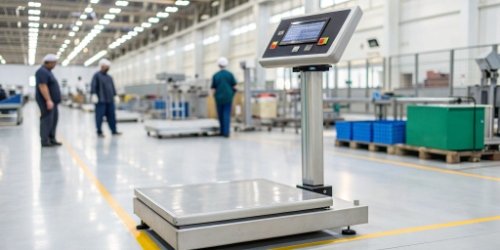
I've spent nearly two decades in the industrial weighing industry, and I've seen technology transform the factory floor. The humble scale, once just a tool for measurement, is now at the heart of this revolution. The factory floor is the most sensitive place for new technology, where efficiency and accuracy are everything. But how exactly does this transformation happen, and what does it mean for your business? The real power isn't just in the weighing; it's in the data. Let's explore how these systems are changing the game.
How Can Smart Scales Revolutionize Data Collection in Manufacturing?
Tired of manual data entry errors on your production line? These mistakes cause inventory chaos and quality problems. Smart scales automate data capture, ensuring perfect accuracy every time.
Smart scales revolutionize data collection by automating it completely. They capture precise weight data, piece counts, and timestamps directly at the source. This information is then sent instantly to your ERP, MES, or other software, eliminating human error entirely.
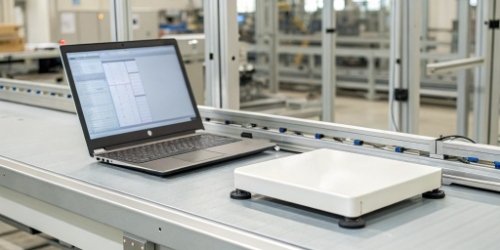
In my experience, the biggest leap in factory efficiency comes from eliminating manual steps. Workers on the line are focused on production, not data entry. Asking them to write down weights on a clipboard is asking for trouble. It's slow, and mistakes are inevitable. A smart scale changes this completely.
From Manual to Automated
Think about a typical process. A worker fills a box, weighs it, writes the weight down, and then someone else enters that data into a computer later. There are at least three places where errors can happen. A smart scale combines these steps into one. The moment the box is weighed, the data is captured. There's no writing, no typing, and no chance for a number to be transposed. This not only improves accuracy but also frees up your team to focus on more valuable tasks. It transforms the factory floor, a place I know is obsessed with accuracy, into a truly efficient data source.
The Power of Integration
The real magic happens when the scale talks directly to your other systems. We design our scales to integrate seamlessly with Enterprise Resource Planning (ERP)1 and Manufacturing Execution Systems (MES)2. This creates a live, unbroken chain of information.
| Feature | Manual Data Collection | Smart Scale Data Collection |
|---|---|---|
| Speed | Slow, delayed | Instant, real-time |
| Accuracy | Prone to human error | Highly accurate, automated |
| Labor Cost | High (for data entry) | Low (worker focuses on task) |
| Visibility | Poor, data is old | Excellent, live production view |
This direct connection means your inventory levels, production counts, and quality checks are always up-to-date. You're no longer making decisions based on yesterday's information.
What Makes Modern Weighing Systems Effective Information Centers?
Is your scale just a dumb display showing a number? This one-dimensional data gives you no real insight into your process. Modern weighing systems are information centers that provide rich, actionable data.
It's the combination of three key elements: advanced sensors, onboard software, and connectivity. They don’t just measure mass; they process information, communicate with other devices and networks, and can be programmed for specialized tasks, turning raw data into business intelligence.

As a manufacturer, I have seen the technology inside these scales evolve dramatically. It's not just about the metal and the load cell anymore. The real value for clients like you, who are often software providers, lies in the technology stack that makes these devices "smart."
Beyond the Load Cell
The heart of any scale is its sensor, or load cell. But a modern system builds on this foundation with a powerful microcontroller and onboard software3. This is like putting a small computer inside the scale. This computer can run applications for tasks like piece counting, checkweighing against a target, or formula mixing. It processes the raw weight data and turns it into useful information before it even leaves the device. For a software company, this means you receive pre-processed, structured data, which is much easier to work with.
The Importance of Connectivity
A smart scale's brain is useless if it can't communicate. That is why connectivity is crucial. We build our IoT scales4 with a range of options to fit any factory environment.
| Component | Function | Benefit for Software Vendors |
|---|---|---|
| High-Precision Sensors | Accurately measure weight. | Provides reliable raw data. |
| Onboard Processor | Runs software, processes data. | Simplifies integration; less processing needed on your end. |
| Connectivity (IoT) | Transmits data to networks/cloud. | Enables real-time data flow5 into your software platform. |
| APIs / SDKs | Allows for custom integration6. | Easy to connect and build custom solutions for your clients. |
This connectivity is what truly transforms the scale into an information hub. It becomes a node on your network that feeds your software with constant, reliable data from the factory floor.
How Do Intelligent Scales Enhance Data-Driven Decision Making in Production?
Are you making production decisions based on guesswork? This uncertainty leads to costly mistakes like waste and stockouts. Intelligent scales give you the hard data to make smart, profitable choices.
They enhance decision-making by replacing assumptions with facts. By providing live, granular data on output, waste, and efficiency, managers can immediately identify production issues, optimize material usage, and improve forecasting with confidence, all based on what's actually happening.
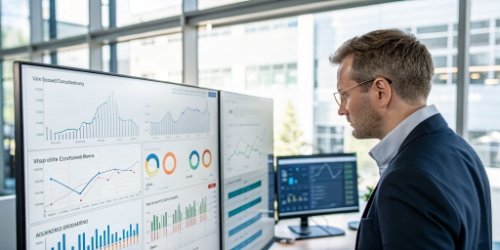
In my nineteen years, I have had countless conversations with purchasing managers and technical directors. The core problem is often the same. There is a delay between an event on the factory floor and the moment a decision-maker knows about it. Intelligent scales close that gap.
From Reactive to Proactive
Traditionally, a manager might find out about a quality problem or a drop in output at the end of a shift, or even the next day. By then, the damage is done. With data streaming from a smart scale, alerts can be triggered in real-time. For example, if a scale records a series of under-filled packages, your system can immediately flag the issue. The manager can then investigate the filling machine right away, not hours later. This shifts the entire management approach from being reactive to proactive.
Real-World Applications
The applications are incredibly practical and directly impact the bottom line.
| Decision Area | Before Smart Scales (Guesswork) | After Smart Scales (Data-Driven) |
|---|---|---|
| Inventory Control | Order based on historical averages. | Order based on real-time consumption rates. |
| Quality Assurance | Spot-check a few items per batch. | Monitor 100% of items via checkweighing. |
| Performance Tracking | "Feeling" a line is slow. | Pinpoint exact bottlenecks7 with cycle time data. |
A client of ours in the food processing industry used our scales to monitor waste at each stage. They quickly discovered one particular cutting station was generating 15% more waste than the others. By addressing that single issue, they saved thousands of dollars a month. These are the kinds of powerful, data-driven decisions that intelligent scales enable.
Can Advanced Scale Technology Support Better Analytics on the Factory Floor?
Drowning in raw data you can't make sense of? This unused information represents missed opportunities for improvement. Advanced scale technology provides analytics-ready data to unlock powerful insights.
Absolutely. Advanced scale technology is the bedrock of factory floor analytics. It delivers clean, consistent, and timestamped data—the exact type of high-quality input that analytics software and AI models need to identify patterns, predict outcomes, and optimize your entire production flow.
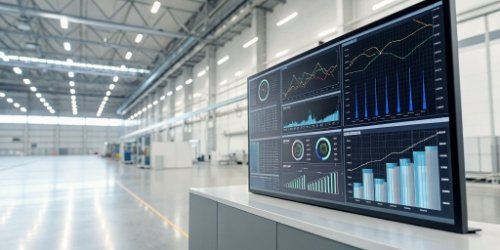
As someone who provides custom weighing solutions, I know that my software vendor clients are always looking for the next big thing. The future is analytics, AI, and machine learning8. But all of that advanced software is useless without good data.
The Foundation of Good Analytics
The principle is simple: garbage in, garbage out. If your data is messy, inconsistent, or inaccurate, your analytics will be worthless. Advanced scales are designed to be the ultimate source of clean data. Every data point—weight, unit count, timestamp, operator ID—is captured digitally and structured consistently. This eliminates the need for extensive data cleaning and preparation. Analytics teams tell me this is often the most time-consuming part of their job.
Fueling the Future: AI and Machine Learning
This is where it gets really exciting. With a steady stream of high-quality data, you can start doing more than just looking at the past. You can begin to predict the future.
| Data Aspect | Standard Scale Output | Advanced Scale Output (Analytics-Ready) |
|---|---|---|
| Format | Often unstructured (e.g., printed ticket) | Structured (e.g., JSON, CSV) |
| Timestamp | None or manual | Automatic, highly precise |
| Context | Just weight | Weight, Operator ID, Product SKU, Line # |
| Consistency | Variable | Standardized across all devices |
For example, a machine learning model could analyze weighing cycle times from a scale. It could then predict when a piece of equipment needs maintenance before it breaks down. Or, it could analyze material usage patterns to create hyper-accurate demand forecasts. Our IoT-enabled scales are built to provide the fuel for these next-generation analytics engines that you and your company are developing.
Conclusion
In short, modern scales are no longer just for weighing. They are essential, intelligent data hubs that can transform your factory's efficiency, accuracy, and decision-making capabilities from the ground up.
-
Understand how ERP systems integrate with smart scales for better data management. ↩
-
Find out how MES work with smart scales to improve production tracking and efficiency. ↩
-
Learn how onboard software enhances the functionality of smart scales in factories. ↩
-
Discover the advantages of IoT scales in providing real-time data and connectivity. ↩
-
Explore the significance of real-time data flow for timely decision-making in factories. ↩
-
Understand the advantages of custom integration for tailored manufacturing solutions. ↩
-
Discover methods to pinpoint and resolve bottlenecks in production processes. ↩
-
Discover how machine learning can enhance manufacturing efficiency through data analysis. ↩


Comments (0)