

Struggling with inaccurate inventory counts? Worried that your current scales are costing you money? Choosing the right scale can solve these problems and improve your bottom line.
Digital scales offer superior accuracy and advanced features like data tracking, making them ideal for commercial and industrial use. Analog scales are simpler, cheaper, and require no power, suiting environments where basic, durable weighing is sufficient. The best choice depends entirely on your specific operational needs.
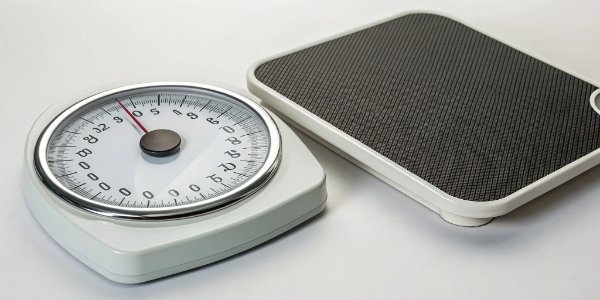
Over my 18 years in the industrial scale business, I've seen countless companies grapple with this decision. It seems simple on the surface, but the right choice can significantly impact your efficiency and profitability. This isn't just about getting a weight; it's about getting the right data to run your business effectively. Let's break down the key differences to help you make an informed decision for your operations.
Are digital scales more accurate than analog scales?
Are small measurement errors causing big production headaches? These inaccuracies can compound, leading to waste and quality control issues. Precision is key to avoiding these costly mistakes.
Yes, digital scales are significantly more accurate than analog scales. They use electronic load cells to provide precise readings, often to fractions of a gram, while analog scales rely on springs that can lose tension and accuracy over time, leading to larger potential errors.
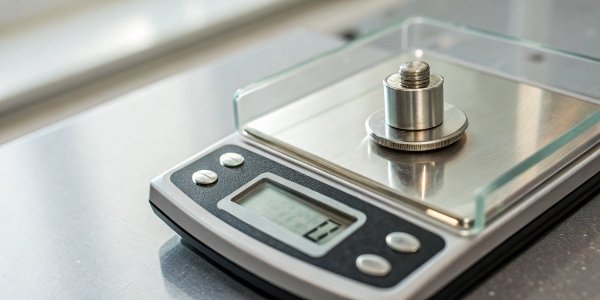
In my experience, the difference in accuracy is the single most important factor for most businesses. An analog scale works using a spring. When you place an object on it, the spring compresses, and a pointer moves along a dial. This mechanical system is simple, but it has its downsides. The spring can weaken over time, and even temperature changes can affect its tension, leading to incorrect readings. Furthermore, reading a dial from different angles can give you slightly different results, a problem we call parallax error.
Digital scales1, on the other hand, use a component called a strain gauge load cell2. This is an electronic sensor that converts the force of the weight into an electrical signal. This signal is then processed and displayed as a clear, exact number. This method is not only more precise but also more repeatable, meaning you get the same exact weight every single time.
How Technology Impacts Precision
| Feature | Analog Scale (Mechanical) | Digital Scale (Electronic) |
|---|---|---|
| Principle | Spring deformation (Hooke's Law) | Strain gauge load cell |
| Resolution | Low (e.g., ±0.5 kg) | High (e.g., ±0.01 kg or better) |
| Repeatability | Varies, degrades over time | High and consistent |
| Calibration | Manual, frequent adjustments needed | Digital, often with auto-calibration |
| Error Sources | Parallax, spring fatigue, friction | Electronic noise, temperature (often compensated) |
What are the main advantages of a digital scale over a traditional analog one?
Is your manual data entry process slow and prone to errors? This outdated method wastes time and creates data you can't trust. Modernization can streamline your entire workflow.
Beyond accuracy, digital scales offer data connectivity. They can integrate with software, barcode scanners, and IoT systems to automate inventory management, quality control, and shipping processes. This eliminates manual errors, saves labor, and provides valuable business insights.
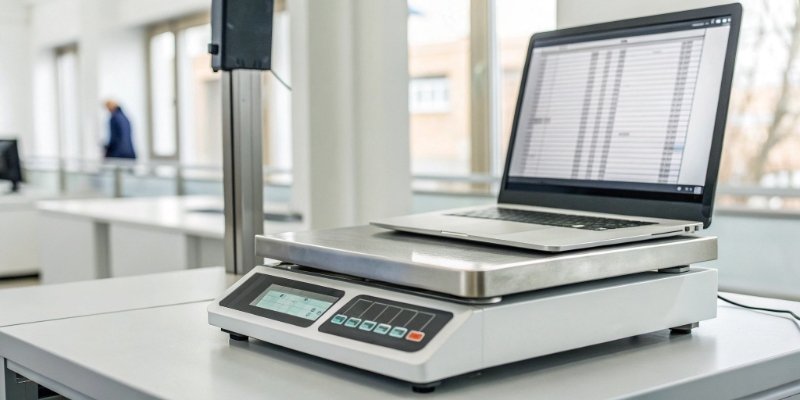
This is where digital scales truly transform a business. As a software provider, you understand the power of data. An analog scale gives you a number that someone has to write down. A digital scale gives you a data point that can be automatically fed into your systems. This opens up a world of possibilities for efficiency and control. Our clients connect our scales to their Enterprise Resource Planning (ERP)3 or Warehouse Management Systems (WMS). This allows for real-time inventory tracking, automatic reordering, and precise shipping cost calculation.
Moreover, many digital scales come with smart features built-in. Functions like parts counting4, checkweighing (to ensure packages are within a target weight range), and formulation are huge time-savers. Imagine trying to count thousands of tiny screws by hand versus simply weighing a sample and letting the scale calculate the total quantity instantly. That is the kind of efficiency leap we help our customers achieve.
From Weighing to Business Intelligence
| Advantage | Digital Scale | Analog Scale |
|---|---|---|
| Data Output | Yes (RS-232, USB, Ethernet, IoT) | No |
| System Integration | Seamless with ERP, WMS, MES | Not possible |
| Advanced Functions | Parts counting, checkweighing, etc. | Basic weighing only |
| Automation | Enables automated quality control | Requires manual checks |
When is it better to choose an analog scale over a digital one?
Operating in a harsh environment without reliable power? Worried about your sensitive electronics getting damaged? Finding a durable, simple solution can feel impossible in these conditions.
An analog scale is better in environments where simplicity and durability are more important than precision. They excel in locations without electricity, in wet or dusty conditions, or for applications where a rough weight estimate is all that's needed, like a basic receiving dock.
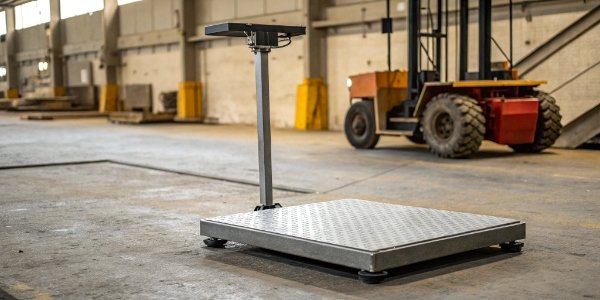
While we are experts in advanced digital weighing, I always tell my clients to choose the right tool for the job. Sometimes, that tool is a simple, robust analog scale. Because they are purely mechanical, there are no electronic components to fail. You don't need to worry about power surges, battery life, or moisture shorting out a circuit board. This makes them incredibly reliable in tough conditions.
I remember a client working in a remote mining operation. Power was unreliable, and the environment was incredibly dusty and subject to rough handling. They initially tried digital scales, but the sensitive electronics couldn't withstand the abuse. We supplied them with heavy-duty mechanical platform scales. While less precise, they were dependable day in and day out. For them, consistent uptime was more valuable than pinpoint accuracy. The initial cost is also lower, and with no need for power, the operational cost is zero, which is a key factor for some businesses.
Matching the Scale to the Environment
| Scenario | Best Choice | Why? |
|---|---|---|
| No Power Source | Analog | Works mechanically without electricity. |
| Extremely Harsh/Wet Environment | Analog | Fewer electronic components to fail. Simple and robust. |
| Budget is the #1 Priority | Analog | Lower upfront investment and no power costs. |
| Need for a Quick, Rough Estimate | Analog | Simple dial reading is fast for non-critical weights. |
Conclusion
In summary, choose digital scales for precision and data integration. Opt for analog scales for simplicity and durability in harsh environments. The right choice depends on your specific operational needs.
-
Explore how digital scales enhance accuracy and efficiency in various industries. ↩
-
Delve into the technology behind digital scales and their accuracy. ↩
-
Learn how ERP systems enhance business efficiency through scale integration. ↩
-
Discover how parts counting features can save time and improve accuracy. ↩



Comments (0)