

Struggling to trust a cheap digital scale? You worry that saving money means sacrificing accuracy, which could ruin your project. This doubt can be frustrating when you need reliable measurements.
For casual home use, a cheap digital scale can be surprisingly accurate. However, their precision is limited by their components and they are not suitable for industrial or commercial environments where accuracy is critical for operations and profit.
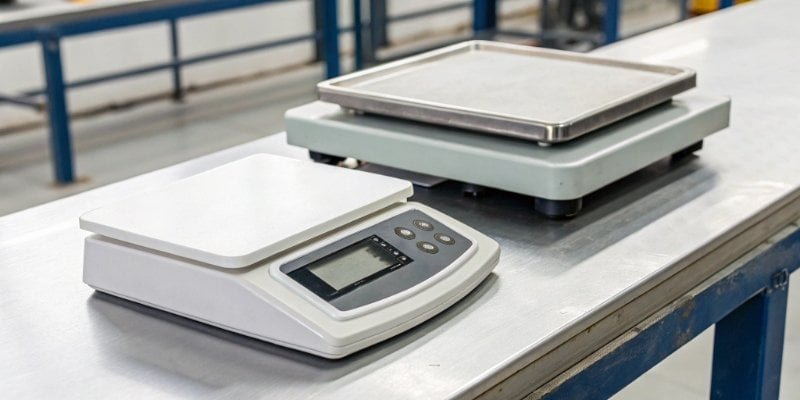
In my 19 years in the industrial scale business, this is one of the most common questions I get. People want to know if they can get by with a simple, inexpensive device. The truth is, it depends entirely on what you need it for. A $30 scale might be fine for weighing ingredients for a cake, but it's not the right tool for a business that ships thousands of packages. Let's look deeper into what accuracy1 really means and how to check it, so you can make the right choice for your needs.
How can I tell if my digital scale is accurate?
You have a scale, but you're not sure if you can trust it. This uncertainty makes every measurement feel like a guess, wasting your time and creating a lack of confidence.
The easiest way to check your scale’s accuracy is with a known, standardized weight. Common items like new coins (a U.S. nickel weighs exactly 5 grams) or a full liter of water (which weighs 1 kilogram) are great for a quick test.
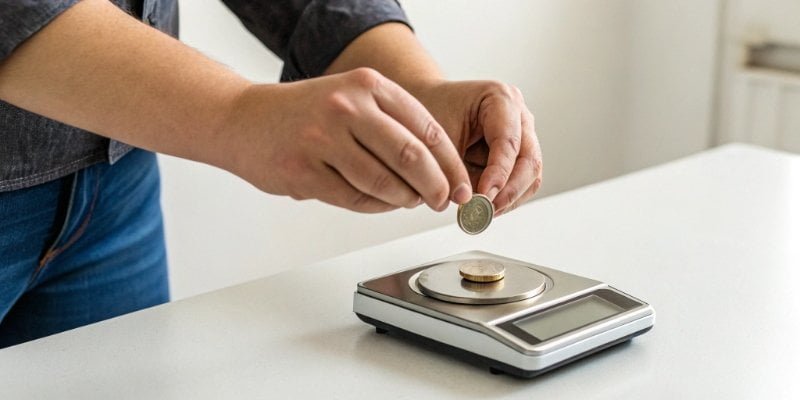
Checking for accuracy goes beyond a single test. As someone who oversees quality control2 for industrial scales3, I teach my team to look for consistency above all else. A scale that is consistently off by a tiny amount can sometimes be calibrated. A scale that gives different readings every time is unreliable and useless. Here are the professional tests4 you can easily do at home.
Three Key Accuracy Tests
We use these principles every day to test our industrial scales before they ship. The same logic applies to any scale you own.
| Test Name | How to Perform It | What It Tells You |
|---|---|---|
| Known Weight Test | Place an object with a government-standardized weight, like a new coin, on the scale. See if the reading matches the known weight. | This is a basic check of the scale's fundamental calibration5. It answers the simple question: "Is it close to the real weight?" |
| Repeatability Test | Weigh the same object (like your phone) three to five times in a row. Make sure to lift it off the scale completely between each measurement. | This tests the quality of the load cells6 and electronics. A good scale will show the exact same weight every single time. Fluctuations indicate low-quality components. |
| Corner Load Test | Place your test weight in the center of the scale, then on each of the four corners. The reading should remain the same no matter where the weight is placed. | This tests the structural integrity and the quality of the load cell system. In cheap scales7, the corners are often weak spots that give inaccurate readings. |
For our software partners, hardware reliability is everything. If a scale gives inconsistent data, their software can't perform its function, leading to unhappy customers. That is why we ensure every Weigherps scale passes all these tests.
Why am I heavier on digital scales?
You step off your old analog bathroom scale and onto a new digital one. Suddenly, the number is higher. It is confusing and makes you question if the new, modern scale is wrong.
You likely appear heavier on a digital scale because it is more precise than an old analog (spring-based) scale. Digital scales measure in smaller increments and are not prone to the mechanical wear and tear that makes analog scales less accurate over time.

I remember my family had an old spring scale in the bathroom when I was growing up. Before weighing yourself, you had to tap it with your foot to make sure the needle was on zero. When we finally got a digital scale, everyone in the house thought they had gained weight overnight. The reality was we were just getting a more honest measurement.
Digital Precision vs. Analog Approximation
The core difference lies in the technology.
- Analog Scales: These use a spring. Over time, the spring stretches and loses its tension. This means it requires more weight to show the same number, making you seem lighter. They also have a lot of friction in their moving parts, so they often don't return to a true zero.
- Digital Scales: These use electronic sensors called load cells. These cells measure the actual force being applied with much greater sensitivity. They don't wear out in the same way a spring does and they can be electronically zeroed out for a perfect starting point every time.
The Impact of Precision
A digital scale might show your weight as 75.3 kg, while an analog scale might just show it as somewhere between 75 and 76 kg. This ability to measure fractions of a unit is what we call precision. In a business setting, this precision is not a luxury; it is a necessity. For a company shipping products, a difference of 0.1 kg per package, multiplied by thousands of shipments a day, can lead to massive over- or under-payments for postage. This is why our clients in logistics and manufacturing depend on the certified precision of our industrial scales.
How to calibrate a cheap scale?
Your scale is giving you inconsistent numbers. You think it needs to be calibrated, but you don't know how. You don't want to throw it out, but its readings are becoming useless.
Most cheap scales can be calibrated by entering a special mode, usually by pressing and holding a button like 'CAL' or 'MODE'. Once in this mode, the scale will prompt you to place a specific calibration weight on it to reset its accuracy.

Calibration is the process of teaching a scale what a known weight truly is. While many cheap scales offer this feature, their ability to hold that calibration is what separates them from professional equipment. A cheap scale might need recalibrating every few weeks, while a high-quality industrial scale can hold its calibration for a year or more.
A Simple Guide to Calibration
If your scale has a calibration function, the process is usually straightforward.
- Check the Manual: Your scale’s manual is the best source. It will tell you which button to press and, crucially, what size calibration weight8 you need (e.g., 100g, 500g, etc.).
- Get the Right Weight: For a true calibration, you need a certified calibration weight. Using a coin is fine for a quick check, but for a proper reset, an accurate weight is essential.
- Enter Calibration Mode: Turn the scale on and wait for it to read '0'. Then, press and hold the calibration button. The display should change to 'CAL' or show a number.
- Place the Weight: The display will then flash the required weight (e.g., '500g'). Place that exact weight in the center of the platform and wait.
- Finish: The scale will do a quick calculation and then typically display 'PASS' before returning to normal weighing mode. You can now remove the weight.
It is important to know that some of the cheapest scales on the market have no calibration function at all. They are essentially disposable. This is a critical difference. At Weigherps, our scales are designed for stability. Our clients, particularly software providers, need hardware that provides reliable data over the long term. Constant recalibration is a sign of poor-quality components that would never pass our quality control.
Why is my digital weighing scale not accurate?
Your digital scale, which once worked perfectly, is now giving you wildly different numbers. This unreliability is deeply frustrating, especially if your work depends on accurate measurements. You need to find the cause fast.
The most common reasons for inaccuracy are an unstable surface, low batteries, air drafts, or temperature shifts. If you've checked these external factors, the scale may have been damaged internally from being dropped or overloaded, affecting the load cell.

As an industrial scale manufacturer, troubleshooting9 is a huge part of our after-sales service. I’ve learned that 90% of accuracy problems are not due to a faulty scale, but to the environment or the way it’s being used. Before assuming your scale is broken, it's worth running through a quick diagnostic checklist.
Troubleshooting Your Scale's Accuracy
Think of this as a simple checklist to run through when your scale acts up.
- The Surface: Is the scale on a flat, level, and hard surface? A scale on a carpet, a wobbly table, or an uneven floor will never be accurate. All its feet must be firmly on the ground.
- The Power: Are the batteries low? This is the number one cause of strange readings and fluctuating numbers. Before you do anything else, try replacing the batteries with a fresh set. If it uses an AC adapter, ensure it's plugged in firmly.
- The Environment: Is there a draft from an open window or an air conditioner vent? Highly sensitive scales can be affected by air pressure. Also, sudden changes in temperature can temporarily affect the electronics. Let the scale adjust to room temperature before using it.
- The Tare Function: Did you press the "TARE" or "ZERO" button correctly before placing your item on the scale? If the scale doesn't start at '0.0', your measurement will be wrong.
- Internal Damage: Have you ever dropped the scale or placed something on it that was way over its maximum capacity? Overloading can permanently damage the load cell, which is the sensor that measures weight. This type of damage is often not repairable in cheap scales.
This last point is why industrial scales are built differently. At Weigherps, our products include overload protection10 and are housed in durable materials to prevent this kind of damage. For our clients, who operate in busy warehouses and factories, this ruggedness is essential for long-term accuracy and a positive return on investment.
Conclusion
Cheap scales are fine for simple, non-critical tasks at home. But for professional use, where accuracy affects your profits and reputation, investing in a quality industrial scale is essential for reliability.
-
Learn effective methods to verify and maintain the accuracy of your digital scale. ↩
-
Explore the quality control processes that ensure reliable and accurate scales. ↩
-
Discover the key features that make industrial scales essential for professional use. ↩
-
Discover professional testing methods to ensure your digital scale is functioning correctly. ↩
-
Find step-by-step instructions for calibrating your digital scale for accurate measurements. ↩
-
Understand the technology behind load cells and their importance in scale accuracy. ↩
-
Evaluate whether cheap scales are a practical choice for your home weighing needs. ↩
-
Learn about calibration weights and their role in ensuring accurate scale readings. ↩
-
Find effective troubleshooting tips to resolve common accuracy problems with your scale. ↩
-
Understand the importance of overload protection in maintaining scale accuracy and longevity. ↩


Comments (0)