
Your business is bleeding money from returns and customer complaints. The cause might be something small, hiding in plain sight on your product labels, silently damaging your profits and reputation.
The most direct answer is yes. Inaccurate labels cause customers to receive the wrong product, see incorrect information, or encounter pricing errors. This discrepancy directly leads to costly returns, negative reviews, and a significant drop in customer trust, impacting your bottom line and brand image.
The problem feels frustratingly simple, yet its consequences are complex and far-reaching. A tiny error on a label can set off a chain reaction of operational headaches and financial losses. You ship a product, thinking the job is done, only to have it come right back, accompanied by an angry email. This cycle is expensive and exhausting. So, let’s dig deeper into how these small mistakes create such big problems and, more importantly, what we can do to stop them for good.
How Do Incorrect Labels Lead to Increased Returns and Customer Issues?
You thought the fulfillment process was perfect. Yet, returns are piling up. A small label error can quickly snowball into a massive logistical problem and a customer service nightmare.
Incorrect labels create a mismatch between what a customer ordered and what they received. This could be the wrong size, color, or even the wrong product entirely, forcing returns and sparking complaints.

Diving Deeper into the Chain Reaction
When a label is wrong, it breaks the fundamental promise you made to your customer at the point of sale. The issue isn't just one of inconvenience; it's a breakdown in the transaction that ripples through your operations. We see this happen with our clients before they start working with us. It usually falls into a few common categories.
Mismatched Product Information
This is the most common cause. A customer orders a medium-sized shirt but receives a large because the labels were swapped. Or they order a blue gadget and get a red one. From the customer's perspective, you sent the wrong item. The only solution for them is to return it, which costs you in shipping, restocking fees, and the labor required to process it all.
Incorrect Content or Allergen Details
For industries like food, cosmetics, or pharmaceuticals, this is a critical error. I recall a client who dealt in pre-packaged foods. An employee accidentally applied labels for a nut-free product onto a batch containing peanuts. The fallout was immediate. It wasn't just about returns; it was a serious health risk that led to a public apology and a costly recall. Even a small error here can have catastrophic consequences for your brand's credibility.
Pricing and Barcode Errors
Sometimes the error is in the price or barcode on the label. This causes chaos at checkout, frustrating both retail staff and customers. It can lead to disputes over pricing and lost sales if the customer abandons the purchase.
Here's how a single mistake escalates:
| Stage | Impact of an Incorrect Label |
|---|---|
| Warehouse | Wrong item is picked and packed. |
| Customer | Receives an item they did not order. |
| Response | Customer initiates a return and complains. |
| Logistics | You pay for return shipping (reverse logistics1). |
| Operations | Staff must process, inspect, and restock the item. |
| Finance | You shoulder the cost of shipping, labor, and potential product loss. |
What Are the Consequences of Inaccurate Labeling for Customer Satisfaction?
You work hard to build a loyal customer base. But what happens when a simple label mistake makes them question your brand? The damage goes far beyond a single returned item.
Inaccurate labeling severely damages customer satisfaction by eroding trust. It creates a poor experience, leading to negative reviews, reduced loyalty, and customers switching to your competitors without hesitation.

Diving Deeper into Brand Damage
The trust between you and your customer is your most valuable asset. Every product you ship is a promise that it will be exactly what they ordered. An incorrect label breaks that promise. Over my 19 years in this industry, I've seen firsthand how quickly a good reputation can be tarnished by what seems like a minor operational slip-up.
Erosion of Trust
When a customer receives the wrong item, their first thought isn't about a simple warehouse mistake. They think, "This company is careless," or "They don't value my business." I once spoke with a purchasing manager for a large retailer who dropped a supplier after just two mislabeled shipments. He told me, "If they can't get the label right, how can I trust them with quality control on the entire product?" This sentiment is common. One error makes customers question everything.
The Power of Negative Word-of-Mouth
In today's connected world, an unhappy customer has a megaphone. They won't just tell their friends; they'll post on social media, leave a one-star review, and share their bad experience on forums. A single tweet or a detailed negative review can reach thousands of potential buyers, poisoning the well before they even consider purchasing from you. Positive reviews build a brand slowly, but negative ones can tear it down overnight.
Long-Term Brand Damage
Winning back a customer who has lost faith is incredibly difficult and expensive. Most of the time, they simply leave and never come back. The long-term consequence of inaccurate labeling is a slow, steady leak of your customer base. You end up spending more on marketing to attract new customers, all while your existing ones are quietly walking away. The stain on your brand's reputation can linger for years, making growth an uphill battle.
How Can Label Mistakes Result in Expensive Returns and Complaints?
You see the return on your dashboard and groan. It's more than just a product coming back; it's a financial drain. But how deep does that financial hole actually go?
Label mistakes trigger a cascade of direct and indirect costs. You pay for return shipping, labor for restocking, and product replacement. Severe errors can even lead to massive product recalls and legal fines.

Diving Deeper into the Financial Black Hole
Every time an incorrectly labeled product leaves your facility, it's like sending money out the door with it. The costs aren't always obvious at first glance, but they add up quickly and can seriously impact your profitability. As a manufacturer myself, I am obsessed with tracking these hidden costs2. They are the silent killers of a healthy profit margin. Let's break down where the money goes.
Direct Financial Costs
These are the easiest to track. You have the cost of the return shipping label, which many businesses now offer for free to keep customers happy. Then there's the cost of the original shipping you already paid. If the returned product is damaged or opened, you may have to write it off completely. Even if it's in perfect condition, you still have to pay your staff to receive, inspect, and restock it.
Operational and Logistical Nightmares
Beyond the direct costs, your operations take a hit. Your team's time is diverted from fulfilling new orders to handling returns. This "reverse logistics" process is often twice as complicated as outbound shipping. It disrupts workflow, reduces efficiency, and can cause backlogs in your warehouse. All this extra, unplanned work puts a strain on your resources and your people.
The Ultimate Cost: Recalls and Legal Action
This is the worst-case scenario. As I mentioned before with a food client, an incorrect allergen label can force a full product recall. This means pulling every single unit from shelves, warehouses, and distribution centers. The costs are astronomical: public notifications, massive logistical efforts, and compensation to retailers and consumers. In certain industries, regulatory bodies can issue hefty fines for non-compliance with labeling laws. At this stage, the cost of a label mistake can threaten the entire business.
| Cost Type | Examples |
|---|---|
| Direct Costs | Return Shipping, Original Shipping, Product Write-Offs, Restocking Labor |
| Indirect Costs | Decreased Team Productivity, Customer Service Time, Brand Reputation Repair |
| Opportunity Costs | Lost Sales, Wasted Marketing Spend, Customer Churn |
What Strategies Can Prevent Costly Returns Due to Labeling Errors?
You are tired of watching profits disappear due to simple human error. Manual checks and double-checks aren't working. It is time for a more reliable, technology-driven solution.
The most effective strategy is to integrate weighing and label printing into a single, automated step. This ensures every product's weight is verified before the correct label is printed, virtually eliminating human error.
Diving Deeper into a Smarter Solution
For years, we've helped businesses struggling with the consequences of mislabeling. The root of the problem, especially for small to medium-sized enterprises, is almost always a manual process that is prone to mistakes. A tired or distracted employee can easily grab the wrong roll of labels or input the wrong information. The solution is not to demand perfection from humans but to implement a system that makes mistakes nearly impossible.
The Flaw in Manual Processes
Think about your current process. Does a worker weigh a product, write it down, then walk over to a separate station to print and apply a label? Each step is a potential point of failure. This is why we've seen even the most diligent companies suffer from label errors. Relying solely on human accuracy in a fast-paced environment is a recipe for inconsistency.
Integrating Technology: The Weighing and Labeling Solution
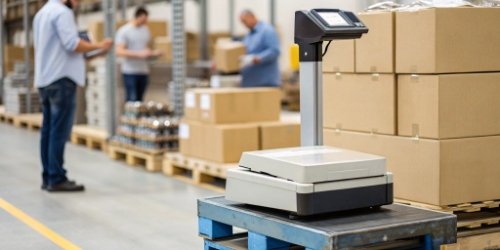
This is where technology changes the game. At Weigherps, we specialize in creating systems that combine these separate steps into one seamless action. Our industrial scales with integrated label printers are designed for this exact purpose. An operator places a product on the scale. The system instantly captures the weight, cross-references it with your product database (SKU), and automatically prints the correct label with all the right information: weight, product name, barcode, price, and more. There's no room for guesswork or manual data entry errors.
Our Solution in Action
We've developed a range of mobile, efficient label-printing weighing scales designed for complex industrial environments. For one of our clients, a wholesaler of various bulk goods, manual errors were causing a nearly 15% return rate on mislabeled packages. After implementing our integrated scales, they were able to reduce manual labeling errors by over 50% within the first three months. The system validates the product before a label is even created. Because we offer OEM/ODM services, we can customize these weighing solutions to fit your specific workflow, whether you're a global brand or a regional retailer. This simple shift from manual to automated processes is the single most effective strategy to protect your business.
Conclusion
Inaccurate labels are a costly drain on your business, but the problem is entirely fixable. By moving away from error-prone manual work and embracing automated weighing and labeling technology, you can protect your profits and your brand.



Comments (0)