
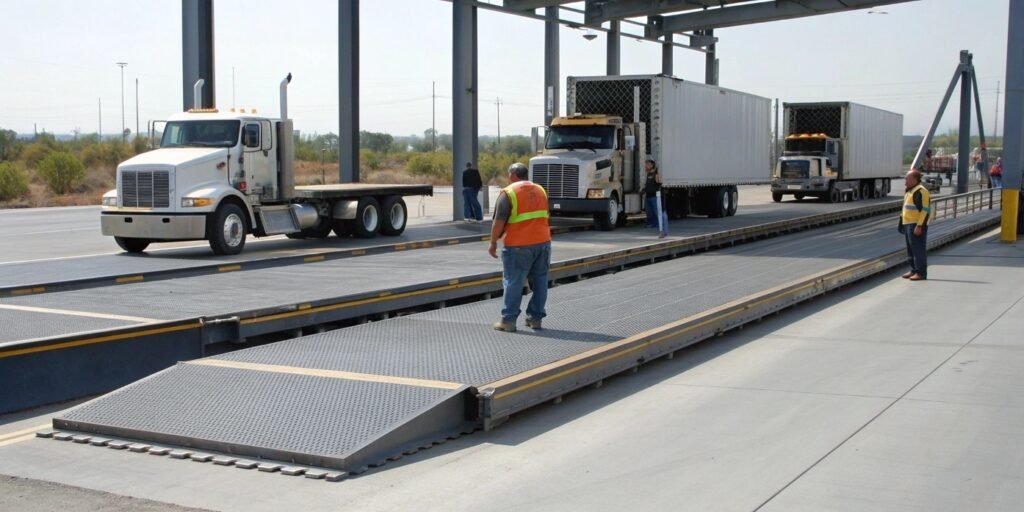
Finding a reliable heavy-duty truck scale can be a challenge. You worry about accuracy, durability, and meeting legal standards. Let us help you understand what the US market has to offer.
Yes, the US market has a wide variety of heavy-duty truck scales. You can find everything from large, permanent steel and concrete deck scales to mobile, portable axle scales. Top brands offer solutions that meet demanding industrial needs and legal for trade requirements.
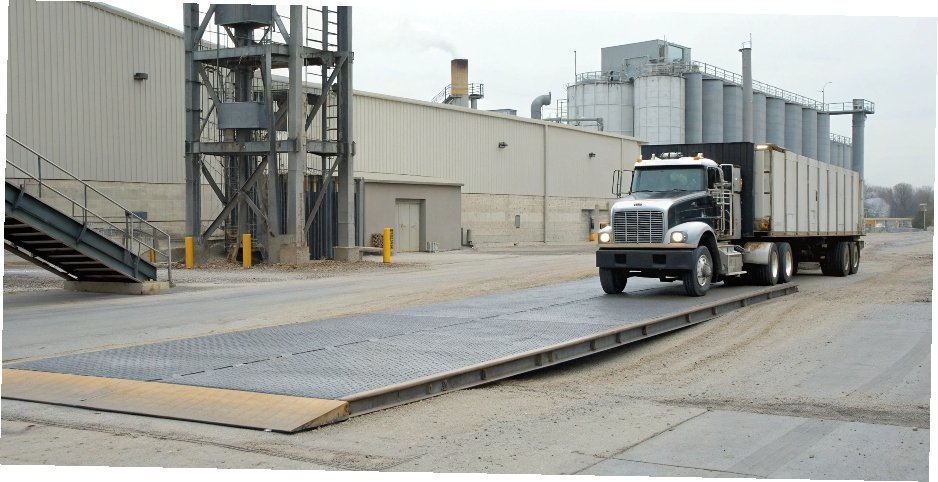
I've spent years helping businesses find the right weighing solutions. The options can seem endless, and making the wrong choice is expensive. But don't worry. Once you understand the key factors, the decision becomes much clearer. Let's break down everything you need to know to make a smart investment for your company.
How do you choose the right heavy-duty truck scale for your business?
Choosing a truck scale feels overwhelming. The wrong choice costs your business money and causes operational headaches. Here is a clear guide to help you select the perfect scale for your specific needs.
To choose the right truck scale, first analyze your business needs. Consider truck volume, the materials you weigh, and your site's environment. Then, evaluate scale types, load cell technology, and software integration capabilities to find a cost-effective and reliable solution that will last for years.
When I work with clients, especially software vendors who need to integrate weighing data, the conversation always starts with their unique operation. One client in the logistics industry almost bought a pit-style scale1 for a leased property, which would have been a disaster. We walked through their needs and realized a modular, pitless scale was a much better fit. It saved them from a huge installation and removal headache.
To help you think it through, let's look at the key decision factors.
Key Factors in Your Decision
You need to balance performance with cost. A scale is a long-term investment, so thinking about future needs is also important. The right choice depends on a few core areas.
| Factor | What to Consider | Why It Matters |
|---|---|---|
| Operational Needs | How many trucks will you weigh per day? What is the maximum weight you need to measure? | High traffic requires a durable steel deck. Heavier loads might need a concrete deck for rigidity. |
| Installation Site | Do you have space for above-ground ramps? Is the ground level? Are there drainage issues? | An above-ground (pitless) scale is cheaper to install. A pit scale saves space but costs more. |
| Material/Deck Type | Should you choose a steel deck or a concrete deck? | Steel decks are faster to install. Concrete decks handle extreme weight and corrosion better. |
| Software Integration | How will the scale connect to your existing systems (ERP, billing software)? | Seamless data flow is critical for efficiency. As a software vendor, this is key for your clients. |
Choosing the right features from the start prevents costly upgrades or replacements later.
What are the top heavy-duty truck scale manufacturers in the USA?
You want a trusted brand for your truck scale. But with so many names out there, how do you know who really makes the best ones? Let's cut through the noise and look at the top players.
The top heavy-duty truck scale manufacturers in the USA include Mettler Toledo, Rice Lake Weighing Systems, and B-TEK. These companies are known for their high-quality products, extensive service networks, and history of compliance with US standards. They offer both standard and custom solutions.
These brands have built strong reputations in the US market. They offer excellent products and reliable local support. However, something many of my clients are surprised to learn is the manufacturing side of the business. For the past 18 years, our company, Weigherps, has been the OEM/ODM manufacturer2 behind some of the components and even entire systems sold by global brands.
Here's a breakdown of what makes these companies stand out, and how we fit into the global supply chain.
Understanding the Market Players
Each major brand has its strengths. Some focus on cutting-edge technology, while others are known for their rugged, no-frills durability.
- Mettler Toledo: Known for high-precision technology like their POWERCELL® load cells. They are a premium choice, often for applications where accuracy3 is the absolute top priority.
- Rice Lake Weighing Systems: A very popular brand with a huge catalog of products. They are known for their durable designs and strong distributor network across the country.
- B-TEK: This company is well-regarded for its focus on heavy-duty, durable scales, especially their Centurion line. They often use very thick steel plates for maximum longevity.
The Global Manufacturing Secret
Many of these American and European brands partner with expert manufacturers in China, like us, to produce their scales. We build products to their exact specifications, meeting all international quality standards like CE. This allows them to offer competitive pricing while maintaining quality. As a software vendor, sourcing directly from a proven OEM like Weigherps gives you a major advantage. You get the same high-quality, reliable hardware but at a much better price point, which improves your profit margins and gives your clients a more cost-effective solution.
What is the total cost to purchase and install a truck weighbridge?
Seeing the price tag on a truck scale is just the beginning. Hidden installation and maintenance costs can quickly ruin your budget. Let's break down the total cost of ownership so you know what to expect.
The total cost to purchase and install a truck weighbridge in the US typically ranges from $40,000 to over $100,000. This price includes the scale hardware, freight, foundation work, installation, calibration, and essential software. The final cost depends heavily on the scale's size, material, and features.
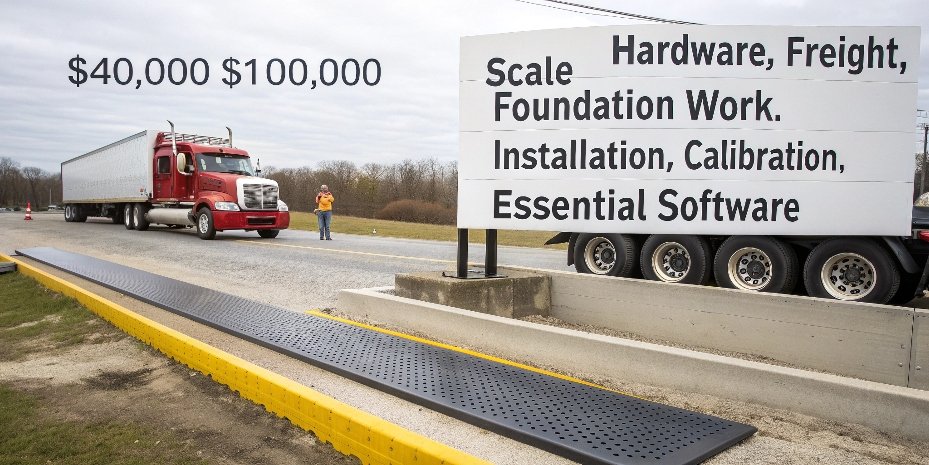
I always advise my clients to look at the total cost of ownership4, not just the initial purchase price. A cheaper scale might cost you more in the long run if it requires frequent repairs or a complex installation. A purchasing manager I worked with once chose a scale that was $5,000 cheaper upfront, but the foundation work required for it ended up costing an extra $15,000. Planning for the full scope of the project from the start is essential for staying on budget.
Here’s a simple table to help you understand where the money goes.
Breakdown of Total Costs
| Cost Component | Typical Price Range | Description |
|---|---|---|
| Scale Hardware | $25,000 - $70,000+ | The price of the weighbridge deck, load cells, junction boxes, and digital indicator. |
| Freight | $2,000 - $8,000 | The cost to ship the large, heavy components of the scale from the factory to your job site. |
| Foundation/Site Work | $10,000 - $30,000+ | Includes excavation, concrete pouring for the foundation slab or pit, and drainage. Varies by location. |
| Installation & Crane | $5,000 - $15,000 | The labor cost for the technical crew to assemble the scale and the crane rental to lift the deck. |
| Calibration & Software | $1,000 - $5,000 | Initial calibration with certified test weights and the cost of any specialized management software. |
| Long-Term Maintenance | ~$500 - $2,000 annually | Includes routine inspections, cleaning, and periodic re-calibration to maintain accuracy and compliance. |
By working directly with an OEM manufacturer, you can significantly lower the "Scale Hardware" cost, which is often the largest single expense. This gives you more budget for a quality installation and software.
What are the legal for trade requirements for vehicle scales in the US?
Using a non-compliant scale for business transactions can lead to big fines and legal trouble. Are you sure your scale meets all the necessary standards? Let's review the key requirements simply.
For a vehicle scale to be "Legal for Trade" in the US, it must have a National Type Evaluation Program (NTEP) Certificate of Conformance. This certificate proves the scale's design meets the accuracy and reliability standards set by Handbook 44, published by the NIST.
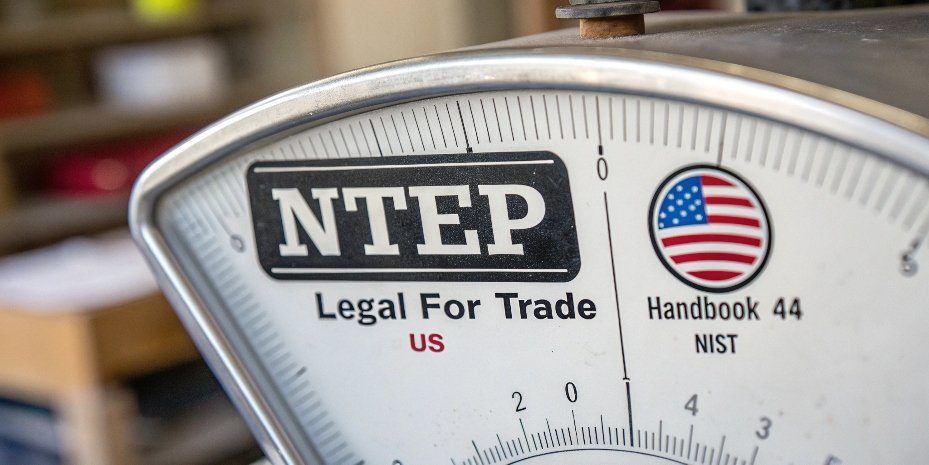
Compliance is not optional if you're buying or selling goods by weight. I had a client in the scrap metal business who was using a non-certified scale. A state inspector discovered it during a random check, and they were fined thousands of dollars and had to shut down weighing operations until they installed a new, certified scale. It was a costly lesson. Making sure your scale is certified from day one is the only way to operate legally and protect your business.
Let’s dive a bit deeper into what these regulations mean for you.
Understanding the Standards
The rules are there to ensure fair trade for everyone. They make sure that a ton of rocks in California weighs the same as a ton of rocks in New York.
- NTEP (National Type Evaluation Program): This is the first step. Before a scale model can be sold as Legal for Trade, its design must go through rigorous testing in a lab. If it passes, it gets an NTEP Certificate. Always ask your supplier for the NTEP certificate number for the scale model you are buying.
- NIST Handbook 445 (H-44): This book contains all the technical rules for weighing and measuring devices. It sets the tolerances for accuracy, how scales must be designed, and how they must perform in real-world conditions. An NTEP certification confirms the scale design meets H-44 rules.
- State and Local Inspectors: After your NTEP-certified scale is installed, a licensed technician must test and calibrate it on-site. Then, an inspector from your state or county's office of Weights and Measures will place it into service. They will come back periodically to re-test it.
As a manufacturer, we design our scales to meet tough international standards like OIML and CE. We work closely with our clients and their software teams to ensure the hardware they source from us is fully prepared to pass local US certification with ease.
Conclusion
Finding the right heavy-duty truck scale in the US is very possible. By understanding your needs, the top players, total costs, and legal rules, you can make a smart, cost-effective investment.
-
Explore the pros and cons of pit-style scales to make an informed decision. ↩
-
Discover how OEM/ODM partnerships can enhance product quality and reduce costs. ↩
-
Understanding accuracy is crucial for ensuring compliance and operational efficiency. ↩
-
Get a comprehensive view of all costs associated with owning a truck scale. ↩
-
Understand the technical rules for weighing devices as outlined in the NIST Handbook. ↩



[…] number on a screen. The scale needs to be a reliable partner in your research. Top-tier brands like Mettler Toledo3 and Sartorius4 offer amazing features, but their cost can be high. At Weigherps, we focus on […]