

Struggling to find a hardware partner? Incompatible scales can devalue your WMS/ERP software, frustrating clients. A reliable label printing scale ensures seamless integration and enhances your offering.
To find a reliable label printing scale, focus on hardware with flexible data output protocols, robust security features, and a proven track record of successful integration. Look for a manufacturer offering strong OEM/ODM support, like us, to ensure compatibility with your WMS/ERP system.

As a software vendor, your reputation is on the line. Bundling your application with subpar hardware is a risk you can't afford. Over my 19 years in this industry, I've seen firsthand how the right hardware partnership can make or break a software solution. It’s not just about the scale; it's about the entire ecosystem working together flawlessly. Let’s explore what truly matters when you're making this crucial choice, so you can offer your clients a complete, powerful, and reliable solution. We'll break down the key features you need to consider.
What Features Should You Consider When Integrating a Label Printing Scale with WMS/ERP Software?
Integrating the wrong scale causes data errors and system conflicts. This frustrates your clients and damages your reputation. Prioritizing key features like data compatibility and security ensures a seamless integration.
When integrating, prioritize scales with versatile connectivity options (like Ethernet, Wi-Fi, RS232), customizable data output formats (JSON, XML), robust security protocols, and an open API or SDK. These features ensure the scale can accurately and securely communicate with any WMS/ERP system.
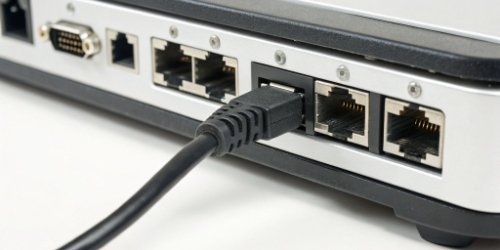
Choosing the right scale goes beyond just weighing. The real challenge, and where we focus our expertise, is ensuring the data journey from the scale to your software is flawless. It must be accurate, fast, and secure. Let’s break down the most critical features.
Data Compatibility and Flexibility
Your WMS/ERP software needs data in a specific format. A rigid scale that only outputs a fixed string is a recipe for disaster. You need a partner whose hardware can be configured to send data just the way your system needs it. This could be a simple weight value or a complex JSON object containing weight, timestamp, unit, and item ID.
Security in Data Transmission
Once the data format is right, you have to protect it. In today's world, any data sent over a network is a potential target. We ensure our scales support modern security protocols to prevent data interception or tampering. This is crucial for maintaining inventory accuracy1 and protecting your client's sensitive operational data.
| Feature | Why It Matters for a Software Vendor |
|---|---|
| Customizable Data Output | Ensures plug-and-play compatibility with your software's data intake requirements. |
| Multiple Connectivity Options | Provides flexibility for different client environments (wired, wireless, legacy). |
| Secure Transmission Protocols | Protects data integrity2 and security, building trust with your end-users. |
| Open API/SDK | Simplifies the development process for your team, reducing integration time and cost. |
How Can a Label Printing Scale Enhance Your WMS/ERP System's Efficiency?
Manual data entry is slow and creates costly errors in your client's WMS. These mistakes lead to inventory chaos and shipping delays. An integrated scale automates data capture, boosting efficiency.
A label printing scale enhances your system by automating weight and data capture directly at the source. This eliminates manual entry errors, accelerates processes like receiving and shipping, and provides real-time, accurate data for inventory management, ensuring your WMS/ERP operates with maximum efficiency.

I remember visiting a client's warehouse years ago. They had a top-tier WMS, but their process was bottlenecked at the receiving dock. A worker would weigh a pallet, scribble the weight on a notepad, walk to a terminal, and type it in. Your powerful software was being held back by a simple, manual step.
Eliminating the Bottleneck
An integrated label printing scale3 solves this instantly. The moment a package is weighed, the data is sent directly to your WMS/ERP. The scale then prints a label with a barcode containing all necessary information (weight, product ID, date). This single action replaces several manual steps, reducing the time per task from minutes to seconds.
From Raw Data to Actionable Insights
This isn't just about speed. It's about data quality. With automated input, your system gets 100% accurate, real-time data4. This empowers your software's advanced features—like real-time inventory tracking, accurate shipping cost calculation, and production yield analysis. Your software becomes more powerful because its data source is flawless. By providing this efficiency boost, you make your software indispensable to your clients.
What Are the Best Practices for Choosing a Label Printing Scale Compatible with ERP Software?
Choosing a scale on price alone often creates future compatibility nightmares. This means hidden costs and support headaches for your team. The best practice is to choose a long-term partner.
The best practice is to partner with a manufacturer, not just buy a product. Choose a provider with proven OEM/ODM experience, strong technical support, and the ability to customize firmware. Always conduct a proof-of-concept (POC) to validate compatibility and data flow with your specific ERP system.

As a software vendor, your success depends on the entire solution you provide, including the hardware. You aren't just buying a scale; you are forming a partnership. After nearly two decades in this business, I can tell you that the support behind the product is more important than any single feature on a spec sheet.
Look Beyond the Spec Sheet
Anyone can sell you a box. You need a partner who understands your software. Does the manufacturer have a dedicated technical team? Can they customize the scale’s firmware to solve a unique integration challenge? At Weigherps, our business is built on this kind of deep collaboration. We work with your developers to ensure our hardware speaks the same language as your software.
The Power of a Proof-of-Concept (POC)
Never commit based on a brochure. The most critical best practice is to run a POC. We encourage this. Get a sample unit, connect it to your development environment, and test the entire workflow. This simple step de-risks your purchase and proves the value of the integration before you offer it to your customers.
| Best Practice | Actionable Step |
|---|---|
| Evaluate the Partner | Review their technical support5 structure and OEM/ODM case studies. |
| Request a POC | Test a sample unit with your actual WMS/ERP software. |
| Discuss Customization | Ask if they can modify firmware or data outputs for your needs. |
| Check Certifications | Ensure the hardware (e.g., CE) meets your target market's standards. |
How Do Label Printing Scales Benefit Supply Chain Management in WMS/ERP Integration?
Blind spots on the warehouse floor disrupt your supply chain. This leads to costly overstock and slow responses to problems. Integrated scales provide real-time data, creating a transparent, agile supply chain.
Label printing scales benefit supply chain management by providing accurate, real-time data at every key point: receiving, production, and shipping. This data, fed into a WMS/ERP, improves inventory accuracy, enables precise track-and-trace, optimizes logistics, and enhances overall visibility from end to end.

A modern supply chain is built on data. Without accurate data from the ground level, even the most sophisticated WMS/ERP is just guessing. An integrated label printing scale is the first link in that data chain, capturing critical information at the very moment goods enter or leave a facility.
Creating a Single Source of Truth
When a scale automatically sends weight data to your ERP, it establishes a "single source of truth." There is no debate about receiving quantities or shipping weights. This eliminates disputes with suppliers and customers. For your clients in regulated industries like food or pharmaceuticals, this accurate data trail is essential for compliance and track-and-trace6 requirements.
Enabling Advanced Logistics
This reliable data also unlocks more advanced strategies. Your WMS can use precise shipping weights to optimize pallet and truck loads, reducing freight costs. It can track production yields in real-time to adjust purchasing forecasts. By integrating a reliable scale, you’re not just selling a feature; you’re giving your clients the tools for a smarter, more resilient, and more profitable supply chain.
Conclusion
The right label printing scale is more than hardware; it's a strategic partnership. Integrating a reliable, compatible scale enhances your software, empowers your clients, and drives business growth for everyone.
-
Find out how integrating scales can enhance your inventory accuracy and reduce errors. ↩
-
Explore measures to maintain data integrity and build trust with your clients. ↩
-
Explore this link to find top-rated label printing scales that ensure seamless integration with your WMS/ERP. ↩
-
Explore the significance of real-time data for effective inventory and supply chain management. ↩
-
Learn about the key aspects of technical support that can aid your integration efforts. ↩
-
Learn about the advantages of implementing track-and-trace systems for compliance. ↩


Comments (0)