
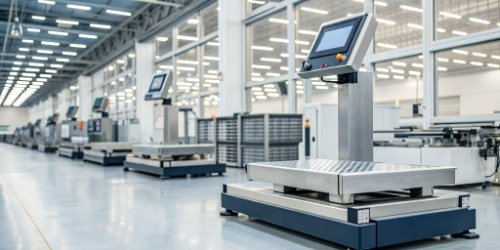
Your current weighing systems might be holding you back from making smart decisions. It's time to get ready for the data-driven future of industrial weighing to stay competitive.
To prepare, focus on upgrading to IoT-enabled scales for real-time data collection. This move enables precise inventory management, optimizes production, and fuels smarter business decisions. A modern, integrated scale is the most cost-effective first step towards unlocking your company's potential.

The shift to a data-driven approach1 can seem like a huge task. You might wonder where to even begin. Don't worry, I've been in this industry for 19 years and have seen these changes firsthand. Let's break down the essential steps you need to take to ensure your business is not just ready, but thriving in this new era.
What Steps Should You Take to Prepare for a Data-Driven Future in Industrial Weighing?
Feeling stuck with outdated weighing equipment? Without a clear plan, upgrading can be a huge risk. Follow these simple steps to confidently move your operations into the future.
Start by auditing your current systems to identify gaps. Next, invest in IoT-integrated scales for real-time data capture. Then, train your team to use the new data effectively. These foundational steps will build the confidence you need to make smart, data-backed business decisions.

Taking a structured approach is far better than making random upgrades. It saves you time and money. For the last 19 years, I've helped clients navigate this path, and it always starts with understanding what you have.
Step 1: Audit and Assess
First, look at your existing weighing systems. Are they connected to your network? Can they share data automatically? If the answer is no, you have found your starting point. You need to know your weaknesses before you can make them strengths.
Step 2: Strategic Investment
Next, you need to invest wisely. Large companies might install a complete weighing solution. But for businesses with limited budgets, a modern, IoT-integrated scale is the best option. It provides the accurate data you need without a massive upfront cost. As your partner, we provide custom solutions2 that fit your budget and goals.
Step 3: Implementation and Training
Finally, hardware is only half the battle. Your team needs to understand how to use the data. Proper training ensures the new technology is used to its full potential, turning information into action.
| Old System Feature | Modern System Capability |
|---|---|
| Manual Data Entry | Automated Real-Time Data Capture |
| Isolated Operation | Network Integration (IoT) |
| Basic Weight Display | Data Analysis & Reporting |
| Reactive Maintenance | Predictive Maintenance Alerts |
How Is Big Data Transforming the Landscape of Industrial Weighing Systems?
Are your scales just giving you numbers? This isolated data isn't enough anymore. See how big data transforms basic measurements into a powerful competitive advantage for your entire operation.
Big data transforms industrial weighing from a simple measurement tool into a strategic asset. It enables predictive maintenance, optimizes supply chains by tracking material flow, and improves quality control by identifying trends. This shift gives you the power to make proactive, not reactive, decisions.
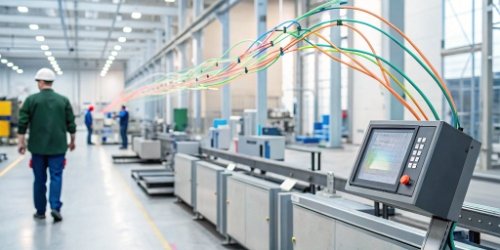
The change is profound. We've moved from scales that simply tell you "what" to systems that can help explain "why." This transformation is not just for huge corporations anymore. With IoT technology, these capabilities are now accessible to more businesses.
From Measurement to Management
A modern scale doesn't just measure weight; it generates a constant stream of data. When you collect and analyze this data over time, it becomes business intelligence. You can see patterns in your production, track material usage with incredible accuracy, and monitor your equipment's health. For example, my team helps clients set up systems that automatically flag deviations from a standard weight, ensuring consistent product quality.
Predictive Maintenance and Supply Chain Visibility
Instead of waiting for a scale to break, big data can identify small performance changes that predict a future failure. This lets you schedule maintenance before it causes costly downtime. It also provides a clear view of your supply chain. You can track raw materials from the moment they arrive to the moment a finished product ships, all based on real-time weight data.
What Role Does Data Analytics Play in the Future of Industrial Weighing?
You've collected tons of data, but it feels like a puzzle. Without the right tools, it's just noise. Data analytics is the key to unlocking profitable insights.
Data analytics interprets the information your scales collect. It helps identify production bottlenecks, reduce waste by tracking material usage, and forecast demand more accurately. Essentially, analytics turns your weighing data into a clear roadmap for improving efficiency and increasing your bottom line.
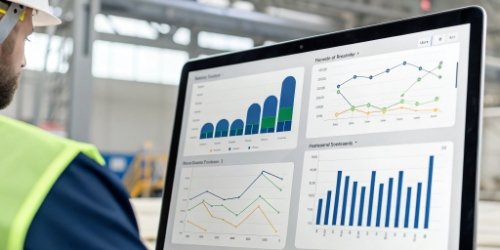
Think of data analytics3 as the brain of your weighing operation. The scale is the sensor, gathering information, but analytics is what makes sense of it all. As a manufacturer specializing in custom solutions, I've seen firsthand how powerful this can be. It's where the real return on investment comes from.
Uncovering Hidden Inefficiencies
Analytics can reveal problems you didn't even know you had. For instance, by analyzing thousands of weight readings from a packaging line, you might discover you are consistently over-filling each box by a tiny amount. This small overage, when multiplied by thousands of units, adds up to significant material loss and costs you money.
Turning Data into Actionable Insights
The goal of analytics is to create insights that lead to action. It isn't just about making charts; it's about making better business decisions. A good system will translate raw data points into clear recommendations.
| Data Point | Actionable Insight |
|---|---|
| Gradual weight decrease in a raw material bin | Schedule a timely reorder to prevent a line stoppage. |
| Frequent small overages in finished packages | Recalibrate the filling machine to save material cost. |
| Spike in rejected product weight for one batch | Investigate that specific batch for quality control issues. |
How Can Companies Adapt to the Digital Transformation of Weighing Technologies?
Worried about the complexity of digital transformation? The fear of disruption can be paralyzing. Let's explore how a smart, phased approach makes adapting easy and affordable.
Companies can adapt by starting small with a pilot project, such as upgrading a single production line with an IoT scale. Choose a partner who provides scalable solutions and technical support. This allows you to prove ROI and build momentum for a full-scale digital transformation.

Adapting to new technology is a journey, not a single event. The key is to avoid trying to do everything at once. From my experience helping clients globally, a step-by-step process is the most successful and least disruptive way to modernize your operations.
Start with a Pilot Program
Instead of overhauling your entire factory, pick one area to improve. Install a single IoT-integrated scale on a critical production line. Use this pilot project4 to learn the technology, train a small team, and measure the results. This small win will demonstrate the value of the investment to your leadership and make it easier to get approval for a wider rollout. It proves the concept with minimal risk.
Choose the Right Partner
You don't have to do this alone. A good partner is crucial. You need someone who understands industrial weighing and can provide a customized solution that meets your specific needs. As an OEM/ODM manufacturer, my company works with clients to build systems that fit their market and compliance needs, like CE certification. We provide the technical support5 and after-sales service to ensure your success long after the installation is complete.
Conclusion
The future of industrial weighing is data-driven. Accurate data gives you the confidence to make smart decisions. An IoT-integrated scale is your most effective step towards that future.
-
Understand the importance of a data-driven approach for staying competitive in today's market. ↩
-
Discover how custom solutions can meet your specific operational needs and challenges. ↩
-
Learn how data analytics can transform raw data into actionable insights for your business. ↩
-
Learn the best practices for running a pilot project to test new technologies effectively. ↩
-
Understand the importance of ongoing technical support for successful technology adoption. ↩



Comments (0)