
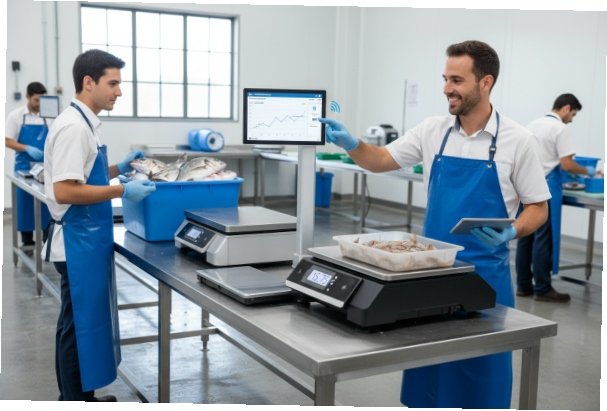
Inefficient weighing wastes time and money. Manual errors pile up, and slow processes create bottlenecks. AI PC-based scales automate and streamline these tasks, boosting your overall operational efficiency.
An AI PC-based scale is a smart weighing system that integrates artificial intelligence to automate tasks like object recognition, quality control, and data logging. This technology helps you save time and effort, ultimately leading to more accurate and efficient operations for your business.
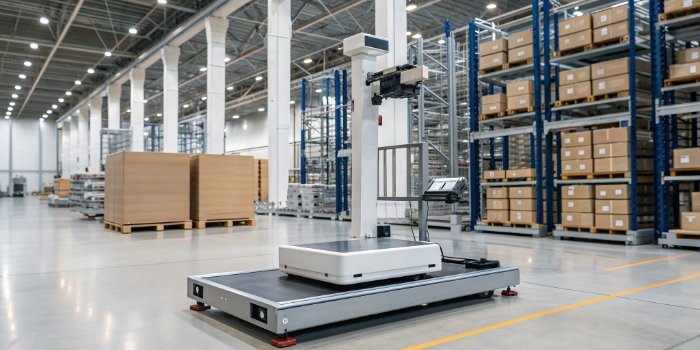
This might sound like a huge leap from the scales you're used to. You are probably wondering what this technology actually does and how it could fit into your existing workflow. The idea of "AI" can seem complex, but its practical application in weighing is straightforward and powerful. It’s all about making your work easier, faster, and more reliable. Let's break down exactly what these scales are and how they can revolutionize your business.
What is an AI scale?
Are you tired of manual data entry errors and slow weighing processes? An AI scale automates these tedious tasks, eliminating costly mistakes and speeding up your entire workflow.
An AI scale is a smart weighing device using artificial intelligence to automate key functions. Through features like computer vision and advanced data analysis, it can identify objects, check quality, and log data instantly, making your weighing process much faster and more reliable than ever before.
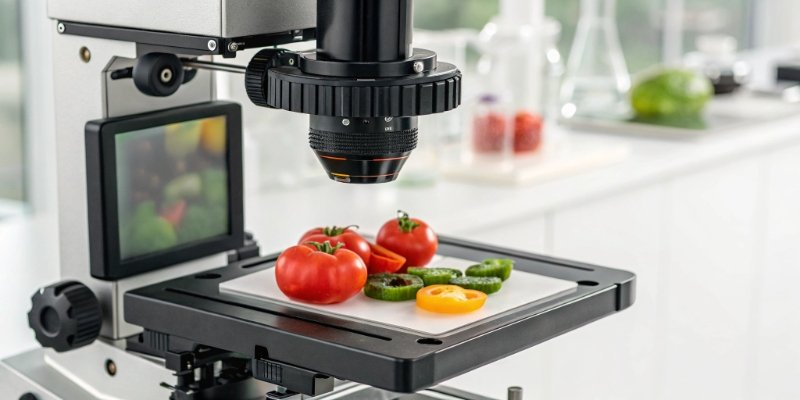
An AI scale is more than just a device that measures weight; it's an intelligent partner in your operations. Think of the scales you see every day. My team and I have developed solutions for many industries, and we see the same patterns. For instance, a traditional supermarket checkout1 requires a cashier to manually look up a code for every piece of fruit or vegetable. This is slow and prone to errors. An AI scale, however, uses a camera to instantly identify the item, weigh it, and calculate the price. This same principle applies to more complex industrial settings.
As a manufacturer, we've helped clients implement these systems in various ways.
Common AI Scale Applications
| Application Area | Traditional Method | AI Scale2 Method |
|---|---|---|
| Supermarket Checkout | Manual produce lookup by cashier. | Scale's camera auto-identifies items. |
| Canteen Receiving | Staff manually check delivery items against a paper list. | Scale identifies items, weighs them, and matches against digital purchase order. |
| Food Safety Sampling | Staff manually log sample details, weight, and time. | Scale automates logging, adds a timestamp, and archives data for compliance. |
This automation3 drastically reduces human error and frees up your staff to focus on more valuable tasks. It’s not about replacing people but empowering them with better tools.
Which PC is best for AI?
Worried that your current hardware can't handle demanding AI tasks? Choosing the wrong PC for an AI scale system leads to slow performance, creating bottlenecks that defeat the purpose.
For an AI PC-based scale, the best computer needs a powerful CPU and, most importantly, a dedicated GPU. Graphics cards like NVIDIA's RTX series are essential for processing complex AI models, especially for computer vision. Ample RAM and fast storage are also critical for smooth operation.
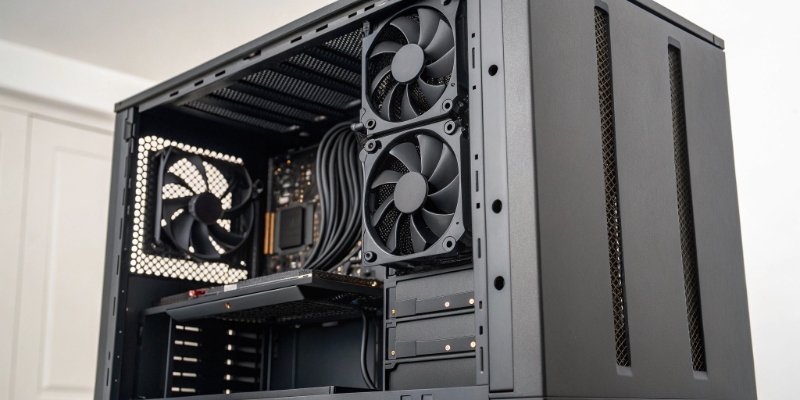
When we work with clients, a common concern is the hardware needed to run everything. After 19 years in this business, I can tell you that the PC is the brain of the AI weighing system. The scale provides the data, but the PC does the heavy lifting. The choice of PC depends entirely on the AI task's complexity. For simple data analysis, a standard industrial PC4 might be enough. However, for real-time object recognition5 from a video stream, you need more power. The key component is the Graphics Processing Unit (GPU6). While a CPU handles general tasks, a GPU excels at performing many calculations at once, which is exactly what modern AI models require.
Recommended PC Specifications for AI Scales
| AI Intensity | CPU (Minimum) | GPU (Recommended) | RAM | Use Case Example |
|---|---|---|---|---|
| Low | Intel Core i5 / AMD Ryzen 5 | Integrated Graphics | 16 GB | Simple data logging7 and analysis |
| Medium | Intel Core i7 / AMD Ryzen 7 | NVIDIA GTX/RTX 3050 | 32 GB | Image recognition for simple objects |
| High | Intel Core i9 / AMD Ryzen 9 | NVIDIA RTX 3070 or higher | 64 GB | Real-time video analysis, quality control8 |
As a solutions provider, we don't just sell you a scale. We analyze your specific needs to recommend and provide an integrated system where the hardware and our custom software work together flawlessly.
Is Scale AI free?
Are you confused by the different "Scale AI" products you see online? You might be thinking of the well-known data labeling company, which has significant costs. This is completely different.
There is a common misunderstanding here. "Scale AI" is a famous company that provides data annotation services, and it is not free. The AI software integrated into our PC-based scales, however, is part of the complete product package you purchase from a manufacturer like us.

I've had conversations with many purchasing managers who get this mixed up, and it's an important distinction. Scale AI, Inc., is a unicorn startup in Silicon Valley that helps other companies label massive datasets to train AI models. Their service is essential but is a high-cost, ongoing operational expense. When we at Weigherps talk about an "AI Scale," we are talking about a different thing. We provide a finished product. The "AI" is the intelligence we build into our weighing systems to perform a specific job for you. Whether it's identifying products, checking for defects, or automating logistics, the AI is part of the solution we deliver.
The cost you pay is for a complete, functional system—the industrial scale hardware plus the specialized software designed for your unique requirements. There are no hidden fees or subscriptions to a separate AI service. Our goal is to provide a targeted and cost-effective weighing solution that delivers a clear return on investment. You are buying a tool, not subscribing to a service. It's a one-time capital expense that improves your efficiency for years to come.
Can AI control a PC?
Does the idea of AI controlling your systems make you feel uneasy? It might sound like science fiction, but in an industrial context, it simply means automating specific, predefined tasks to help you.
Yes, AI can control certain functions on a PC, but not in a general, self-aware way. In our systems, AI software runs on a PC to automate processes. For example, it can record data, direct a conveyor belt based on weight, or flag an issue for a human operator.
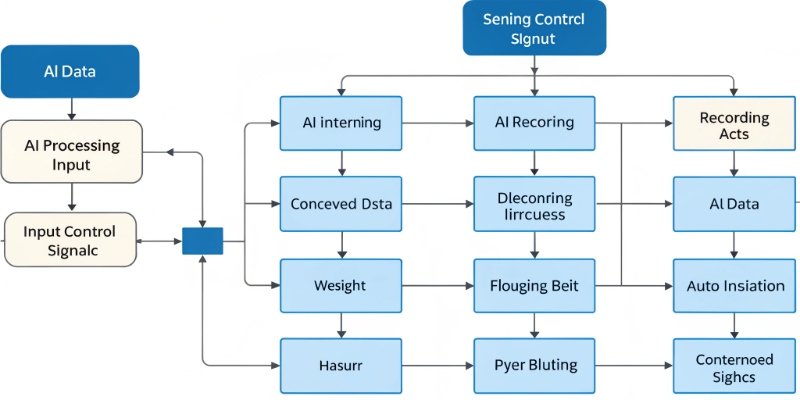
Let me give you a practical example based on a custom system we recently built. A client in the recycling industry9 needed to sort different types of materials. A standard scale could only give them the weight. We integrated an AI PC-based scale into their conveyor line. The AI's job is very specific. It doesn't "think" for itself; it follows rules we programmed.
Here is how the control flow works:
- Input: An item moves onto the scale. A camera takes a picture and the scale measures the weight. This data is sent to the PC.
- AI Processing: The AI software on the PC analyzes the image to identify the material (e.g., plastic, metal). It then checks this against a set of rules.
- Output (Control): Based on the rule, the AI sends a command. For instance:
If material is plastic, send signal to pneumatic arm 1.If material is metal, send signal to pneumatic arm 2.
This is AI "control." It's a closed-loop, secure system designed to execute a task faster and more accurately than a human could. For our clients, particularly technical directors, security and stability are top priorities. This form of automation happens within a controlled environment that we design and test extensively to ensure it is reliable and safe, meeting all enterprise information security10 requirements.
Conclusion
AI PC-based scales are revolutionizing weighing by automating tasks, improving accuracy, and boosting efficiency. This technology is a smart investment for future growth and a significant competitive advantage.
-
Explore how AI can streamline checkout processes, reducing wait times and errors. ↩
-
Understand the unique features of AI scales and their advantages over conventional weighing methods. ↩
-
Explore the benefits of automation in various industries and its impact on productivity. ↩
-
Get insights on the ideal specifications for an industrial PC to support AI functionalities. ↩
-
Discover the technology behind object recognition and its transformative impact on various industries. ↩
-
Discover why a powerful GPU is essential for running complex AI models effectively. ↩
-
Understand the significance of data logging in operational efficiency and compliance. ↩
-
Find out how AI enhances quality control, ensuring better product standards and compliance. ↩
-
Find out how AI is revolutionizing the recycling industry through improved sorting and efficiency. ↩
-
Understand the importance of security in AI systems and how to implement best practices. ↩


Comments (0)