

Your team is still scribbling down weights on paper. This slow, manual process is prone to costly errors and lost data, creating headaches you don’t need in your daily operations.
Relying on pen and paper in the digital age severely damages efficiency, invites human error, and lacks data security. Modern businesses thrive on accurate, traceable data, which manual methods simply cannot provide. A digital weighing solution is the key to staying competitive and secure.

I’ve been in the industrial weighing business for nearly two decades. I’ve visited countless facilities and seen the same story play out. Operations run smoothly until a single, handwritten number is misread. A ‘6’ becomes a ‘0’, or a decimal point is misplaced. Suddenly, inventory is off, a shipment is wrong, and a client is unhappy. This tiny mistake, born from an outdated process, creates a massive ripple effect of problems. It’s a preventable issue, and I want to walk you through exactly why moving away from pen and paper isn’t just an upgrade, but a necessity for survival and growth. Let’s break down the real-world impact.
What Are the Drawbacks of Using Pen and Paper in Modern Digital Workflows?
You believe your manual records get the job done. But a smudged number or a lost sheet of paper can cause chaos in your supply chain, leading to expensive mistakes.
The main drawbacks of pen and paper are inefficiency, high error rates, no data security, difficult traceability, and physical storage costs. These issues directly hurt your productivity and profit, making manual methods obsolete in today’s digital world.
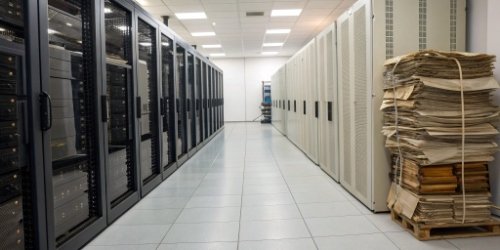
In my 19 years in this industry, I have seen how these drawbacks play out in the real world. They aren’t just theoretical problems; they cost businesses real money. Let’s look closer at the core issues.
The High Cost of Human Error
Handwriting is inconsistent. A ‘1’ can look like a ‘7’. A tired worker might transpose numbers. These aren’t huge moral failures; they are simple human mistakes that happen every day. In a manual system, there are no safeguards. Our integrated digital weighing solution1s capture data directly from the scale, eliminating the risk of transcription errors completely. The weight on the scale is the weight in your system.
Security and Traceability Nightmares
Paper records are incredibly vulnerable. They can be easily lost, damaged by water or fire, or even intentionally altered to hide a mistake. I once worked with a client who discovered an employee was fudging weight records to cover up material theft. With a digital system, every entry is timestamped and logged. The data is secure and cannot be easily changed, providing a clear, traceable audit trail2. This is essential for quality control3 and accountability.
The Hidden Costs of Physical Records
Think about the space your paper records take up. Filing cabinets, archive rooms—that’s valuable real estate. Now add the cost of the paper itself, ink, and the time your employees spend filing, searching for, and managing these documents. It all adds up.
| Feature | Pen & Paper | Digital Solution |
|---|---|---|
| Accuracy | Low (Prone to human error4) | High (Direct data capture) |
| Security | Very Low (Easy to alter or lose) | Very High (Encrypted, timestamped) |
| Traceability | Difficult and time-consuming | Instant and comprehensive |
| Efficiency | Very Low (Manual data entry) | Very High (Automated workflow) |
How Can Transitioning to Digital Tools Enhance Business Efficiency?
Your team spends hours every day just recording and re-entering weighing data. This wasted time could be used for valuable tasks, but instead, it is slowing down your entire operation.
Digital tools boost efficiency by automating data capture, removing manual entry, and connecting with other business systems like an ERP. This speeds up workflows, cuts labor costs, and gives you real-time data for faster decision-making.

When we design a weighing solution for a client, our primary goal is to remove friction. Manual processes are full of friction. A worker weighs an item, writes the number down, walks it over to a computer, and types it in. Each step is a point of potential delay and error. A digital workflow transforms this process entirely.
Automating the Weighing Process
With an integrated system, the process is simple and immediate. The item is placed on the scale. The operator confirms the reading on a terminal. With a few clicks, the data is saved, and a standardized label with a barcode, weight, date, and other critical information is printed. Our clients are often shocked by how much time this saves. What used to take several minutes per item now takes only a few seconds.
Seamless Data Integration
The real power comes when your weighing data talks to your other systems. Our IoT electronic scales can send data directly to your inventory management software5 (WMS) or enterprise resource planning (ERP)6 system. This means your stock levels are updated in real-time, purchase orders can be generated automatically, and your entire supply chain becomes more responsive. There is no more end-of-day manual data entry marathon.
Real-Time Insights for Better Decisions
When your data is digital and centralized, you can see what’s happening in your business right now, not last week. Managers can view production output, track material usage, and identify bottlenecks from their desks. This allows for quick, informed decisions that can improve productivity and profitability on the fly. This is how modern businesses gain a competitive edge7.
What Benefits Do Digital Solutions Offer Over Traditional Record-Keeping Methods?
You might be thinking about going digital but are not sure of the real benefits. Sticking with the old way feels safe, but it means you are losing out on major advantages.
Digital solutions provide much better accuracy by removing human error, stronger security with records that are hard to tamper with, and full traceability for audits. They also offer central data access and lower long-term costs.
The benefits of a digital shift8 go far beyond just being faster. It fundamentally changes the quality and reliability of your entire operation. For our clients, who are often software vendors or technical leaders, these concrete benefits are what justify the investment.
Unmatched Accuracy and Consistency
Digital systems don’t have bad days. They don’t get tired. They record the exact weight every single time. This consistency is crucial, especially in industries with tight tolerances or high-value materials. Furthermore, our systems allow you to create standardized label formats. This means every label for a specific product looks the same, with the same information in the same place. It eliminates confusion and streamlines a customer’s receiving process.
Fortified Data Security and Traceability
I touched on this before, but it’s worth repeating. Digital data is secure data. Our systems create a permanent, unchangeable record for every transaction. If there’s ever a quality dispute or a need for an audit, you can pull up the exact record in seconds. You can trace a finished product all the way back to the raw materials used, with weight data to back it up. This level of traceability9 is simply impossible with a paper-based system. It also helps our clients meet international standards, like CE, because their processes are verifiable.
Long-Term Cost Savings
While there is an initial investment, a digital solution pays for itself over time. You save on labor costs from reduced manual entry. You reduce losses from inaccurate shipments or inventory counts10. You save on the physical costs of storing paper. More importantly, you gain the ability to make better, data-driven decisions that increase overall profitability. We see it as an investment in a more efficient and profitable future.
How Does Reliance on Manual Processes Affect Organizational Growth in the Digital Era?
Is your business growth starting to slow down? You might not realize it, but old manual processes could be the anchor holding you back from scaling up your operations effectively.
Relying on manual processes stops growth by creating bottlenecks, making it hard to scale, and preventing data-driven planning. It makes a business slow and unable to compete, which limits its ability to grow and make more money.

This is the big-picture question. Efficiency and accuracy are great, but how do they translate to growth? In my experience, the companies that thrive are the ones that build scalable systems. Manual processes, by their very nature, are not scalable.
The Scalability Ceiling
If your orders double, you can’t just hire twice as many people to write down weights. The process becomes chaotic, error rates skyrocket, and your warehouse gets clogged. A digital system, however, can handle a massive increase in volume with ease. The process remains the same whether you are weighing 100 items a day or 10,000. It removes the operational ceiling that holds so many businesses back. You can grow your sales confidently, knowing your operations can keep up.
Hindering Strategic Decision-Making
To grow, you need a strategy. And a good strategy is built on good data. With piles of paper records, you have no real insight into your operations. You’re guessing. With a digital weighing system, you have a goldmine of data. You can analyze throughput, identify your most efficient production lines, track material waste, and forecast inventory needs. This is the information you need to make smart strategic decisions that fuel growth, rather than just reacting to daily problems.
Falling Behind the Competition
Your competitors are getting smarter and faster. If they have digitized their operations, they can process orders more quickly, with fewer errors, and at a lower cost than you can. They can offer their customers better service and more reliability. Our vision at Weigherps is to empower our customers to make that quantum leap and become leaders in their field. Sticking with pen and paper in a digital world is like choosing to run a race with your legs tied together.
Conclusion
Switching from pen and paper to a digital weighing solution is essential for accuracy, efficiency, and growth. It’s time to make this change for a more secure and profitable future.
-
Explore how digital weighing solutions enhance accuracy and efficiency in operations. ↩
-
Understand the importance of maintaining a clear audit trail for compliance. ↩
-
Explore how digital tools can enhance quality control measures in production. ↩
-
Learn strategies to minimize human error and improve data integrity in your processes. ↩
-
Get insights on essential features that can optimize your inventory management. ↩
-
Discover how ERP systems can integrate and streamline business operations. ↩
-
Discover effective strategies to stay ahead of the competition in your industry. ↩
-
Explore the transformative benefits of transitioning to digital operations. ↩
-
Understand the significance of traceability for quality control and compliance. ↩
-
Find out methods to enhance the accuracy of your inventory management. ↩



Comments (0)