

Inaccurate measurements can ruin your results and waste valuable materials. It's frustrating when a simple button press is the only thing standing between precision and failure.
The Zero button sets the scale's true starting point when the platform is empty. The Tare button subtracts the weight of a container, allowing you to measure only the ingredients you add. Use Zero first, then use Tare for your container.
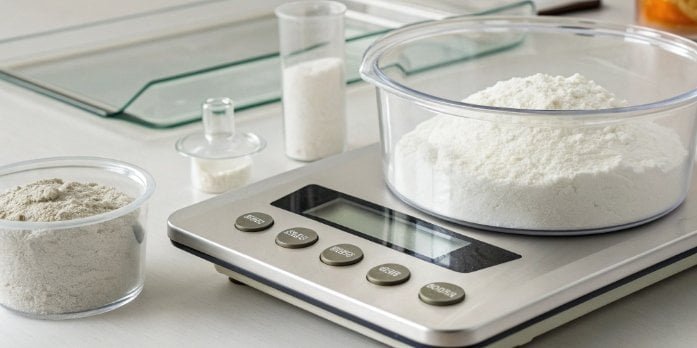
This small difference might seem basic, but it's the foundation of all accurate weighing1. I've seen this simple mistake cause big problems in labs, workshops, and even kitchens. It's a critical skill to master. Let's look at why this matters in different situations and how you can get it right every time, ensuring your measurements are always perfect.
Need the Ultimate Cheat Sheet for Using a Weighing Scale Correctly?
Are you ever confused by the buttons on your scale? Making a mistake can ruin your work. Here is a simple guide to master Zero, Tare, and Calibration for perfect results.
Always Zero an empty scale to set your baseline. Use Tare after placing a container to measure only the contents. Calibrate your scale regularly with a certified weight to confirm its overall accuracy. This simple sequence ensures your measurements are always reliable.
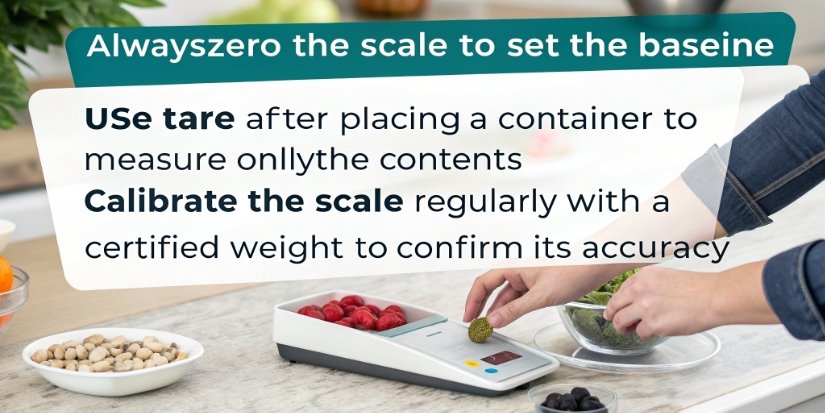
These three functions—Zero, Tare, and Calibrate—are the pillars of accurate measurement, but they each do a very different job. As someone who has worked with industrial scales at Weigherps for years, I see how important it is to understand these basics. Think of it like this:
Zero: Your Starting Line
The Zero function establishes the true zero point. You should only press it when the scale is completely empty. It tells the scale, "This empty state is our starting point." This is useful for correcting for small drifts caused by temperature changes or dust settling on the platform. It's the first thing you do.
Tare: Measuring What's Inside
The Tare function is for convenience. It ignores the weight of a container. You place your beaker, bowl, or box on the scale, press Tare, and the display goes back to zero. Now, you can measure only the substance you add. It's a temporary zero point that includes the container's weight.
Calibrate: The Ultimate Truth Test
Calibration2 is completely different. It checks the scale’s fundamental accuracy across its entire weighing range. You use a special, certified weight to test and adjust the scale. Zero and Tare only set a starting point, but Calibration ensures the scale's measurements are correct from 1 gram to its maximum capacity.
| Function | When to Use | Purpose |
|---|---|---|
| Zero | On an empty scale platform | Sets the true zero point |
| Tare | After placing a container | Ignores container weight |
| Calibrate | Periodically (e.g., monthly) | Verifies overall scale accuracy3 |
Perfecting Your Pour-Over: How Do You Use Tare and Zero on a Coffee Scale?
Your coffee tastes different every day, even when you follow the same recipe. This inconsistency could come from your weighing method. Getting Zero and Tare wrong ruins your coffee-to-water ratio.
First, turn on your scale and press Zero to ensure it reads 0.0g. Place your empty brewer and filter, then press Tare. This ignores their weight. Now you can add your coffee grounds for a perfect measurement. Tare again before adding water.
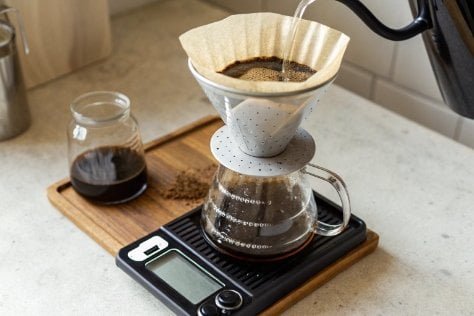
Making a great cup of coffee is all about repeatable precision. The Tare button4 is your best friend here. I remember when I first started getting serious about my morning coffee. I thought just weighing the beans was enough, but my brews were all over the place. Then I realized I was forgetting to Tare at crucial moments. Using the scale correctly transformed my coffee from a game of chance to a reliable science. Here's the simple workflow I now follow every single day.
Step 1: Set Your Foundation
Before anything touches the scale, turn it on and press Zero. This ensures your starting point is accurate. Any little bit of dust or a change in temperature can throw it off, so this is a crucial first step.
Step 2: Measure Your Beans
Next, place your empty brewing device, like a Hario V60 with its paper filter, on the scale. The display will show its weight. Now, press Tare. The screen will reset to 0.0. This step is what allows you to measure only the coffee grounds, not the equipment. Add your beans until you hit your target weight, for example, 20 grams.
Step 3: Control Your Pour
After adding your grounds, press Tare one more time. The scale will again reset to 0.0. Now you are ready to pour your water. As you pour, the scale will only show the weight of the water you are adding. This allows you to hit your exact water-to-coffee ratio, like 320 grams of water for 20 grams of coffee, giving you that perfect brew.
Jewelry & Metalsmithing: Why is Knowing Tare vs. Zero Crucial for Accuracy?
When you work with precious metals, every fraction of a gram matters. A tiny weighing error is not just a mistake, it is a costly one. You risk losing money or compromising quality.
In jewelry, Zero sets the clean baseline before you begin. Tare allows you to weigh materials in a crucible without including the crucible's weight. This ensures your alloy ratios and final product weights are exact, preventing material waste and ensuring purity.
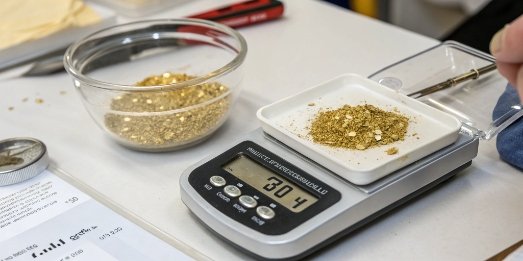
In my 18 years in the weighing industry, I have seen that nowhere is precision more critical than in metalsmithing. The financial stakes are simply too high for guesswork. A misunderstanding between Zero and Tare can directly impact your bottom line and the integrity of your work. Let's break down exactly why this matters so much.
The Cost of a Tiny Mistake
Precious metals are sold by weight. If your scale is off by even a small amount, you could be giving away product for free or overpaying for raw materials. The Tare function is essential for accurately measuring scrap gold or silver shavings in a container. By taring out the container's weight, you ensure you are only measuring the valuable metal, protecting your investment.
Alloying with Confidence
Creating alloys like 14k gold requires mixing pure gold with other metals in exact ratios. For example, to make 10 grams of 14k gold, you need 5.83 grams of pure gold and 4.17 grams of other alloys. You would place your crucible on the scale, press Tare, and then add exactly 5.83 grams of gold. Then, you'd press Tare again and add 4.17 grams of the other metals. This process, which relies entirely on the Tare function, is the only way to guarantee the final purity and quality of your piece.
Documenting Your Work
For both insurance purposes and pricing, you need to know the exact weight of a finished piece. The Zero function ensures that initial measurement is correct. When you place a finished ring on an empty, zeroed scale, you get a verifiable weight that you can trust for documentation and sales.
Baking with Precision: What's the Real Difference Between Tare and Zero Buttons?
Are your cakes too dense? Is your bread not rising properly? Using measuring cups is a common source of baking problems because volume is not always accurate. A scale is better, but only if you use it correctly.
Zero recalibrates the scale's empty state; you should use it once at the very beginning. Tare is for adding multiple ingredients to one bowl. After adding flour, press Tare. The scale resets to 0, ready for you to weigh the next ingredient.

I'm not a professional baker, but working at Weigherps has made me obsessed with precision in all things, including my kitchen. My baking improved overnight when I ditched measuring cups and learned to properly use my digital scale5. The Tare button, in particular, is a baker's secret weapon. It not only improves accuracy but also makes the whole process faster and cleaner. A cup of my flour can weigh 120 grams one day and 140 grams the next, depending on how it's packed. A scale removes that guesswork.
Building Your Recipe in One Bowl
This is where the Tare function truly shines. Imagine you are making bread. Place your bowl on the scale and press Tare. Add 500g of flour. Now, instead of getting a new bowl, just press Tare again. The display returns to 0. Next, add 10g of salt and see the scale display exactly 10g. Press Tare again. Now add 7g of yeast. This "add-and-tare" method lets you measure every ingredient perfectly in a single bowl.
Why It's More Accurate
This method is far more accurate than using cups and spoons. It's also much faster and results in fewer dishes to wash. You are not just measuring ingredients; you are building your recipe step by step with scientific precision. This is why professional bakers weigh everything. There's no ambiguity. 500g is always 500g. It’s the key to getting consistent, repeatable results every single time you bake.
Conclusion
Mastering Zero and Tare is simple but powerful. Zero sets your true baseline on an empty scale, while Tare removes container weight. Use them correctly for guaranteed accuracy everywhere.
-
Exploring best practices can help you avoid common mistakes and improve your measurement accuracy. ↩
-
Calibration ensures your scale's accuracy, which is vital for reliable measurements in any application. ↩
-
Understanding factors that affect scale accuracy can help you maintain reliable measurements. ↩
-
The Tare button is essential for measuring only the contents of a container, making it a must-know for precise weighing. ↩
-
Digital scales offer accuracy and convenience, making them a valuable tool in any kitchen. ↩


Comments (0)