

You focus only on accuracy when buying a lab balance, but later face data transfer issues or environmental instability. This leads to wasted time and integration headaches.
Beyond accuracy, consider data connectivity (like USB or Wi-Fi) for seamless data logging. Also, look for draft shields for stability and easy calibration methods (internal or external). These features ensure your balance is practical for your lab's daily workflow.
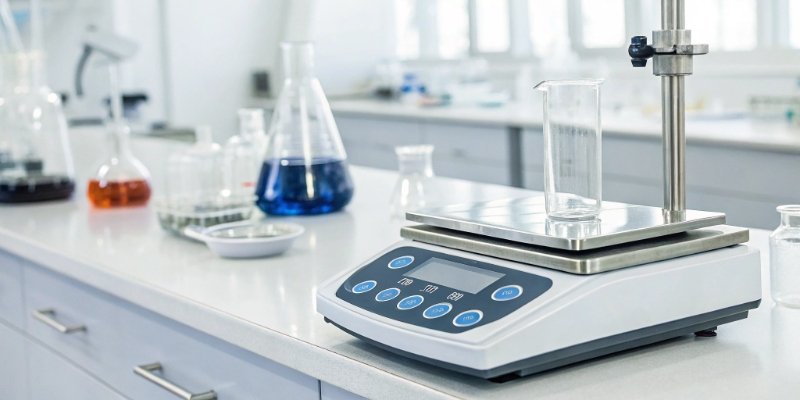
Choosing the right balance goes beyond just the numbers on the screen. In my 18 years in the weighing industry, I've seen many clients purchase an extremely accurate balance that ultimately fails to meet their needs because it doesn't fit their workflow. With so many features available, it can be tough to know what really matters. A balance is an investment, and thinking about features like data management and maintenance costs from the start saves you headaches down the line. Let's break down the key considerations to help you make a smart choice that pays off in the long run.
Which type of balance is most accurate for laboratory use?
You need the highest precision for critical experiments. Choosing the wrong balance type can invalidate your results, wasting expensive materials and setting your research back.
For most high-precision laboratory work, the analytical balance is the most accurate choice. With readability often reaching 0.1mg (0.0001g) or better, it is designed for quantitative analysis where even the smallest error can have a big impact on outcomes.
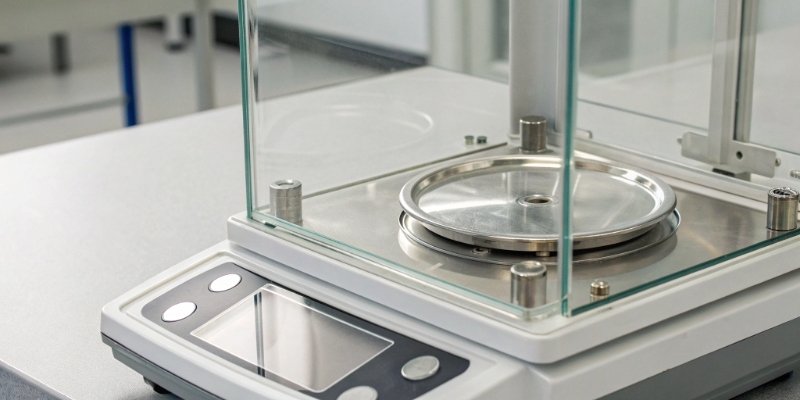
When we talk about accuracy in balances, we are really discussing different levels of precision for different jobs. An analytical balance1 is the go-to for tasks that demand the highest degree of accuracy, like preparing chemical standards or performing gravimetric analysis. This is because it uses a sophisticated electromagnetic force restoration mechanism, which provides much finer readings than the strain gauge sensors found in typical precision balances. However, "most accurate" isn't a one-size-fits-all term. For weighing very small samples in the microgram range, a microbalance2 or ultra-microbalance would be even more accurate.
As a manufacturer, we guide clients by first understanding their application. Here is a simple breakdown:
Comparing High-Accuracy Balances
| Balance Type | Typical Readability | Common Use Case |
|---|---|---|
| Analytical Balance | 0.1mg – 0.01mg | Quantitative chemical analysis, density determination. |
| Semi-Microbalance | 0.01mg | High-precision formulation, filter weighing. |
| Microbalance | 0.001mg (1µg) | Pipette calibration, analysis of particulates. |
Ultimately, the "most accurate" balance is the one with the appropriate readability and capacity for your specific task.
What rules should be followed when using a laboratory balance?
Your team gets inconsistent readings from a high-quality balance. This casts doubt on your data integrity and quality control processes, causing frustration and rework.
Always place the balance on a stable, vibration-free surface away from drafts. Allow it to warm up before use, handle samples with forceps, not hands, and center the load on the pan. Consistent procedure is key to repeatable, accurate results.

A laboratory balance is a sensitive instrument, and its performance depends heavily on how it's used. I've visited labs where a multimillion-dollar project was delayed because a balance was placed next to a centrifuge—a simple mistake with huge consequences. To get reliable measurements every time, it’s crucial to establish and follow a standard operating procedure3. We advise all our clients to implement a simple checklist that covers the entire process, from setup to cleanup. This not only ensures accuracy but also extends the life of the instrument.
Before You Weigh
- Stable Surface: Ensure the balance is on a solid, level weighing table4, away from vibrations, direct sunlight, and HVAC vents.
- Warm-Up: Let the balance acclimate to the room temperature and warm up for the time specified by the manufacturer (usually 30+ minutes).
- Level Check: Check the leveling bubble and adjust the feet if necessary. An unlevel balance will not give an accurate reading.
- Calibrate: Perform a calibration check with certified weights, especially if the balance has been moved or the environment has changed.
During the Weighing Process
- Use the Draft Shield: For analytical balances, always close the doors of the draft shield before taring or recording a weight.
- Handle with Tools: Use forceps, gloves, or weighing paper to handle samples. This prevents oils, moisture, and heat from your hands from affecting the measurement.
- Center the Load: Place the sample in the center of the weighing pan5 to avoid off-center loading errors.
What are the factors that affect the accuracy of analytical balance?
Your top-tier analytical balance gives fluctuating results. You start to doubt the equipment, but the real culprit is often the surrounding environment or a simple oversight.
Environmental factors like temperature changes, air currents, and vibrations are major culprits. Operator errors, static electricity, using a non-calibrated balance, and temperature differences between the sample and the chamber also heavily impact accuracy.
The accuracy listed on a balance's spec sheet is achieved under ideal conditions. In a real-world lab, many factors can interfere with performance. Understanding these factors is the first step to controlling them. This is why modern balances are being built with features to counteract these issues. For example, some advanced models for research scenarios include internal sensors that provide temperature and humidity compensation. As a solutions provider, we emphasize choosing a balance with features that match your environment. For a standard chemistry lab, a good draft shield and external calibration function are essential. For high-stakes research, investing in automatic internal calibration and environmental compensation pays for itself in reliable data.
Key Factors and How to Mitigate Them
| Factor | Impact on Balance Reading | Solution or Feature |
|---|---|---|
| Temperature Fluctuation | Causes drift as internal components expand or contract. | Allow balance to acclimate. Use models with internal calibration and temperature compensation6. |
| Air Drafts | Air movement exerts force on the pan, causing unstable readings. | Use the draft shield. Position the balance away from doors, windows, and vents. |
| Vibrations | Causes fluctuating readings and prevents the balance from stabilizing. | Use a dedicated, heavy weighing table. Avoid proximity to heavy machinery. |
| Static Electricity | Creates an invisible force that repels or attracts the sample, leading to errors. | Use an anti-static device (ionizer). Maintain room humidity above 40%. |
What are the different types of balance in laboratory?
You're tasked with buying a new balance, but the terminology is overwhelming. Choosing incorrectly means either overspending on unneeded precision or getting a device that can't do the job.
The main types are analytical balances for high precision (0.1mg or better), precision balances (or top-loading) for larger capacities with less precision (1g to 0.001g), and microbalances for extremely small samples requiring the highest sensitivity (1µg or better).
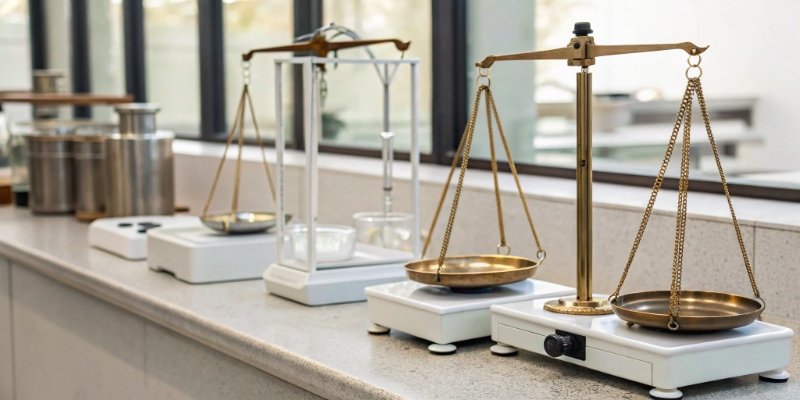
The term "laboratory balance" covers a wide range of instruments, each designed for a different purpose. The key is to match the balance's specifications—readability and capacity—to your application. There's no sense in using an expensive analytical balance to weigh a few kilograms of buffer solution, just as a precision balance is unsuitable for preparing analytical standards. Thinking about maintenance costs is also important. We often recommend models with modular designs7 because they are easier and cheaper to repair. Choosing the right tool for the job saves money, time, and ensures your measurement data is fit for purpose.
Choosing the Right Tool for the Job
| Balance Type | Readability | Max Capacity | Key Feature | Best For... |
|---|---|---|---|---|
| Analytical Balance | 0.0001g | ~220g | High-visibility draft shield | Quantitative analysis, formula development in research settings. |
| Precision Balance | 0.1g - 0.001g | Up to several kg | High capacity, durable design | General lab work, quality control, large sample preparation. |
| Microbalance | 0.000001g (1µg) | A few grams | Extreme sensitivity, special chamber | Weighing stents, analyzing filters, pipette calibration. |
| Moisture Analyzer | 0.01% - 0.1% | 50g - 200g | Integrated heating unit | Determining moisture content in food, plastics, and pharmaceuticals. |
Conclusion
Accuracy is the starting point, not the final goal. Features like data connectivity, environmental controls, and practical design are what make a lab balance a truly reliable tool.
-
Understand the features and applications of analytical balances in precision work. ↩
-
Find out how microbalances are essential for weighing extremely small samples. ↩
-
Learn how SOPs can enhance accuracy and consistency in balance usage. ↩
-
Explore the essential features of a weighing table for optimal balance performance. ↩
-
Learn how the design of the weighing pan affects measurement accuracy. ↩
-
Find out how temperature compensation features improve balance accuracy. ↩
-
Explore how modular designs simplify maintenance and repair of balances. ↩



Comments (0)