

Think industrial scales are only for warehouses? This narrow view misses how they're quietly powering major breakthroughs. Let's explore the versatile, high-tech world of modern weighing solutions.
Industrial scales are found in unexpected places like livestock farms for health monitoring, hospitals for weighing wheelchair users, and even in recycling plants to manage waste efficiently. They are crucial for precision and safety well beyond the factory floor, providing critical data for countless industries.
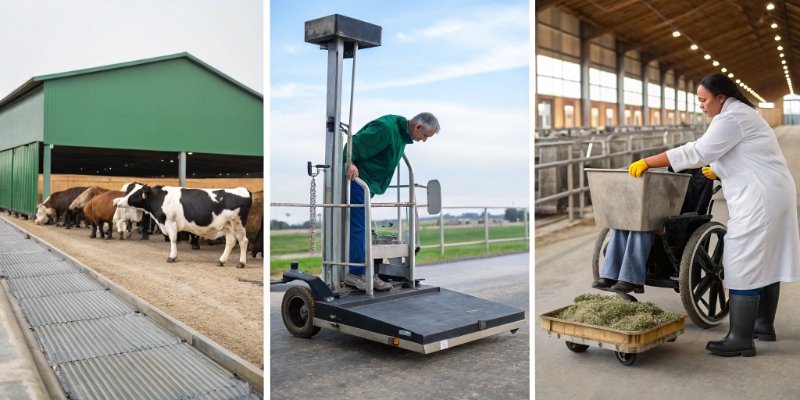
You might be surprised by just how embedded these tools are in our daily lives, often in ways we never see. At Weigherps, we've spent nearly two decades building these systems, and even we are sometimes amazed by the creative applications our clients develop. It shows that with the right partner, a scale can become a solution for almost any challenge. Let's peel back the curtain and look at some of these unexpected uses. You’ll see that a scale is much more than just a scale.
What are some unexpected places you might find an industrial scale?
Thinking weighing technology is impersonal? This overlooks its vital role in caring for the vulnerable. Specialized scales are now essential tools in both modern healthcare and precision agriculture.
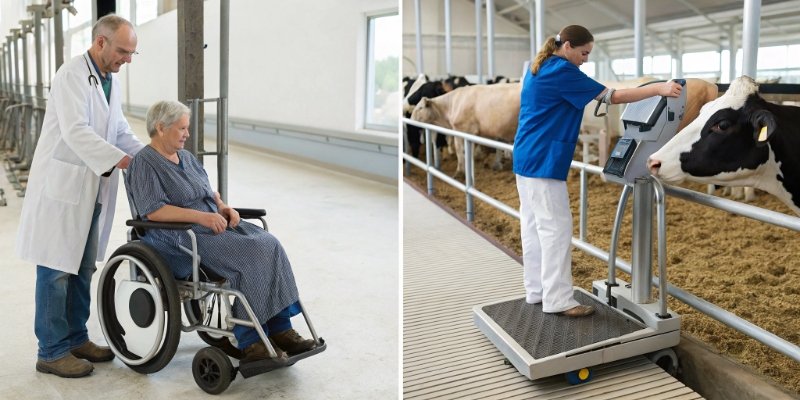
You can find industrial-grade scales in modern hospitals, designed to weigh patients in wheelchairs, and on farms with dynamic systems to monitor livestock health. These applications use precise weight data to provide better care and detect problems early, proving their value in sensitive environments.
As a manufacturer, we've seen our products adapted for uses that directly impact well-being. It is incredibly rewarding. The key is understanding that weight is often one of the first and most critical indicators of change, whether for a person or an animal. This data, when captured accurately and consistently, empowers professionals to act decisively.
Precision in Healthcare
For patients with limited mobility, getting an accurate weight can be difficult and stressful. We've helped develop low-profile platform scales1 specifically for this need. These scales feature gentle, anti-slip ramps and sturdy handrails, allowing a caregiver to easily roll a wheelchair onto the platform. The system can then tare the weight of the chair, providing a quick and precise reading of the patient's weight. This is vital for dosage calculations and monitoring health conditions.
Proactive Livestock Management
On modern farms, animal health is business health. We have clients who integrate our dynamic weighing systems2 directly into their barns. As an animal walks over a platform, its weight is automatically recorded. This data feeds into a software system that uses intelligent algorithms to track weight changes over time. A sudden drop in weight can trigger an alert, signaling potential illness or nutritional issues long before visible symptoms appear. This allows farmers to intervene early, improving animal welfare and preventing economic loss.
| Application Area | Key Feature | Primary Benefit |
|---|---|---|
| Medical/Rehab | Low-profile platform, ramps, handrails | Safe, dignified, and accurate weighing for mobility-impaired patients. |
| Livestock Farming | Dynamic weighing, IoT data transfer | Early detection of health issues, optimized feeding, improved herd management. |
| Pharmaceuticals | High-precision sensors3, GMP compliance | Ensures accurate dosage and quality control in drug manufacturing. |
How do large scales help in recycling and waste management?
Managing tons of unorganized waste feels chaotic and inefficient. Without accurate data, recycling goals are missed and costs soar. Industrial scales bring precision, enabling efficient sorting and valuable resource recovery.
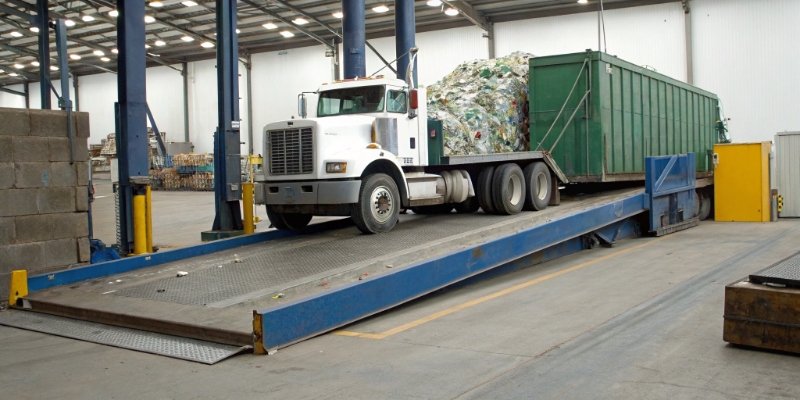
Large industrial scales, like truck scales and floor scales, weigh incoming and outgoing waste at recycling centers. This data is essential for billing, tracking recycling rates, and managing inventory. It transforms waste management from a guessing game into a data-driven, profitable operation.
Weighing is the foundation of the entire recycling economy. Every transaction, every efficiency metric, and every compliance report starts with an accurate weight measurement. We provide the robust scales that can withstand the harsh environment of a waste management4 facility while delivering the reliable data our clients depend on.
The Weighing Process in Recycling
The journey begins when a truck full of waste arrives at a facility. It drives onto a large weighbridge5 to record its gross weight. After emptying its load, the truck is weighed again on its way out. The difference between the two weights is the net weight of the materials delivered. This process provides the fundamental data for the facility's operations. The same logic applies internally, where large floor scales are used to weigh sorted materials like plastics, metals, and paper before they are bundled and sold.
Data for Efficiency and Profit
This weight data serves multiple purposes. First, it is used for billing—companies are often charged by the ton for the waste they dispose of. Second, it allows the facility to track what materials they have and in what quantities, which is crucial for inventory management and sales. By knowing the precise weight of a bale of aluminum, for example, they can accurately determine its market value.
Handling Hazardous Materials
Waste isn't always just paper and plastic. For facilities that handle chemical or other hazardous wastes, safety is the top priority. We offer specialized solutions, such as explosion-proof scales, that are certified to international standards (like CE/ATEX). These scales ensure accurate measurement without creating an ignition source, which is critical for safe handling and compliant disposal of dangerous materials.
How are massive vehicles like airplanes and cargo trucks weighed?
You obviously can't put a 747 on a bathroom scale. Yet, incorrect weight distribution is incredibly dangerous. Specialized, high-capacity systems ensure every massive vehicle operates safely and efficiently.
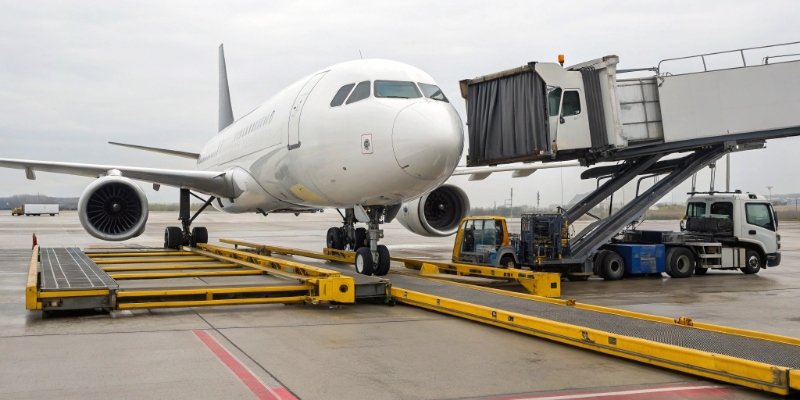
Massive vehicles are weighed using multiple, coordinated scales. Airplanes use a set of portable aircraft scales placed under each wheel to calculate total weight and center of gravity. Trucks use large, permanently installed weighbridges that they drive onto for a total weight measurement.
The physics of moving large, heavy objects safely from point A to point B is unforgiving. There is no room for error. That’s why we take our role in this sector so seriously. Our weighing systems provide the precision data that transportation professionals rely on to ensure safety, comply with regulations, and operate efficiently.
Aircraft Weight and Balance
An airplane's weight and, just as importantly, its center of gravity must be within strict limits for safe takeoff and flight. To measure this, a set of highly accurate, portable scales is placed under each wheel of the aircraft. These individual readings are sent to a central processor, which calculates the total weight and the exact center of gravity. We have even designed custom, battery-powered scales that are durable enough to be used inside military cargo planes, allowing for real-time load monitoring during missions.
Logistics and Road Transport
For ground transport, the most common solution is the truck scale, or weighbridge. These are massive scales, often 60 feet or longer, that are permanently installed into the ground. Trucks drive onto them to measure their total weight. This is essential for two main reasons:
- Safety and Compliance: Overloaded trucks are a danger on the road and cause significant damage to infrastructure. Weighbridges ensure trucks comply with legal weight limits.
- Commerce: Many goods, from grain to gravel, are sold by weight. The weighbridge provides the official measurement for the transaction.
| Vehicle Type | Weighing Method | Key Measurement | Purpose |
|---|---|---|---|
| Airplane | Multiple portable axle scales | Total Weight & Center of Gravity | Flight safety, fuel calculation |
| Cargo Truck | Single large weighbridge | Gross/Net Weight | Regulatory compliance, commerce |
Can industrial scales be used to calculate the weight of large crowds?
Monitoring crowd density in real-time seems like a futuristic challenge. Yet, overcrowding in public venues is a major safety risk. Smart weighing technology can literally weigh crowds for safety.
Yes, it's possible. By integrating a network of high-sensitivity load cells into the flooring of a stadium or bridge, the total weight can be measured. This data helps engineers monitor structural stress and allows venue managers to manage crowd flow and prevent dangerous overcrowding situations.

This is where our work gets really exciting. It's about looking at a scale not as a single product, but as a system of sensors that can generate powerful data. For a software vendor, this is the frontier where your expertise in data analysis meets our expertise in reliable hardware. This is how we build the smart infrastructure6 of the future, together.
Smart Infrastructure and Safety
Imagine a pedestrian bridge or a stadium viewing platform. By embedding dozens of our load cells beneath the floor surface and connecting them to a central IoT gateway7, you can create a massive, distributed scale. The system collects data from each sensor and aggregates it to calculate the total live load on the structure in real-time. Software then translates this weight data into an estimated number of people, allowing venue operators to monitor crowd density. If the weight approaches a structural limit or a designated capacity, the system can trigger alerts or automatically update digital signage to redirect foot traffic.
The Future: IoT, AI, and Blockchain
This concept of data-driven weighing8 extends to other advanced applications.
- New Energy Vehicle Manufacturing: In battery production lines9, our bench scales are combined with AI calibration. They don't just weigh battery modules; the system learns and adjusts for tiny variations, ensuring product consistency and improving manufacturing efficiency.
- Data Traceability with Blockchain: For high-value goods like pharmaceuticals or specialty foods, trust is everything. We can build scales with an integrated blockchain module10. Every time a weight is recorded, the data is instantly and immutably written to a distributed ledger. This creates an unbreakable chain of custody, providing absolute traceability and reducing disputes in the supply chain11. This is the kind of innovation we love to partner on.
Conclusion
From farms to flight decks, industrial scales are essential, data-driven tools. They push boundaries in safety and efficiency, empowering businesses to grow and innovate far beyond the factory floor.
-
Understand the importance of low-profile platform scales in providing accurate weight measurements for patients. ↩
-
Find out how dynamic weighing systems enhance livestock management and health monitoring. ↩
-
Learn about the role of sensors in improving the accuracy and capabilities of industrial scales. ↩
-
Learn how industrial scales transform waste management into a data-driven, efficient operation. ↩
-
Explore the role of weighbridges in recycling centers for accurate waste measurement and management. ↩
-
Understand how smart infrastructure utilizes weighing technology for safety and efficiency. ↩
-
Find out how IoT gateways integrate with weighing systems to provide real-time data. ↩
-
Learn about the future of weighing technology and its applications in various industries. ↩
-
Discover how scales enhance efficiency and consistency in battery manufacturing. ↩
-
Explore how blockchain technology ensures traceability and trust in weighing processes. ↩
-
Explore the significance of weighing technology in optimizing supply chain operations. ↩


[…] truck scales (weighbridge2s) to charge by weight and monitor landfill […]
[…] a visit to a large grain cooperative, I saw a weighbridge6 in action. Trucks loaded with freshly harvested wheat would drive onto the large platform before […]