
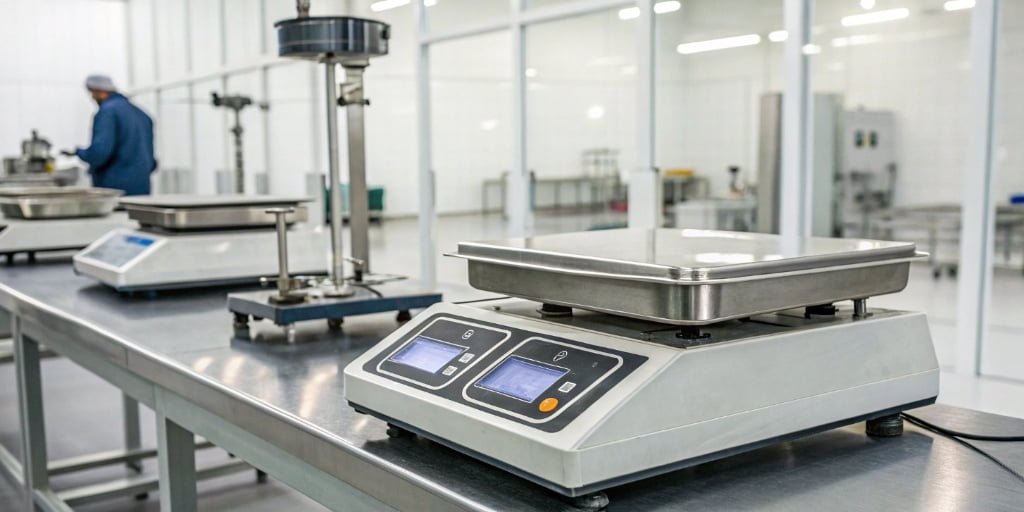
Are you paying too much for high-precision weighing? The costs of traditional technologies can hurt your budget. What if a better, more affordable solution already existed?
Surface Acoustic Wave (SAW) technology is the future because it delivers precision comparable or even superior to expensive Magnetic Force Restoration (MFR) scales but at a much lower cost. This makes high-accuracy weighing accessible and financially smart for modern industrial and commercial applications.

Over my 18 years in this industry, I have seen many technologies come and go. The one constant is the search for greater precision without breaking the bank. We’re always looking for that next leap forward. It’s what drives our innovation and what helps our clients succeed. The conversation used to be dominated by one specific technology for high-precision tasks1. But things are changing, and I believe we’re on the cusp of a major shift. Let's explore why this matters for your business.
What is the precision of a weighing scale?
The term "precision" gets used a lot in marketing. But do you know what it really means for your operations? Misunderstanding it can lead to costly errors and inefficiencies.
Precision in a weighing scale is its ability to give you the same result every single time you weigh the same object. It is measured by factors like readability (the smallest unit it can display) and repeatability (how close multiple measurements are to each other).
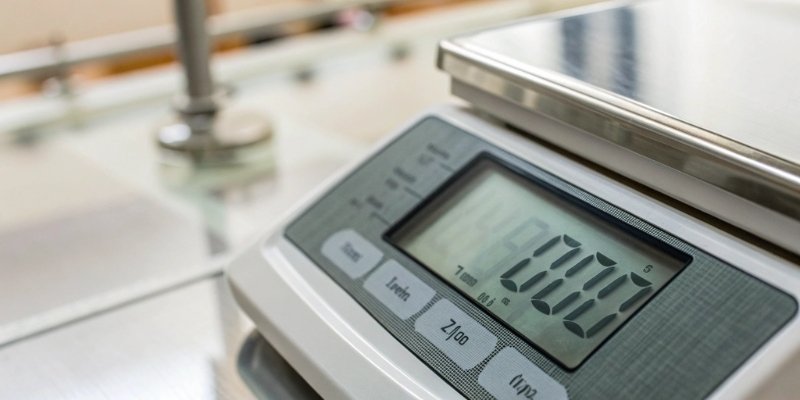
Let's dive a bit deeper into this. Precision is not the same as accuracy. Accuracy is how close a measurement is to the true value. You can have a scale that is very precise but not accurate. For example, it might show 10.50 grams every time for a 10.00-gram standard weight. It’s precise because the result is repeatable, but it's not accurate. In our business, we need both. To make it clearer, I've broken down the key terms my team and I use every day.
Key Concepts in Weighing Measurement
| Term | What it Means | Why it Matters for You |
|---|---|---|
| Accuracy | How close the reading is to the actual, true weight. | Ensures you're not over-filling, under-filling, or mis-billing. |
| Precision | How repeatable the measurements are for the same item. | Guarantees consistent results for quality control processes. |
| Readability | The smallest increment the scale's display can show. | Determines the level of detail you can measure. Finer readability2 is needed for lab work. |
Traditional high-precision scales often use Magnetic Force Restoration (MFR)3. This technology uses an electromagnet to counterbalance the weight on the pan. It's very precise but contains complex, delicate parts, making it very expensive.
Why was the spring scale invented?
We take today's digital scales for granted. But how did we get to this point? Understanding the past helps us see where the future of weighing is heading. Let's go back.
The spring scale was invented in the 1770s to provide a simple, portable, and cheap way to measure weight. It works on a principle called Hooke's Law, where the stretch of a spring is directly proportional to the force (or weight) applied to it.

Before the spring scale, most weighing was done with balance scales. These were often large, not very portable, and required a full set of reference weights. They were not practical for merchants or everyday people. The spring scale changed everything. It was a compact device you could hold in your hand. I remember seeing one in my grandfather's workshop, a simple tool that was revolutionary for its time.
However, the spring scale had its problems.
- Wear and Tear: The spring could lose its elasticity over time, leading to inaccurate readings.
- Temperature Sensitivity: Extreme heat or cold could cause the metal spring to expand or contract, affecting the measurement.
- Limited Precision: It was great for general estimates, but not for applications requiring fine measurements.
These limitations pushed inventors to find better solutions. This led to the development of electronic scales using strain gauge load cells4, and eventually, the ultra-precise MFR and SAW technologies we see today. The journey from a simple spring to advanced sensors shows our industry's relentless drive for better performance.
How many types of weighing are there?
Choosing the right scale can feel overwhelming. With so many technologies available, picking the wrong one can mean wasted money or a compromise in quality for your software integration projects.
Weighing technologies fall into two main groups: mechanical, like old spring scales, and electronic. The electronic category includes common strain gauge load cells, high-precision Magnetic Force Restoration (MFR), and the innovative Surface Acoustic Wave (SAW) systems we specialize in.
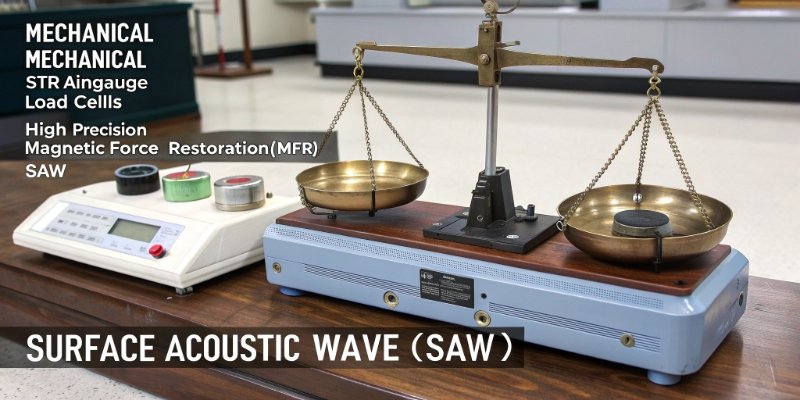
As a manufacturer, my team and I work with all these technologies, but we've seen a clear shift in what our clients need. They require the precision of a lab scale but in a durable, cost-effective package that can handle industrial environments5. This is where the difference between MFR and SAW becomes so important. MFR is the established champion for precision, but it comes with a high price tag and can be sensitive to its environment. We wanted to find a better way.
Here is a simple table to compare the key electronic technologies we work with.
Comparison of Modern Weighing Technologies
| Technology | Principle of Operation | Precision Level | Relative Cost |
|---|---|---|---|
| Strain Gauge Load Cell | Measures the electrical resistance change in a deformed material. | Good | Low |
| Magnetic Force Restoration (MFR) | An electromagnet generates a force to balance the load. | Extremely High | Very High |
| Surface Acoustic Wave (SAW) | Measures the frequency change of a wave traveling on a surface. | Extremely High | Medium |
As you can see, SAW technology hits a unique sweet spot. It offers the same extremely high precision as MFR but at a significantly more manageable cost. It achieves this with a simpler, more robust design, making it a perfect fit for software vendors who need to integrate reliable, high-performance weighing hardware without the huge expense.
Why am I heavier on digital scales?
Have you ever stepped on a new digital scale and the number surprised you? It can make you doubt the scale's accuracy. Is it faulty, or is something else at play here?
You might seem heavier on a digital scale because it is more precise and sensitive than an older mechanical one. Digital scales detect small variations accurately, while analog scales can become less accurate over time due to wear and tear, often showing a lower weight.
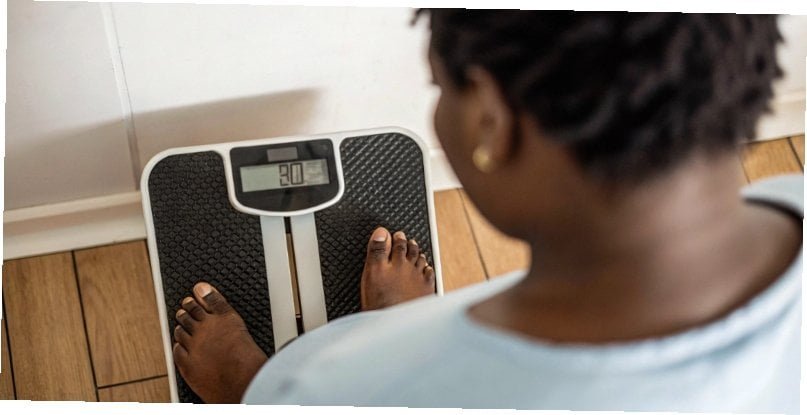
This common experience actually highlights a critical point in industrial weighing. It's not just about the number; it's about reliability and trust in that number. Several factors can influence a digital scale’s reading, and understanding them is key to effective measurement.
- Calibration: A scale must be calibrated to a known standard weight to be accurate. In our factory, every single scale is calibrated before it ships. An uncalibrated scale, even a high-tech one, will give you precise but wrong information.
- Surface: Digital scales need a flat, hard, and level surface to work correctly. An uneven or carpeted surface can distribute the weight incorrectly, leading to errors.
- Consistency: The difference you see between scales often comes down to their internal technology. A cheap bathroom scale and a high-precision industrial scale are worlds apart.
This brings us back to MFR versus SAW. For your business, you need technology that is not just sensitive but also incredibly stable and repeatable. You need a scale that gives the same result today, tomorrow, and a year from now, regardless of minor environmental changes. This is where SAW excels. Its design is inherently more resistant to factors like temperature shifts and physical vibration, providing the trustworthy data you need to run your operations effectively.
Conclusion
In summary, Surface Acoustic Wave (SAW) technology is a game-changer. It provides the high precision you need at a cost that makes sense, making it the smart choice for any future-focused business.
- Discover the types of tasks that require high-precision weighing and the technologies that support them. ↩
- Find out why readability is crucial for accurate measurements and how it impacts your weighing needs. ↩
- Learn about MFR technology's precision and its high costs, and why alternatives like SAW are emerging. ↩
- Learn about strain gauge load cells, their operation, and their role in modern weighing technology. ↩
- Learn about the specific requirements for weighing technology in demanding industrial settings. ↩



Comments (0)