

Product giveaway and manual errors are silently costing you money. A counting checkweigher automates this process, turning hidden losses into real profits and improving your overall production efficiency.
Yes, a counting checkweigher significantly improves productivity by automating weight and count verification, eliminating manual errors. This saves money by reducing product giveaway, preventing underweight shipments, and cutting labor costs, directly boosting your profitability and protecting your brand reputation.
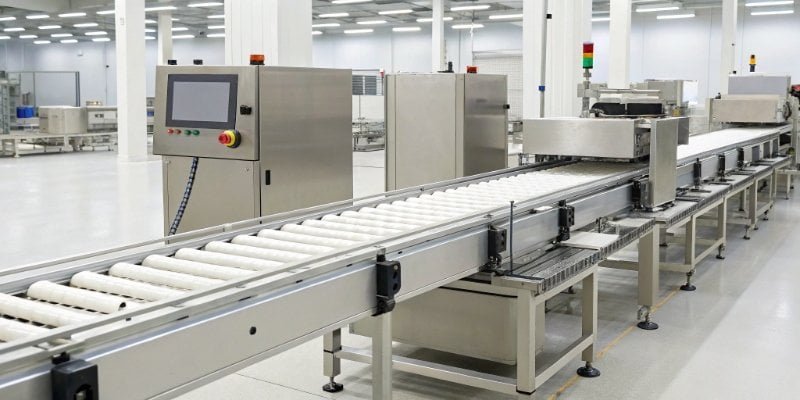
For over 18 years, I've seen countless businesses struggle with the same challenge: ensuring every package leaving their facility is perfect. Manual checks are slow, prone to error, and expensive. You might think it's just a small part of your operation, but these small errors add up to huge financial losses and can seriously damage your customer relationships. The good news is that there is a proven technological solution. This simple investment can completely transform your quality control process1. Let's explore how this technology works and how it can directly benefit your bottom line.
What is a checkweigher machine?
You need to ensure every product package is correct. But manual checks are slow, inconsistent, and can't keep up with your production speed, creating a major bottleneck.
A checkweigher is an automatic machine that weighs items as they pass along a production line. It rejects any items that are over or under a preset weight limit. This ensures product weight conformity and quality control without stopping the production flow.
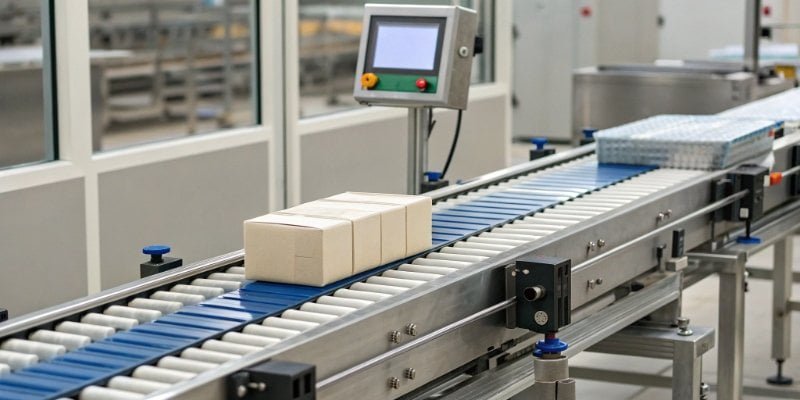
A checkweigher is a key part of a modern, automated production line. Think of it as your nonstop quality control inspector. It sits right on your conveyor and works tirelessly. I remember visiting a client's factory where they were manually weighing small hardware kits. It was a slow and tedious process. Their team was spending hours just to keep up, and they were still getting customer complaints about missing pieces. After we installed a basic checkweigher system, their world changed. Their throughput doubled almost overnight, and their product giveaway2 costs dropped to nearly zero.
How a Checkweigher Works
The process is simple but highly effective.
- Infeed Section: An infeed conveyor separates products to ensure they pass over the scale one at a time.
- Weighing Section: The product moves onto a high-speed, highly accurate scale or load cell that captures its weight in a fraction of a second.
- Outfeed Section: Based on the weight reading, the system makes a decision. If the product is within the target weight range, it continues down the line. If it's too light or too heavy, a rejection device (like an air jet or a pusher arm) removes it from the main conveyor.
This all happens in motion, without ever stopping your line.
What are the benefits of a checkweigher?
You are probably losing money but don't know exactly where. Hidden costs from product giveaway, compliance fines, and manual labor are quietly hurting your profits and slowing you down.
The main benefits include ensuring 100% weight control, reducing costly product giveaway, avoiding underweight penalties, and saving on labor. It also provides valuable production data, improves overall efficiency, and protects your brand's reputation by guaranteeing product consistency for customers.
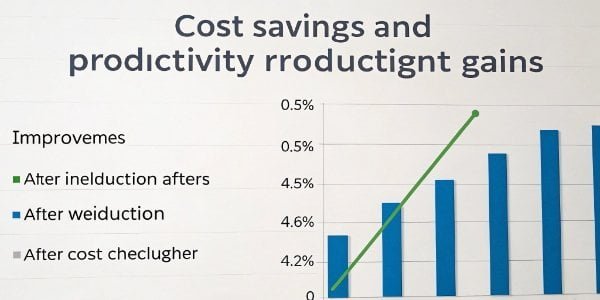
The impact of a checkweigher goes far beyond just weighing things. It becomes the heart of your quality and cost control strategy3. Based on my experience, the initial investment is often paid back within months, not years. The real magic happens when you use multiple checkweighers as part of a connected system. This approach doesn't just save labor costs; it drastically reduces losses from overweight and underweight products. It also prevents customer complaints that can tarnish the brand image we all work so hard to build. For companies like yours that deal with software and smart devices, the data a checkweigher provides is invaluable. It can integrate directly with your systems to give you a real-time view of your production health.
Here’s a breakdown of the key benefits:
| Benefit | How It Boosts Your Business |
|---|---|
| Reduces Product Giveaway | You stop shipping extra product for free, saving raw material costs. |
| Ensures Compliance | You avoid expensive legal fines for selling underweight goods. |
| Cuts Labor Costs | You automate a manual task, freeing up employees for higher-value work. |
| Protects Brand Reputation | Your customers always receive a consistent, quality product. |
| Provides Production Data | You can track trends, identify upstream issues, and optimize your line. |
What is the difference between a Catchweigher and a checkweigher?
Weighing terminology can be confusing. Using the wrong term might lead you to research or even purchase the wrong type of equipment for your specific production needs.
A checkweigher automatically weighs products in motion on a conveyor and rejects off-weight items. A catchweigher, on the other hand, weighs static, stationary items. Checkweighers are for dynamic, high-speed lines, while catchweighers are for manual or static weighing tasks.
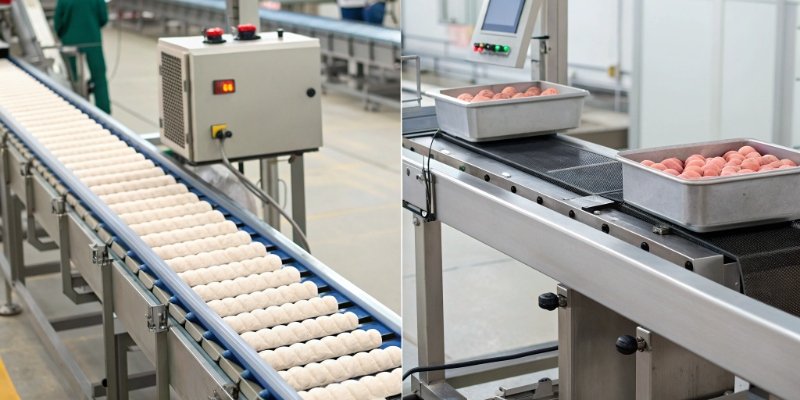
The simplest way to remember the difference is movement. A checkweigher "checks" products as they are moving. A catchweigher "catches" a product's weight while it is stopped. In our business at Weigherps, we provide both types of solutions, because they serve very different purposes. A catchweigher is great for a shipping station where an operator places a box on a scale to print a shipping label. But if your goal is to improve the productivity of your main production line and ensure 100% of your products are the correct weight automatically, a checkweigher is the tool you need. It is designed for speed, automation, and integration into a continuous flow. The decision between the two comes down to one question: is your product moving or stationary when it needs to be weighed?
Here is a simple table to clarify:
| Feature | Checkweigher | Catchweigher |
|---|---|---|
| Process | Dynamic (weighs items in motion) | Static (weighs stationary items) |
| Speed | High-speed and fully automated | Slower speed, often manual or semi-automated |
| Application | In-line quality control, counting, sorting | Shipping stations, manual packing, batching |
| Decision | Automatic accept/reject action | Operator records weight or prints a label |
What are the different types of Checkweighers?
You know you need a checkweigher, but which one is right for you? Choosing the wrong type is a costly mistake that can disrupt your production and not deliver the results you expect.
The main types of checkweighers are categorized by their application and industry. These include standard belt checkweighers for general use, multi-lane checkweighers for high throughput, and specialized models for specific industries like food (washdown-rated) or pharmaceuticals (high precision).
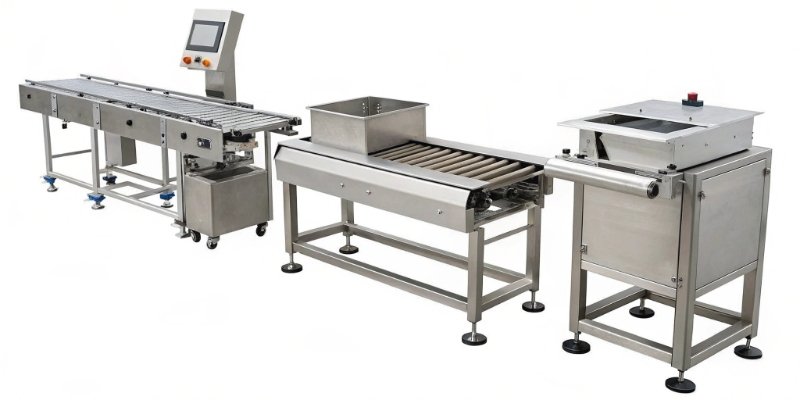
Selecting the right checkweigher is critical, and it really depends on your product and your production environment. As an OEM/ODM manufacturer4, we've designed and built systems for nearly every scenario imaginable. The goal is to find the perfect fit. You don't want to over-engineer a solution, but you also don't want a machine that can't handle your specific needs. Thinking about your product, line speed, and factory conditions will guide you to the right choice.
Standard Belt Checkweighers
This is the workhorse of the industry. It's perfect for most common applications, like checking the weight of sealed boxes, pouches, bottles, and cartons. It's versatile, reliable, and provides a fantastic return on investment for general-purpose packaging lines.
Multi-Lane Checkweighers
Imagine you are packaging small items like single-serve snacks or pharmaceutical blister packs from a machine that produces 4, 6, or even 12 lanes of product at once. A multi-lane checkweigher uses one frame and one controller to weigh all lanes simultaneously. This is far more efficient and space-saving than installing multiple single-lane machines.
Combination Systems
Efficiency is key. A combination system merges a checkweigher with another quality control device, most commonly a metal detector. This single machine does two jobs at once, saving valuable floor space and simplifying your production line. Both systems are controlled from one interface, making operation much easier for your team.
Specialized Checkweighers
Some industries have unique requirements. The food and beverage industry often needs washdown-rated machines5 (like our IP67 models) that can withstand high-pressure cleaning. The pharmaceutical or cosmetics industries may require extremely high-precision models to verify the weight of very small, high-value products. We often build custom solutions that meet these specific client needs.
Conclusion
In short, a checkweigher is a powerful tool to boost productivity and save money. It automates quality control, reduces waste, and ensures every product you ship is absolutely perfect.
-
Explore how modern technology can transform your quality control process. ↩
-
Learn about the hidden costs of product giveaway and how to mitigate them. ↩
-
Learn how to develop an effective cost control strategy for your manufacturing process. ↩
-
Understand the role of OEM/ODM manufacturers in providing tailored solutions. ↩
-
Understand the significance of washdown-rated machines in maintaining hygiene standards. ↩


Comments (0)