
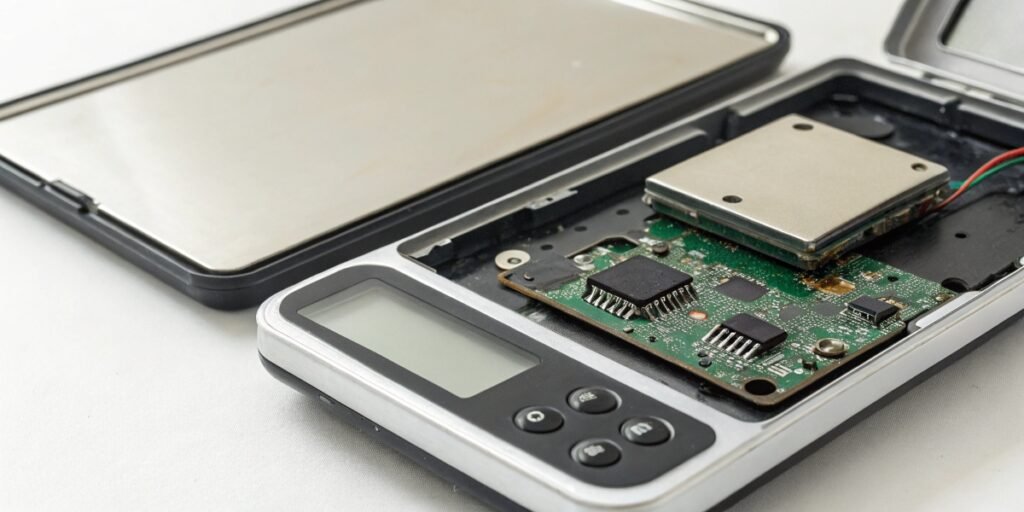
Is your expensive industrial scale broken? You worry about the high cost of replacement and production downtime. Repairing it might be your best, most cost-effective option to get you back online.
Yes, a digital scale can be repaired. For inexpensive consumer scales, replacement is often easier and cheaper. For valuable industrial scales, professional repair is highly recommended to save costs, reduce waste, and extend your equipment's useful life. It's often the smartest financial decision.
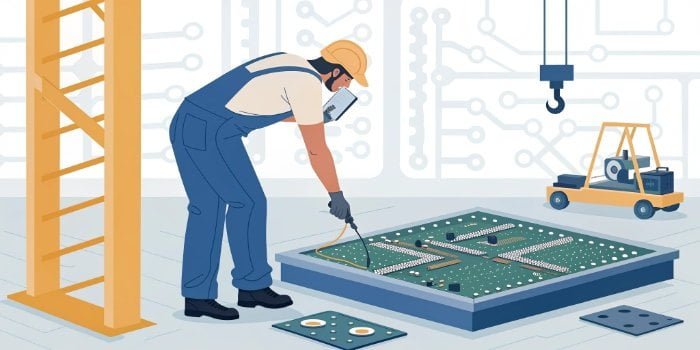
The choice between repairing and replacing isn't always clear. For us in the manufacturing industry, we see this question come up a lot. A scale is a critical tool, and when it fails, it can bring operations to a halt. Deciding what to do next involves looking at the cost, the age of the scale, and the value it brings to your business. Let's break down the factors so you can make the right call for your situation.
Can a digital weighing scale be repaired?
Your scale isn't working, stopping your operations. Buying a new one is expensive and you need a quick solution. Understanding your repair options can save you a lot of money and time.
Most digital weighing scales can be repaired. The real question is whether it's cost-effective. Simple issues like calibration drift or a bad battery are easy fixes. More complex problems with load cells or mainboards require expert help, where repair is usually much cheaper than replacement for industrial models.
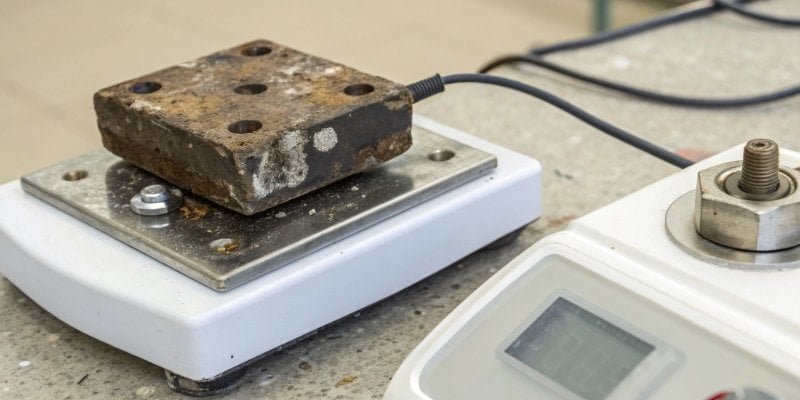
When a scale fails, the first thought for many is replacement. This is especially true for cheap home or kitchen scales. If a $20 scale breaks, it makes no sense to pay for repairs. But for a $2,000 floor scale or a $10,000 truck scale, the math is very different. Industrial scales are built with high-quality, durable components designed for longevity and serviceability. We design our scales with repair in mind because we know they are long-term investment1s for our clients.
Just last month, a long-time customer contacted us. They had a livestock scale that they bought from us over ten years ago. After a decade of hard use, it finally had an issue. Instead of them having to spend thousands on a new system, we arranged for them to ship it back to our facility. Our technicians diagnosed the problem, replaced a worn-out component, and fully recalibrated it. It’s now back on their farm, working as good as new. This saved them a significant amount of money and showed the trust they have in our products to last. A well-built industrial scale is an asset worth maintaining.
How do you fix a digital scale?
Your scale is showing the wrong weights, causing errors and frustration. You need it working correctly now but aren't sure where to start. Following a simple troubleshooting process can often solve the problem.
First, perform basic checks: confirm the power source, ensure the scale is on a level surface, and clean any debris. If it still shows errors, try recalibrating it with a known weight according to the manual. For deeper issues, you should contact the manufacturer for professional support.

Before you call for service, there are several steps you can take yourself. These simple checks solve the majority of scale problems and can save you from an unnecessary service call. We always advise our clients to run through this basic process first. However, it is important to know when to stop and call for an expert. Trying to fix complex internal components without the right knowledge can cause more damage.
Basic Troubleshooting Steps
Here is a structured guide to help you identify and possibly fix the issue with your scale.
| Step | Action | Description |
|---|---|---|
| 1 | Check Power & Level | Make sure the scale is plugged in or has fresh batteries. Use a spirit level to verify the surface is perfectly flat. An uneven surface is a very common cause of inaccurate readings. |
| 2 | Clean the Scale | Turn the scale off. Gently clean any dust, dirt, or material from the weighing platform and especially from the area underneath it. Obstructions can interfere with the load cells2. |
| 3 | Reset and Recalibrate | Turn the scale off, wait a minute, and turn it back on to reset the internal electronics. Then, use a certified calibration weight to recalibrate it. Always follow the specific instructions in your user manual. |
| 4 | Inspect for Damage | Look for any visible damage to the power cords, data cables, the display, or the scale body. A frayed cable is an obvious but sometimes overlooked problem. |
When to Call for Professional Help
If you have gone through all these steps and the scale is still not working correctly, the problem is likely internal. This could be a failed load cell, a damaged circuit board3, or a software fault. At this point, opening the scale yourself could void your warranty and lead to more expensive repairs. Contacting a qualified technician or the original manufacturer is your best next step. Our support team has the parts, tools, and expertise to diagnose and fix these complex issues safely and effectively.
What is the lifespan of a digital scale?
You're investing in new equipment for your business. You worry that it won't last, forcing another big purchase in just a few years. Understanding a scale's expected lifespan helps you make a better investment.
The lifespan of a digital scale varies widely based on quality and use. A cheap consumer scale might only last 1-3 years. A high-quality industrial scale, with proper maintenance and care, can easily last 10-15 years or even longer, making it a sound long-term investment.

The longevity of a digital scale4 is not an accident; it is the result of deliberate design, material choice, and user care. A scale's purchase price often reflects its expected lifespan5. As manufacturers, we see a clear difference between scales built to be disposable and those built to be long-term workhorses. Several key factors determine how long your scale will reliably serve your business. For any software vendor or technical director looking to integrate weighing hardware, understanding these factors is crucial for calculating the total cost of ownership.
Factors That Determine a Scale's Lifespan
| Factor | Impact on Lifespan | Our Commitment to Longevity |
|---|---|---|
| Build Quality | The quality of materials like steel, aluminum, and the load cells themselves is the biggest factor. Robust construction resists wear, impact, and fatigue. | We use industrial-grade stainless steel and high-precision, protected load cells. Every product undergoes rigorous quality control tests before it leaves our factory. |
| Usage Environment | Harsh conditions with dust, moisture, chemicals, or extreme temperatures will degrade a scale quickly if it's not designed for them. | We help clients select scales with the correct Ingress Protection (IP) rating6, like IP67 or IP68, to ensure they withstand their specific environment. |
| Proper Maintenance | Regular cleaning to remove debris and periodic recalibration prevent small issues from becoming major, system-ending failures. | We provide all clients with clear maintenance guides7 and offer after-sales support to help them protect their investment and ensure accuracy over time. |
| Workload | Consistently overloading8 a scale or dropping heavy items on it will damage the sensitive load cells and shorten its life dramatically. | Our sales process involves understanding your specific needs to ensure you get a scale with the right capacity and overload protection for your tasks. |
That 10-year-old livestock scale I mentioned earlier is the perfect example. It lasted so long because it was built with quality parts and the owner took good care of it. Investing in a well-made scale from a reputable manufacturer pays off for years to come.
Do digital scales stop working?
You rely on your scales for daily operations. You're afraid one might suddenly fail, disrupting your entire workflow and causing costly delays. Knowing why scales fail can help you prevent it.
Yes, all digital scales can eventually stop working. Common causes include dead batteries, damaged load cells from overloading, moisture getting into the electronics, software glitches, or a faulty display. However, many of these failures can be prevented with proper use and regular maintenance.
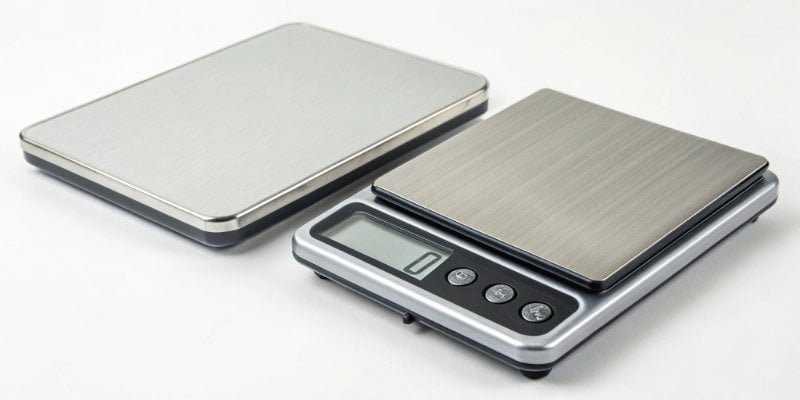
A digital scale is a precise instrument made of many different parts working together. Like any piece of technology, from a computer to a car, components can wear out or fail over time. In our 18 years of manufacturing industrial scales9, we've seen all the different ways a scale can fail. The good news is that most of these issues are not random. They have specific causes, many of which are avoidable. Understanding these weak points helps you and your team use the equipment in a way that promotes a long, reliable life.
Common Reasons for Scale Failure
Load Cell Damage
The load cell is the sensor that measures weight. It is the most critical and most sensitive part of the scale. The top reason for load cell failure is overloading—placing a weight on the scale that exceeds its maximum capacity. Another common cause is shock loading, which is when a heavy item is dropped onto the platform instead of being placed gently. While we build our scales with overload protection features, severe or repeated abuse can still cause permanent damage that requires a professional repair10.
Electronic and Moisture Damage
The brain of the scale is its internal circuit board3. These electronics are vulnerable to moisture, dust, and electrical surges. If you are using a scale in a wet or dusty environment like a food processing plant or a construction site, it is crucial to use a model with the correct IP rating. An IP67-rated scale, for example, is protected from dust and can be submerged in water. Using an unprotected scale in these conditions will almost certainly lead to a short circuit and failure.
Display or Software Issues
Sometimes the weighing mechanism is fine, but the scale still doesn't work. The problem might be a faulty display that no longer shows numbers, or a software glitch causing it to freeze or show error codes. For our modern IoT scales, our technicians can sometimes diagnose and resolve software issues remotely. For a physical display failure, the component typically needs to be replaced.
Conclusion
So, you can definitely repair a digital scale. For industrial models, it's a smart choice that saves money and strengthens trust. Proper care is the key to a long lifespan.
-
Learn why investing in quality industrial scales pays off in the long run. ↩
-
Learn about load cells and their importance in the functionality of digital scales. ↩
-
Find resources on repairing circuit boards to restore your scale's functionality. ↩ ↩
-
Explore this link to understand the repair options for digital scales and how they can save you money. ↩
-
Understanding the lifespan of digital scales can help you make informed purchasing decisions. ↩
-
Discover how IP ratings protect scales from environmental damage. ↩
-
Explore maintenance guides to ensure your digital scale lasts longer and performs better. ↩
-
Learn about the risks of overloading scales and how to prevent damage. ↩
-
Learn why repairing industrial scales is often more cost-effective than replacing them. ↩
-
Find out when it's best to call in professionals for scale repairs to avoid further damage. ↩


Comments (0)