
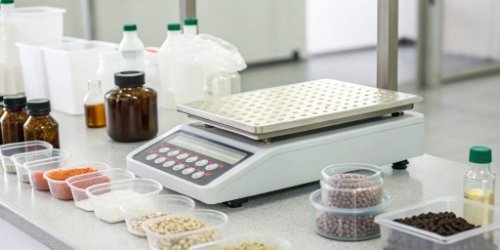
Struggling with manual QC data entry and sample tracking errors? These mistakes risk compliance and customer trust. A label printing scale can streamline and error-proof your entire process.
Yes, absolutely. A label printing scale is perfect for quality control and sample tracking. It weighs a sample, generates a label with critical data like weight, time, and a unique ID, and can send this information directly to your management system for real-time tracking.

You can see how these scales are a game-changer. But the real magic is in the details of how they integrate into your workflow. As a manufacturer for over 19 years, we've seen firsthand how they transform quality control1 from a chore into a powerful data source. This isn't just about hardware; it's about creating an intelligent data ecosystem. Let's look closer at how they achieve this.
How Are Label Printing Scales Utilized in Quality Control and Sample Tracking?
Feeling overwhelmed by disjointed QC processes? Manual logs and separate systems create data silos and confusion. Integrate weighing and labeling to create a single, unified workflow from the start.
They are used by weighing a sample, instantly printing a label with a unique barcode or QR code, and recording data like weight, date, and operator ID. This label becomes the sample's digital passport, seamlessly connecting the physical item to your digital records.
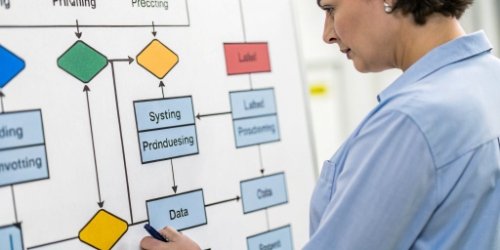
The Scale as a Data Bridge
We see our scales as more than just weighing instruments. They are the foundational data collection points2 in a production system. When you place an item on the scale, it's the start of a digital journey. Our job is to make sure that journey is seamless for our partners, especially software providers. The scale captures the raw weight, but our customizable software can add other essential data fields. This could be operator ID3, batch number, or production line4.
Centralized System Integration
The most powerful feature is how this data is transmitted. The scale acts as a bridge to your customer's management system5, whether it's an ERP, LIMS, or a custom-built platform. We ensure the data from the scale can be easily integrated. This single point of truth eliminates discrepancies between different systems.
| Data Point | Source | Destination |
|---|---|---|
| Weight | Scale sensor | ERP / LIMS / Management System |
| Time/Date | Scale's clock | ERP / LIMS / Management System |
| Unique ID | Software | ERP / LIMS / Management System |
| Operator ID | Manual Input | ERP / LIMS / Management System |
This direct connection is the key. It makes the data actionable in real-time, right where your customers need it.
What Role Do Label Printing Scales Play in Quality Assurance Labeling?
Worried about non-compliance due to inconsistent labeling? Manual labeling invites errors that can lead to costly recalls. A label printing scale ensures every label is accurate and standardized.
Label printing scales play a crucial role by guaranteeing consistency and accuracy. They automatically generate labels with correct weights, dates, and barcodes. This removes human error, ensuring every item meets strict QA and regulatory standards.
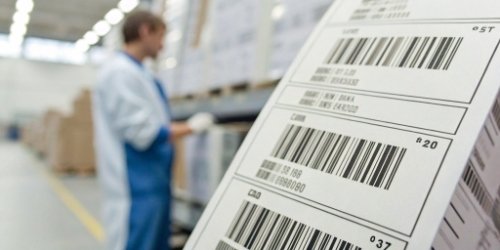
Eliminating Human Error
In my years in this business, I've seen countless audit issues6 stem from a simple labeling mistake. A handwritten "7" can look like a "1," or an operator might write down the wrong date. These small errors have big consequences. A label printing scale7 eliminates this problem entirely. The data is pulled directly from the scale and its internal clock. The information is printed clearly in a standardized format. There is no chance for a typo or a misinterpretation. It makes the process objective and reliable.
Ensuring Data Integrity
The role of the scale goes beyond just printing. It's about locking down the process to ensure data integrity8. As hardware providers, we work with software companies to create secure template systems. This means the end-user, like a factory worker, can't accidentally change critical information on the label format. They simply choose the correct product, place the item on the scale, and the system does the rest. The correct, compliant, and unchangeable label is printed every single time. This turns labeling from a potential weak link into a strong pillar of any quality assurance9 program.
Can Label Printing Scales Enhance the Accuracy of Sample Tracking?
Losing track of samples is a researcher's worst nightmare. Misplaced or misidentified samples waste time and invalidate results. A unique digital identity from a scale can prevent this chaos.
Yes, they dramatically enhance accuracy. By creating a unique, barcoded label at the moment of sample collection, the scale links the physical sample to a digital record immediately. Every subsequent scan updates its location, providing a complete, error-free audit trail.
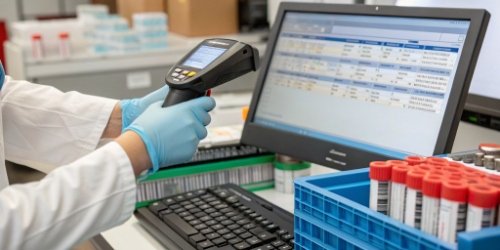
The "Birth Certificate" of a Sample
We like to think of the label printed by the scale as the "birth certificate" for a physical sample. The moment the scale captures the weight and prints the label with a unique QR code or barcode, that sample is born into the digital world. This label contains all its initial, vital statistics: what it is, how much it weighs, when it was created, and where it came from. This initial step is the most important part of creating a reliable tracking system. Without this accurate starting point, any tracking that follows is built on a weak foundation.
Creating a Digital Twin for Seamless Integration
Once that "birth certificate" is printed, a "digital twin10" of the sample now exists in the management system. This is where our focus on collaboration with software vendors becomes critical. Our scales are designed with flexible communication protocols. They speak the language of modern software, whether it's a Laboratory Information Management System (LIMS), a Warehouse Management System (WMS), or a client's proprietary ERP. The data transfer is instant and automatic. This means from the very first second, the sample's journey can be tracked digitally. No more manual logbooks. No more lost samples. A simple scan tells you everything.
How Do Label Printing Scales Support Quality Control Processes in Manufacturing?
Is your manufacturing QC process a bottleneck? Manual checks and data entry slow down the line and are prone to errors. Automate your QC weighing and data logging to speed things up.
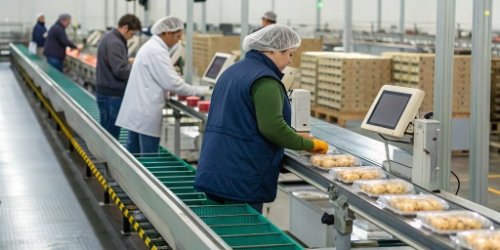
They support QC processes by acting as automated data checkpoints. At key stages, a product is weighed. If it's within tolerance, a "pass" label is printed and data is logged. If not, the system flags it for review. This provides real-time process control.
Data Checkpoints Throughout Production
Think of a manufacturing line. Our scales can be placed at several key points to act as automated gatekeepers.
- In-Process Verification: During production, an operator can perform a spot check. They place a semi-finished product on the scale. The scale software, which is connected to the central system, instantly compares the weight against pre-defined tolerance11s for that specific product. A "pass" or "fail" is displayed. This prevents a small problem from becoming a big one down the line.
- Final Product Inspection: At the end of the line, the scale performs the final check. It records the final weight, prints the shipping label, and logs the complete data set for the product's history.
This process is summarized below:
| Production Stage | Scale's Function | Outcome |
|---|---|---|
| Raw Material | Verify incoming material weight against order | Accurate inventory, correct recipe mixing |
| In-Process Check | Weigh sample against target weight + tolerance | Immediate correction of process deviations |
| Final Inspection | Record final weight, print shipping label | Full traceability, compliant product |
This isn't just about pass/fail for one item. By aggregating this data, our clients can identify trends. They can see if one machine is consistently producing underweight items, for example. This makes manufacturing smarter, and our scales are the fundamental devices that collect the data to make it happen.
Conclusion
In summary, label printing scales are more than just hardware. They are the data bridge for your quality control, ensuring accuracy, traceability, and seamless integration with your management systems.
-
Learn about the critical role of quality control in manufacturing and how it affects product quality. ↩
-
Understand the role of data collection points in improving data accuracy and process efficiency. ↩
-
Find out how operator IDs contribute to accountability and traceability in quality control. ↩
-
Learn how automation in production lines can enhance quality control and efficiency. ↩
-
Discover how management systems can enhance quality control and streamline operations. ↩
-
Explore common audit issues in quality control and strategies to prevent them. ↩
-
Explore how label printing scales can enhance your quality control processes and improve accuracy. ↩
-
Understand the significance of data integrity in maintaining compliance and trust in your processes. ↩
-
Learn about the importance of quality assurance in ensuring product quality and compliance. ↩
-
Explore the concept of digital twins and their application in improving manufacturing efficiency. ↩
-
Learn about the concept of tolerance in quality control and its impact on product quality. ↩



Comments (0)