
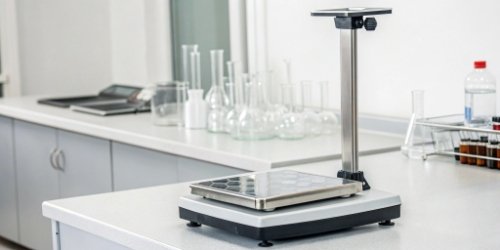
Tired of complex weighing setups that need a separate PC? The extra hardware, software headaches, and space consumption are a constant challenge. A programmable scale integrates this functionality, simplifying your system.
Yes, a programmable scale can often eliminate the need for an external PC. It integrates computing power directly into the weighing terminal, handling data processing, process control, and communication tasks locally. This streamlines your operations and reduces your hardware footprint.
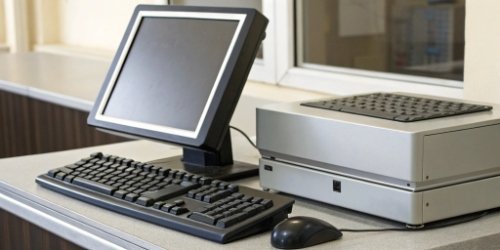
This integration sounds great in theory, but how does it actually work? It is a big step to remove a PC that you have relied on for a long time. Let's break down exactly how these smart scales take on the jobs of dedicated computers and see what that means for your business.
How Can Programmable Scales Replace the Functionality of External PCs in Industrial Systems?
Integrating separate PCs with scales is often clumsy. This leads to compatibility issues, increased maintenance, and more potential points of failure in your industrial workflow. Programmable scales solve this problem.
Programmable scales replace external PCs by using a built-in microprocessor and operating system. They run custom applications for tasks like data logging, formula management, and communicating with other machinery. This turns the scale into the central brain of the weighing process.
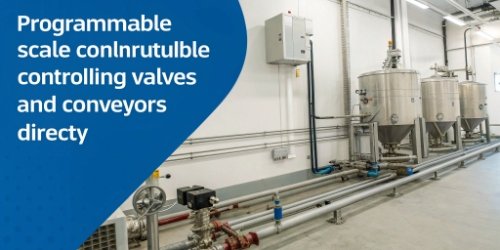
Here's how this plays out in a real-world setting. A standard PC in a weighing system usually handles several key tasks. It receives raw weight data, processes it, stores the results, and communicates with other parts of your network, like an ERP system. A programmable scale1 does all of this inside its own housing.
The Scale as a Central Hub
Imagine the scale's terminal as a mini-computer. It has its own processor, memory, and storage. As a manufacturer, we can install custom software directly onto it. This software can be tailored to perform very specific jobs. For example, it can manage a recipe for batching, control valves to fill a container to a precise weight, and then send a completion report directly to your server. It doesn't need an external PC2 to tell it what to do next. This is based on the insight that many control functions3 rely on decisions made by the scale itself.
Key Functions Taken Over
Let's look at the functions a programmable scale can handle:
| PC Function | How a Programmable Scale Manages It |
|---|---|
| Data Processing | Runs custom software for calculations and logic |
| Process Control | Uses I/O ports to control valves, motors, and lights |
| Data Storage | Stores transaction data and recipes locally |
| User Interface | Provides a touch screen for operator interaction |
| Network Communication | Connects directly to ERP or SCADA systems via Ethernet |
This consolidation means fewer components, less wiring, and a more robust, self-contained system.
What Advantages Do Programmable Scales Offer Over Traditional PC Integration?
Relying on separate PCs for weighing control introduces unnecessary complexity. This means more hardware to buy and maintain, higher energy costs, and a larger physical footprint on your busy factory floor.
Key advantages include a smaller footprint, lower total cost of ownership, and increased system reliability. Since computing is integrated, there are fewer failure points, less wiring, and no PC software compatibility issues. This simplifies maintenance and support.
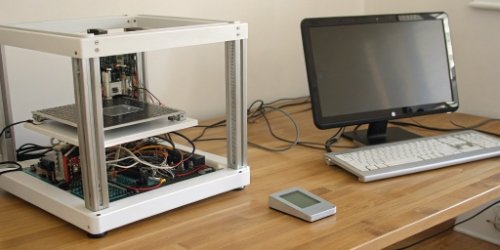
From my 19 years in this industry, I've seen clients struggle with the hidden costs4 of PC integration. The benefits of moving to a programmable scale are not just about convenience. They directly impact your bottom line and operational efficiency.
Reduced Total Cost of Ownership (TCO)
First, let's talk about cost. You eliminate the need to buy a separate industrial PC, which can be expensive. You also do not need to purchase a Windows license or deal with the associated antivirus and system updates. Power consumption is also much lower. An integrated terminal uses far less energy than a full PC running 24/7. Over the life of the equipment, these savings add up significantly.
Enhanced Reliability and Uptime
An industrial environment5 is tough. Dust, moisture, and vibrations can destroy a standard office PC. Even rugged industrial PCs can be a point of failure. A programmable scale's terminal is designed for this environment, often sealed with a high IP rating for protection. By removing the PC, you remove a major component that can fail. This means more uptime for your production line. As we always say, if the line isn't running, you're not making money.
| Aspect | Traditional PC Setup | Programmable Scale |
|---|---|---|
| Hardware | Scale + PC + Peripherals | All-in-one terminal |
| Environment | PC needs protection | Built for harsh conditions |
| Failure Points | More components, more risk | Fewer components, less risk |
| Maintenance | PC updates, scale service | Single device service |
Is It Possible for Programmable Scales to Operate Independently Without External PCs?
You need a weighing station in a remote or standalone location. Running network cables and finding space for a separate PC in these spots can be impractical, time-consuming, and costly to set up.
Absolutely. Programmable scales are designed to be standalone systems. They can execute complex weighing applications, store transaction data locally, and control devices like printers or scanners all by themselves. They do not need a constant connection to a PC.
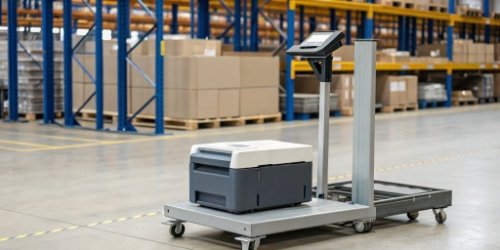
Yes, complete independence is a core feature of these devices. Think of a truck scale at the entrance of a facility or a batching station on a large factory floor. It is not always feasible to have a dedicated PC right there. My team and I have deployed many solutions like this over the years.
True Standalone Operation
A programmable scale achieves this independence through its internal architecture. It has enough processing power and storage to run a full application. For instance, an operator can walk up to the scale, use the touchscreen to select a product, fill a drum to the target weight, and the scale will print a label with all the details. All of this happens without any communication with a server or PC. The transaction data is stored safely inside the scale's memory, just like a small computer.
Offline Data Management
What happens to the data? Many of our clients worry about this. The scale can store thousands of records. When a network connection becomes available, or at the end of a shift, the data can be automatically uploaded to a central database. This "store and forward" capability is crucial. It ensures no data is lost even if your network goes down. This makes them perfect for applications where network reliability is a concern.
How Do Programmable Scales Minimize the Dependency on External Computer Systems?
Constant reliance on a central server creates a single point of failure. If your network or main PC goes down, your entire weighing operation can grind to a halt, costing you time and money.
They minimize dependency by handling logic and control at the device level. Instead of waiting for instructions from a central PC, the scale itself makes decisions. This decentralization ensures that your weighing processes continue even if the network fails.

This concept is about building a more robust and fault-tolerant system. In the past, I have seen entire production lines stop because a single network switch failed. This cut off the scales from the central PC. Programmable scales change this dynamic. They shift intelligence to the "edge," right where the work is happening.
Creating a Resilient System
Instead of a "dumb" terminal that just displays weight, a programmable scale is a "smart" node in your system. It has the full logic of the weighing application running locally. It knows the recipes, the tolerances, and the steps in the process.
Let's break down this shift:
Centralized Model (with PC)
- Scale reports weight to PC.
- PC processes the weight and decides what to do next.
- PC sends a command back.
- If the connection is lost, the process stops.
Decentralized Model (Programmable Scale)
- Scale measures weight internally.
- Onboard software processes the weight and decides what to do.
- Onboard I/O triggers the command directly.
- The process continues without interruption, even if the network is down.
This localized control drastically reduces dependency on external systems. It makes sure that your core operations are more resilient. This is a huge advantage in any manufacturing environment6 where every minute of uptime counts.
Conclusion
Programmable scales streamline operations by merging weighing and computing. They reduce hardware, lower costs, and increase reliability, making them a smart, efficient alternative to traditional PC-based weighing systems.
-
Explore how programmable scales can enhance efficiency and reduce costs in your operations. ↩
-
Learn about the advantages of integrating computing power directly into weighing terminals. ↩
-
Discover the various control functions that programmable scales can handle independently. ↩
-
Understand the potential hidden costs associated with traditional PC-based weighing. ↩
-
Learn about the design features that make programmable scales suitable for tough conditions. ↩
-
Explore how programmable scales can enhance efficiency in manufacturing processes. ↩

Comments (0)