
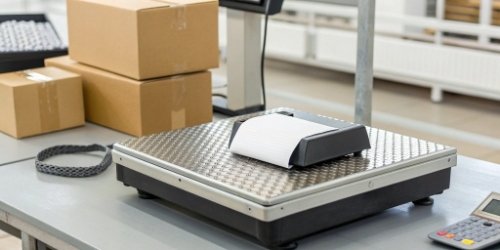
Shipping errors cost you money and customers. A mislabeled package leads to returns and angry clients. But what if one solution could solve your most persistent shipping problem?
Yes, a single label printing scale can virtually eliminate your biggest shipping errors by integrating weighing and labeling into one seamless action. This ensures the weight, shipping data, and the corresponding label are perfectly synchronized, preventing costly inaccuracies before they happen.
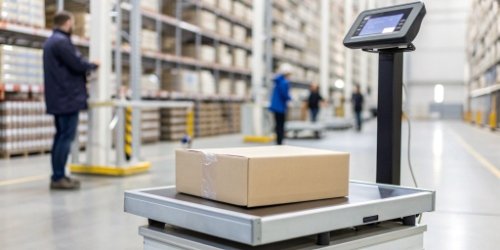
It sounds almost too simple, but the impact on your operation can be massive. For years, I've seen companies struggle with shipping mistakes that seemed unavoidable. They would invest in training, in extra checks, but the errors kept happening. It wasn't until they addressed the root cause—the gap between weighing a package and labeling it—that they saw real change. Let's explore exactly how this piece of equipment works and why it’s so effective. You might be surprised at how many problems this one device can solve for your business.
How Can a Label Printing Scale Reduce Shipping Mistakes?
Manual data entry is slow and full of errors. These small mistakes, like a single wrong digit, add up to big shipping fines and rework costs for your team.
A label printing scale reduces mistakes by automating the data transfer process. The scale captures the exact weight and instantly sends it to the printer. This creates a label with precise information, completely removing human error from manually typing weights.
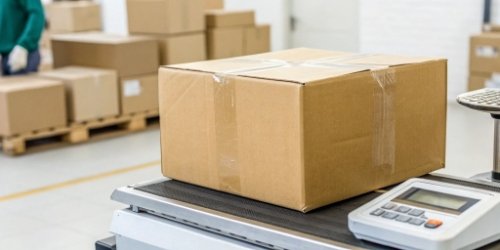
In my 19 years of manufacturing industrial scales1, the biggest source of shipping errors2 I've seen comes from simple human mistakes. A worker is in a hurry, they misread a number, or they type "5.2 kg" instead of "2.5 kg". A label printing scale3 solves this by creating a closed loop. The moment the scale stabilizes with a weight, that exact data is used to generate the shipping label. There is no chance for a typo.
The Power of Automation
Automation here means creating a direct line of communication between the weighing platform and the label printer. Instead of two separate steps with a human in the middle, it becomes one fluid action.
- Step 1: Place the package on the scale.
- Step 2: The scale captures the weight and sends it to the integrated software4.
- Step 3: The printer instantly produces a label with the correct weight and postage.
This seamless process is what we call data synchronicity5. It guarantees the label you stick on the box is the right one, every single time. For software vendors, this is key. When your logistics software integrates with our scales, you can offer your clients an error-proof solution.
Manual vs. Automated Labeling
| Feature | Manual Process | Automated with Printing Scale |
|---|---|---|
| Data Entry | Worker reads scale, types weight | Scale automatically sends weight |
| Error Rate | High (5-10% is common) | Near zero for weight entry |
| Speed | Slow, multiple steps | Fast, single fluid action |
| Cost | High due to errors and fines | Low, quick ROI from error reduction |
What Role Does a Label Printing Scale Play in Preventing Shipping Errors?
Your current shipping process might have gaps. These small gaps between weighing a package and labeling it are exactly where profits leak out and errors sneak in.
A label printing scale acts as a critical quality control point in your shipping workflow. By merging the weighing and labeling stations, it ensures that every single package is correctly weighed and immediately tagged with a corresponding, accurate label.

Think of the label printing scale as a gatekeeper. No package can pass through to the next stage of shipping without first being accurately weighed and correctly identified. This is where it plays its most important role. I remember a client in the seafood industry who constantly had issues with shipping errors. Their environment was wet, cold, and fast-paced, which made manual processes even more difficult. Packages of different weights were getting mixed up, and incorrect labels were being applied. This created huge problems with their customers.
The Scale as a Quality Gate
The scale physically stops the process until two conditions are met: the weight is stable and the label is printed. This single-piece flow prevents the most common mix-up: a worker weighs package A, gets distracted, and then accidentally grabs the label for package A but sticks it on package B. With an integrated system, the label is printed right at the point of weighing, making this mistake almost impossible. It enforces discipline in the workflow.
Adapting to Your Environment
Not all warehouses are clean and dry. As a manufacturer, we understand that you might be operating in a dusty factory, a humid food processing plant, or a cold storage facility. That’s why our industrial printing scales are built to last in these conditions. We provide targeted and cost-effective weighing solutions, from waterproof stainless steel models to scales designed for high-vibration environments. The role of preventing errors remains the same, but the tool must be tough enough for the job. We ensure it is, with every scale we build passing rigorous tests before it ever leaves our factory.
How Effective Is a Label Printing Scale in Enhancing Accuracy in Shipping?
You think your shipping is accurate, but hidden costs are probably there. Carrier chargebacks for incorrect weights and customer returns are quietly eating away at your company's profits.
It is extremely effective. Most of our clients report a near-complete elimination of weight-related shipping errors. This leads to fewer carrier fines, higher customer satisfaction, and a significant boost in operational efficiency from the first week of implementation.
The effectiveness isn't just a small improvement; it's a game-changer. One of our clients, a large e-commerce retailer, was paying thousands of dollars every month in chargebacks from their shipping carrier. They had a team of people whose only job was to verify weights, but mistakes still slipped through. After they installed our integrated label printing scales at their packing stations, their weight-related chargebacks6 dropped by over 98% in the first quarter. The scales paid for themselves in less than six months. This is not a rare story; it's the standard result.
Measuring the Impact on Accuracy
When weight data is entered manually, an error rate of 5% is not uncommon. For a company shipping 1,000 packages a day, that's 50 potential errors daily. A label printing scale reduces that weight-entry error rate to virtually zero. The accuracy is no longer dependent on a person; it's dependent on a calibrated, certified machine. This provides a level of certainty that you just can't achieve with a manual process. The impact is immediate and measurable on your bottom line.
Beyond Weight: The Data Benefit
For our clients who are software providers, the benefit goes even deeper. Our scales can communicate directly with your Warehouse Management System (WMS) or Enterprise Resource Planning (ERP) software. This means your system receives clean, 100% accurate weight data in real-time for every single package. You can use this data for analytics, for billing, and for providing your customers with better visibility into their shipping operations7. It transforms the scale from a simple tool into a powerful data collection node in your network.
What Shipping Errors Can Be Addressed by Using a Label Printing Scale?
Many different kinds of shipping errors plague your workflow. From incorrect postage to packages sent to the wrong destination, each mistake costs your business time and money.
A label printing scale directly addresses errors from incorrect weight entry, which cause wrong postage calculations and carrier fines. It also prevents label mismatches, where a label for one package is accidentally applied to another, ensuring the right information is on the right box.
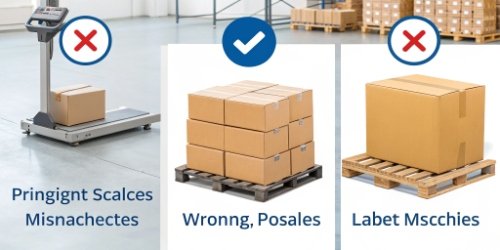
When we analyze the root cause of most shipping problems, they often trace back to a few critical mistakes made at the packing station. A label printing scale is designed specifically to target and eliminate these high-impact errors before they can cause a ripple effect down your supply chain. Let's break down exactly which problems it solves.
A Breakdown of Common Shipping Errors
| Error Type | The Problem | How a Label Printing Scale Solves It |
|---|---|---|
| Incorrect Weight Entry | A worker types 1.5 kg instead of 1.0 kg. This leads to paying too much or too little for shipping. | The scale captures the exact weight automatically. There is no manual entry, so there is no |
| Carrier Chargebacks | Shipping carriers audit packages and charge hefty fines for any discrepancies between the declared weight and the actual weight. | By ensuring the declared weight is always the actual weight, chargebacks for weight discrepancies are eliminated. |
| Label Mismatch | A busy worker prints several labels at once, then accidentally puts the label for Package A onto Package B. | The label is printed at the moment of weighing for that specific package. This one-to-one process makes it nearly impossible to mix up labels. |
| Wrong Shipping Class | Postage rates are often tiered by weight. An incorrect weight can place the package in the wrong, more expensive tier, or vice-versa. | With an accurate weight, your shipping software can automatically assign the correct, most cost-effective shipping class8 every time. |
By building a solution that tackles these core issues, you aren't just putting a bandage on the problem. You are fixing the system from the ground up, making your entire shipping operation more efficient, accurate, and profitable.
Conclusion
A label printing scale isn't just another tool. It's a strategic solution that synchronizes weighing and labeling to boost efficiency, cut costs, and eliminate your most persistent shipping errors.
-
Discover the role of industrial scales in enhancing shipping accuracy. ↩
-
Learn about the various shipping errors and effective strategies to prevent them. ↩
-
Explore how a label printing scale can streamline your shipping process and reduce errors. ↩
-
Learn about integrated software solutions that improve shipping processes. ↩
-
Explore the concept of data synchronicity and its importance in shipping accuracy. ↩
-
Understand weight-related chargebacks and how to minimize their impact on your business. ↩
-
Understand the key components that contribute to efficient shipping operations. ↩
-
Understand how shipping class affects costs and how to determine the correct class. ↩


Comments (0)