

Struggling with complex product tracking and labeling? This confusion costs you time, money, and accuracy. What if one device could simplify everything for you?
Yes, a single smart weighing device with integrated printing and data management can solve these challenges. It combines accurate weighing, instant labeling, and system data transfer into one seamless step, boosting efficiency across your supply chain.
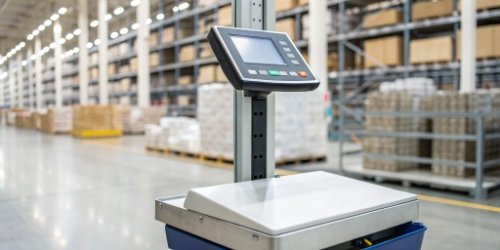
I've been in the industrial weighing business for nearly twenty years. I've seen countless companies wrestle with disconnected systems for weighing, labeling, and data entry. The dream is always a single, simple solution. Today, that solution is a reality. These new smart devices don't just weigh; they think. They connect your physical products to your digital systems instantly. This changes everything for businesses that need to track every item perfectly. Let's dive deeper into how this works and what it means for you.
What will an effective traceability system help?
Losing track of products in your supply chain? This leads to difficult recalls, lost revenue, and damaged customer trust. An effective traceability system gives you complete visibility and control.
An effective traceability system1 gives you full visibility from production to sale. This boosts safety, makes recalls much faster, improves inventory management, and builds critical trust with both consumers and regulators.
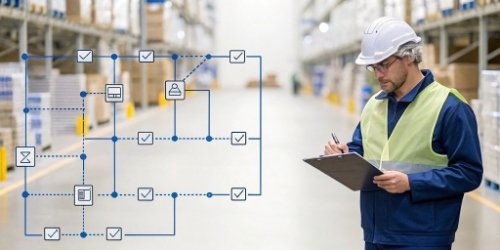
An effective system is about more than just tracking; it's about control and information. At Weigherps, we've helped clients build systems that provide real-time data at every step. This information is key to making smart business decisions. When you know exactly where every product is, you can manage your operations with much more confidence.
Enhancing Supply Chain Visibility
Full visibility means you can see the entire journey of a product. You know where your raw materials came from. You know where a specific batch is in your warehouse. And you know which customer received it. This real-time data helps managers prevent stockouts, reduce waste, and optimize logistics. A smart scale that sends weight and product data directly to your inventory system makes this process automatic and error-free.
Improving Product Safety and Quality Control
Imagine a quality issue is reported. With a good traceability system, you can pinpoint the exact batch affected in minutes, not days. You can trace it back to the specific production line, date, and even the source of raw materials. This allows for quick, targeted recalls that protect consumers and limit financial damage. It turns a potential disaster into a manageable problem.
Building Consumer and Regulator Trust
Today, customers want to know more about the products they buy. A traceability system allows you to provide that transparency. A simple QR code on a label, printed by an integrated scale, can show the product's origin and journey. This builds amazing brand loyalty. Also, it ensures you meet strict government regulations, which is a requirement for doing business in most markets.
| Benefit | Impact on Business |
|---|---|
| Visibility | Better inventory and logistics management |
| Safety | Faster, more precise product recalls2 |
| Compliance | Meets legal and regulatory standards |
| Trust | Strengthens customer confidence and brand reputation3 |
What can be a challenge when tracing individual products?
Trying to track every single item seems impossible, doesn't it? Manual processes are slow and filled with errors that cause major headaches. Understanding these challenges is the first step to solving them.
The biggest challenges are managing huge amounts of data, integrating different software systems, and the high initial cost. Ensuring people capture data correctly across the supply chain is also very difficult.
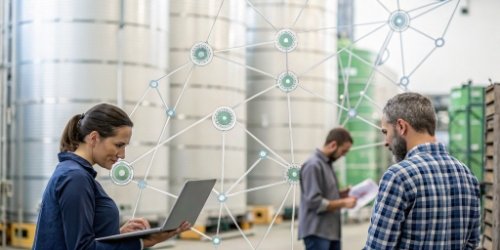
Over the years, I've spoken with hundreds of technical directors. They all face similar hurdles when they try to implement true item-level tracing. The problem usually isn't one single thing. It's a combination of issues related to technology, cost, and people. Breaking these problems down helps us find a real solution. A powerful, flexible device is often the missing piece that ties everything together.
Data Integration Issues
Your supplier uses one system. Your logistics partner uses another. You have your own internal software. Getting these different systems to share data smoothly is a huge challenge. This creates "data silos4," where important information gets trapped in one system. The key is to use hardware, like a smart scale, that can speak a common language and send data in a universal format that all systems can understand.
The Cost Factor
Let’s be honest, setting up a good system costs money. There's the hardware, the software, and the time it takes to train your team. Many companies hesitate because of this initial investment. But we always advise them to look at the long-term return. The money you save by preventing one large recall or by making your inventory more efficient often pays for the entire system, and then some. It's an investment in your company's security and future.
Maintaining Data Accuracy
A traceability system is only as good as the data inside it. One wrong manual entry can make the entire chain of data useless. This is where automation is so important. A smart weighing device5 that automatically captures the weight, links it to a product ID, and prints a barcode eliminates the chance of human error at a critical step. This ensures the data entering your system is accurate from the very start.
What is a consequence of ineffective traceability?
Are you worried about what happens if your traceability system fails? The consequences can be catastrophic for your business and brand. Let's look at the real risks you need to avoid.
An ineffective traceability system leads to slow and expensive product recalls, serious damage to your brand's reputation, and large regulatory fines. In the worst cases, it causes major financial losses and legal trouble.

I remember a client who came to us after a major product recall. They made food products. A problem was detected, but they couldn't figure out which batches were affected. They had to recall three months of production, costing them millions. Their old system was a mess of paper records and separate spreadsheets. It was a painful lesson, but it showed them the absolute necessity of an integrated, automated system. They are now one of our biggest success stories, but I never want to see another company go through that.
Financial Losses
The cost of a recall is much more than just the value of the lost products. You have to pay for shipping the products back, storing them, and destroying them. You lose sales while your product is off the shelves. And you might face lawsuits from customers or partners. These direct financial hits can be devastating, especially for small to medium-sized businesses.
Brand and Reputation Damage
Trust is everything. It can take you years to build a great reputation. A public safety recall can destroy that trust overnight. Customers will remember the news stories and may not buy from you again, even after the problem is fixed. Competitors will use it against you. Rebuilding that trust is a long, expensive process. Effective traceability protects the brand you've worked so hard to build.
Regulatory and Legal Problems
Governments everywhere are creating stricter laws for product traceability, especially in the food and medical industries. If you can't provide traceability data when they ask for it, you can face huge fines. In some cases, officials can even shut down your operations until you prove you are compliant. It is no longer optional; it's a requirement to operate legally.
| Consequence | With Ineffective Traceability | With Effective Traceability |
|---|---|---|
| Recalls | Slow, wide, and very costly | Fast, targeted, and low-cost |
| Brand Image | Damaged, loss of customer trust | Protected, demonstrates responsibility |
| Legal Risk | High fines, potential lawsuits | Low risk, easy to prove compliance |
What are the two main types of traceability systems?
Not sure which traceability system is right for your business? Choosing the wrong one is a waste of your time and money. Understanding the two main types will make your decision much clearer.
The two main types are "internal traceability" and "chain traceability." Internal traceability tracks products within your own company, while chain traceability follows products across the entire supply chain, from raw material to final consumer.
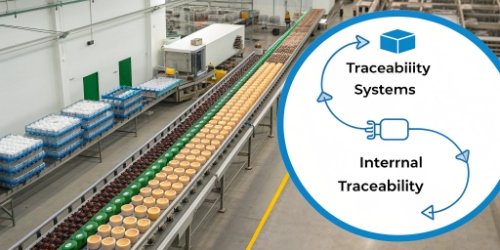
Many of our clients get confused by these terms. They think they have to choose one or the other. But the reality is that most successful businesses need both. You need to perfect your internal tracking first. Once that is solid, you can connect it to your external partners. The best approach is to use tools and devices flexible enough to handle both internal needs and the data-sharing requirements of the wider supply chain.
Internal Traceability Explained
Internal traceability is all about what happens inside your four walls. It tracks a product's journey from the moment you receive raw materials to the moment a finished product is shipped out. The goal is to improve your own efficiency, manage quality, and optimize production processes. For example, you might use it to track a batch of ingredients as it moves through different mixing and packaging stations. Our smart printing scales6 are perfect for this. They weigh ingredients, print labels with batch numbers and barcodes, and record the data for internal use.
Chain Traceability Explained
Chain traceability, sometimes called external traceability, looks at the bigger picture. It connects the internal systems of all the different companies in a supply chain. This means the farm, the processor, the distributor, and the retailer all share data to create one complete product history. This is essential for consumer safety and transparency across the whole industry. It requires cooperation and standardized data formats, so everyone is speaking the same language.
Choosing the Right System for You
You don't have to choose just one. A strong traceability strategy starts with a rock-solid internal system. Once you can track everything perfectly within your own operations, you are ready to connect to your supply chain partners7. The ideal solution is a weighing device that can do both. It should be able to print simple internal labels for your own use but also generate standardized labels with barcodes (like GS1) that your partners can scan and understand. This flexibility is what we build into all our smart weighing solutions.
| Feature | Internal Traceability | Chain Traceability |
|---|---|---|
| Scope | Within one company | Across the entire supply chain |
| Main Goal | Process optimization and internal control | Consumer safety and transparency |
| Data | Private company data | Shared data between partners |
| Example | Tracking a batch on a production line | Tracking a product from farm to store |
Conclusion
A single smart weighing device with printing and data functions is the key. It solves complex traceability challenges and gives you the control and efficiency your business needs to grow.
-
Understand the critical role of traceability systems in ensuring product safety and compliance. ↩
-
Understand the critical steps to effectively manage product recalls and minimize impact. ↩
-
Explore strategies to safeguard your brand's reputation in crisis situations. ↩
-
Understand the impact of data silos and how to integrate systems for better data flow. ↩
-
Explore how a smart weighing device can revolutionize your product tracking and labeling processes. ↩
-
Discover how smart printing scales can enhance your production and labeling processes. ↩
-
Explore collaboration strategies to enhance traceability across the supply chain. ↩


[…] product all the way back to the raw materials used, with weight data to back it up. This level of traceability9 is simply impossible with a paper-based system. It also helps our clients meet international […]
[…] I worked closely with a client in Ethiopia who faced a unique challenge. Their country doesn't have the capacity to produce specialized label paper locally. Every roll of pre-printed labels had to be imported, which was slow and expensive. If they ordered the wrong design or quantity, the mistake was magnified tenfold. For them, moving to on-demand printing wasn't just about reducing waste; it was a business-critical decision. They started stocking only blank labels, which were cheaper and easier to source. This change eliminated obsolescence waste4 and solved a major supply chain headache5. […]
[…] industries like food processing or pharmaceuticals, traceability6 is not optional. A custom label that includes a unique serial number, batch ID, exact weight, and […]