
Struggling with inconsistent product quality? Human error in manual checks can be costly. A smart scale enforces procedural steps, guaranteeing quality and saving you money every single day.
Absolutely. A smart scale enforces procedural steps by integrating with your Standard Operating Procedures (SOPs). It guides operators through each task and can prevent them from proceeding until a step is completed correctly. This ensures every product meets your exact quality standards without deviation.
You have seen that it's possible, but you are probably wondering exactly how this works in practice. It is not just about weighing. It is about creating an intelligent, foolproof system that protects your brand's reputation. We are going to break down how these scales become the guardians of your quality control1, starting with how they ensure total compliance with your established procedures.
How Do Smart Scales Ensure Compliance with Quality Procedures?
Are complex procedures causing missed steps and rework? These inconsistencies hurt your bottom line and production targets. Smart scales create a digital, unskippable checklist, forcing compliance and eliminating procedural errors.
Smart scales ensure compliance using custom software that maps out your exact workflow. They prompt operators for each step, verify inputs like weight or component scans, and log everything automatically. The process cannot continue until the current step is correctly completed, making compliance mandatory.
As a manufacturer with 19 years of experience, we have seen firsthand how easily manual processes can fail. A smart scale2 changes the game by digitizing and enforcing your workflow. It is not just a scale; it is an active participant in your quality control system.
Guided Workflow Integration
First, we work with you to understand your Standard Operating Procedures. We take your paper checklists or digital documents and build them directly into the scale’s software. This means the scale knows every step, every ingredient, and every tolerance required. We can also integrate external devices. For example, the scale can require an operator to scan a barcode on a raw material container. If it is the wrong material, the system will not proceed. This simple check prevents massive, costly batching errors before they happen.
Real-time Verification and Lockouts
This is where the enforcement really happens. The scale actively verifies each step in real time. If an operator needs to add 10kg of a powder, the scale will not allow them to move to the next step until the weight is within the exact tolerance you have set, like 9.98kg to 10.02kg. If the weight is wrong, the screen flashes red and an alert sounds. This "lockout" feature makes it physically impossible to skip a step or perform it incorrectly. It removes the element of human error or judgment from the equation.
Data Logging for Audits
Finally, every single action is logged. Every weight, every scan, every operator ID, and every timestamp is automatically recorded into a secure digital log. This creates a perfect, unchangeable audit trail. When a customer or a regulator asks you to prove that a specific batch was made according to procedure, you can provide a detailed report in seconds. This is a level of accountability that manual logging can never achieve.
| Feature | Manual Process | Smart Scale Process |
|---|---|---|
| Guidance | Paper checklist or memory | On-screen, step-by-step prompts |
| Verification | Operator's visual check | Automatic weight/scan validation |
| Enforcement | Relies on supervision | System lockouts for non-compliance |
| Logging | Manual logbook, prone to error | Automatic, timestamped digital record |
What Is the Role of Intelligent Scales in Enforcing Standard Operating Procedures?
Your SOPs look great on paper, but are they truly followed on the factory floor? This gap between documentation and reality creates major business risks. Intelligent scales turn static documents into an interactive process.
The role of intelligent scales is to be an active enforcer of your Standard Operating Procedures (SOPs). They transform from a passive tool into a digital supervisor. The scale actively manages the workflow, validating each step to ensure your standards are met every single time.
Thinking of a scale as just a measurement tool is an outdated concept. In a modern, connected factory, an intelligent scale plays a much bigger role. It is a critical node in your production system that actively improves quality and efficiency by changing its fundamental role from a passive device to an active manager.
The Scale as a Gatekeeper
The most important role is that of a gatekeeper. Nothing gets past the scale unless it meets your exact specifications. Think of a recipe for a food product or a chemical compound. The scale acts as a checkpoint at each step of the formulation. An incorrect amount of a key ingredient cannot be added. The system will simply not allow the operator to confirm the step and proceed. I remember a client in the food ingredient business who reduced their batch failures3 to nearly zero after implementing our scales. They told me the scale paid for itself in just three months by preventing just one major formulation error.
The Scale as a Trainer
For new employees, the learning curve for complex procedures can be steep, and mistakes are common. The scale's guided interface acts as an on-the-job trainer. It shows the operator exactly what to do, what to add, and how much to add. This reduces training time significantly. More importantly, it empowers new staff to perform complex tasks with confidence and accuracy from day one. The on-screen prompts ensure that even someone on their first shift can execute a procedure as perfectly as a 20-year veteran.
The Scale as a Data Source
Beyond enforcement, the scale plays a vital role as a data collector. It logs cycle times for each step, tracks material consumption4 with high precision, and can even monitor operator performance. This data is pure gold for your technical and operations teams. You can analyze it to identify bottlenecks, optimize your SOPs for better efficiency, and conduct more accurate inventory management5. The scale does not just enforce your current standards; it provides the data you need to improve them continuously.
Can Advanced Scales Automatically Guide Users Through Quality Assurance Steps?
Training staff on complex QA procedures is time-consuming and expensive. Early mistakes are inevitable and costly. Advanced scales provide clear on-screen instructions, guiding users step-by-step and drastically reducing training time.
Yes, absolutely. Advanced scales use a custom user interface to automatically guide users through quality assurance steps. The screen displays clear instructions, prompts for specific actions, and confirms each completion. This creates a foolproof interactive tutorial for every operator, for every single task.

Automatic guidance is one of the most powerful features we build into our weighing systems. It is not just about showing text on a screen. It is about creating a dynamic, interactive experience that makes it almost impossible to make a mistake. We achieve this through deep customization and integration.
Customizable User Interfaces (UI)
As an OEM/ODM provider, we do not believe in one-size-fits-all solutions. We design the entire user interface based on your specific QA workflow. We can use images of the correct components, color-coded prompts, and large, easy-to-read text in multiple languages. For a client who prepares multi-part paint mixes, we designed a screen that visually shows "Step 1: Add 5.00 kg of Base A." As they pour, a graphical bar fills up. It turns green when the weight is within tolerance and locks the screen. Only then does the prompt for "Step 2: Add 2.50 kg of Pigment B" appear. This visual feedback is intuitive and highly effective.
Integration with External Devices
Guidance extends beyond the scale itself. Our systems are part of the IoT ecosystem. We can integrate barcode scanners, temperature probes, RFID readers, and other sensors. The QA process might start with the scale prompting, "Scan product barcode." If the barcode does not match the planned work order, the process stops. Next, it might say, "Check temperature." The operator uses an integrated probe, and the reading is automatically logged. This ensures every prerequisite condition is met and documented before the core weighing task even begins.
Adaptive Workflows
Modern quality assurance6 is not always a linear process. Our advanced scales can handle adaptive, branching workflows. Based on the data it collects, the scale can guide the user down different paths. For example, in a sampling process, if a product sample's weight is within the target range, the scale will prompt the operator to print a "PASS" label. However, if the weight is outside the tolerance, it might trigger a different workflow entirely, guiding the user through a "NON-CONFORMANCE" reporting procedure and alerting a supervisor automatically. This intelligent guidance ensures that even exceptions are handled according to your standard procedure.
How Do Smart Weighing Systems Contribute to Consistent Quality Control?
Is achieving consistent quality across different shifts, operators, and locations a constant battle? This variability hurts customer trust and brand reputation. Smart weighing systems enforce one single standard, ensuring identical results.
Smart weighing systems ensure consistent quality by removing human variability. They enforce a single, digitized procedure that every operator must follow exactly. This standardization guarantees every product is manufactured to the same precise specification, eliminating differences between shifts, operators, or even production facility locations.
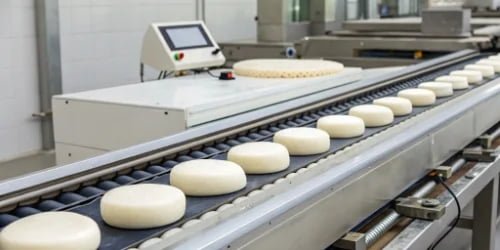
Consistency is the ultimate goal of quality control. Your customers expect the same product every time they buy from you. Smart weighing systems are the foundation for achieving this level of consistency because they target the biggest source of variation: people.
Eliminating Operator Discretion
In any manual process, small variations are introduced by different operators. One person might be slightly faster, another might be more cautious. One might round a measurement up, another might round it down. Individually, these are tiny differences, but they add up to inconsistent product outcomes. A smart weighing system eliminates this discretion. The process is defined in the software. The tolerances are absolute. The sequence is fixed. Whether it is your most experienced technician or a temporary worker on the night shift, the system ensures the procedure is executed in the exact same way. Every single time.
Centralized Recipe and Procedure Management
If you have multiple production line7s or facilities, maintaining consistency is even harder. How do you ensure everyone is using the latest version of a formula? In my experience, relying on paper documents is a recipe for disaster. With our networked smart scales, you manage all your recipes and procedures from a central computer. When you need to adjust a formula, you change it once. The update is then pushed to every connected scale instantly and automatically. This guarantees that your facility in Europe is running the exact same procedure as your facility in Asia, eliminating regional variations.
Creating a Culture of Quality
Finally, when you embed quality rules directly into the tools your team uses every day, it fundamentally changes your company culture. Quality stops being a separate "department" or an abstract goal. It becomes a built-in, unskippable part of the production process itself. The system enforces the standard, which reinforces the importance of quality with every task. Employees see the company investing in tools that help them do their job right, which fosters a shared sense of responsibility for the final product.
Conclusion
Smart scales do more than weigh. They enforce procedures, guide users, and guarantee consistent quality, turning your standards into action and boosting your reliability and profitability.
-
Stay updated on innovative quality control methods that can enhance your production quality. ↩
-
Explore how smart scales can enhance efficiency and quality control in your manufacturing processes. ↩
-
Understand the common causes of batch failures and strategies to mitigate them. ↩
-
Discover techniques to reduce waste and optimize material usage in your production. ↩
-
Learn about effective inventory management strategies to enhance operational efficiency. ↩
-
Explore best practices that can help you achieve high standards in quality assurance. ↩
-
Find out how to enhance the efficiency of your production line for better output. ↩



Comments (0)