
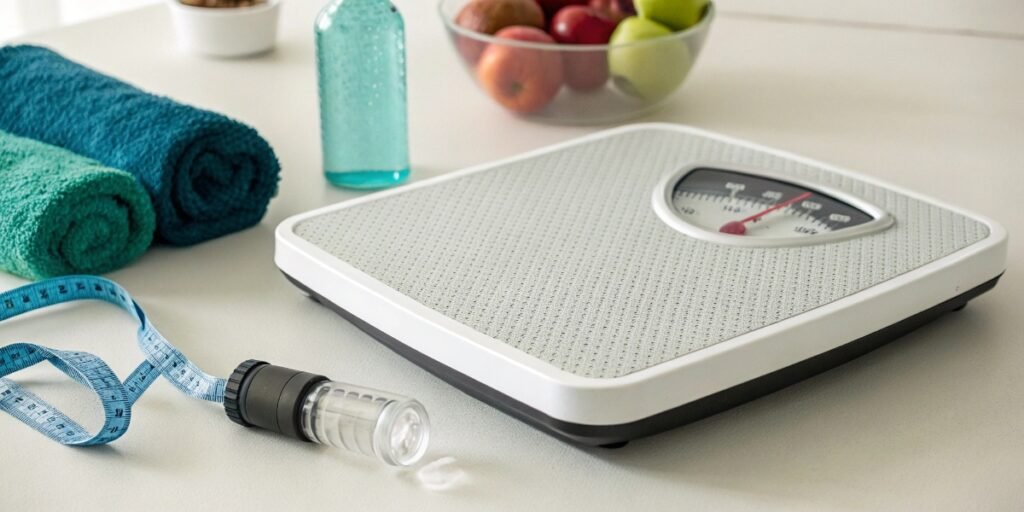
Your business relies on accurate data. But what if your scales are silently giving you wrong information? This can lead to huge losses and costly errors in your production line.
Yes, a weighing scale can be wrong. A "wrong" scale isn't just one that won't turn on. The most dangerous failure is inaccuracy. This can result from calibration issues, environmental changes, or simple wear and tear. In industry, this hidden problem can be a disaster.

I've been in the industrial scale1 business for nearly 20 years. I can tell you that a faulty scale isn't always obvious. It doesn't always flash an error code. Often, the signs are subtle, but the consequences are huge. I see this all the time with new clients who were losing money without even knowing it. That's why I get asked a lot of questions about scale accuracy2. To really trust your equipment, you need to know the answers to some fundamental questions. Let's break them down one by one so you can protect your operations.
How do I know if my weight scale is accurate?
You look at a number on a screen and have to trust it. But nagging doubts about your scale's accuracy can cause production delays and undermine confidence in your entire process.
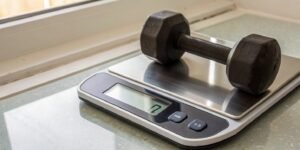
To check a scale's accuracy, use a known, certified calibration weight. Place it on the scale and see if the reading matches the weight. Also, check for repeatability by weighing the same object multiple times. Consistent and correct readings indicate an accurate scale. Regular professional calibration is essential.
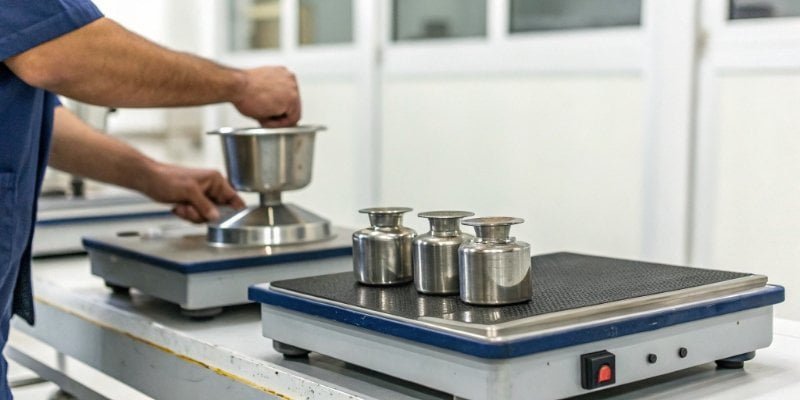
In my experience, thinking your scale is accurate is not enough. You have to prove it. The good news is that you can perform some simple checks yourself. However, these checks should never replace professional service, especially in a critical industrial environment. A combination of daily checks and scheduled professional calibration3 is the best way to ensure total accuracy. I remember a client who was mixing chemical compounds. Their daily checks seemed fine, but they were slowly drifting out of tolerance. A professional calibration caught the error, preventing a batch of product worth thousands from being ruined. It showed them the real value of scheduled maintenance.
Simple Tests You Can Perform Daily
You don't have to be a technician to do these basic checks.
- Zero Test: Before placing anything on the scale, make sure it reads exactly zero. If it doesn't, use the "Tare" or "Zero" function. If it still won't stay at zero, it may need service.
- Known Weight Test: Use an object with a weight you know for certain. A certified test weight is best. If a 10 kg test weight reads 10.2 kg on your scale, you have a problem.
- Repeatability Test: Weigh the same object 5-10 times. A reliable scale will show the exact same reading every single time.
When to Call a Professional
DIY checks are great for daily confidence, but professional calibration is a deeper process.
| Feature | Daily DIY Checks | Professional Calibration |
|---|---|---|
| Tools Used | Any known weight | Certified, traceable test weights |
| Goal | Spot-check for obvious errors | Adjust and certify scale to official standards |
| Scope | Basic accuracy and repeatability | Linearity, eccentricity, and repeatability test4s |
| Outcome | Peace of mind | Official calibration certificate for audits |
Is 70 kg my mass or weight?
You see "kg" on a scale and think you know exactly what it means. But is it mass or weight? This common mix-up can cause real problems in scientific and industrial weighing.
On Earth, a scale showing 70 kg is measuring your mass. However, the scale technically works by measuring weight, which is the force of gravity on your mass. It then converts this force into a simple mass reading. For most practical purposes, you can treat 70 kg as mass.
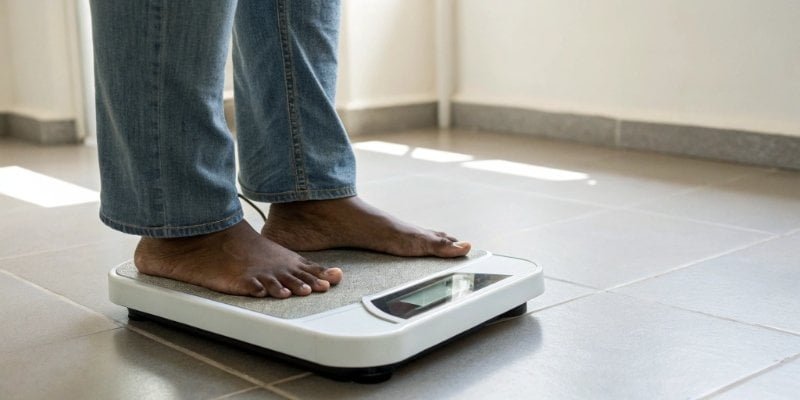
This question seems academic, but it gets to the heart of how scales work. Understanding the difference is crucial for any business that relies on high-precision measurements. Modern scales are smart devices. They do the physics for you so you can get a simple, useful number. A load cell5 inside the scale measures a force—your weight. The scale's software, which knows the local force of gravity, then calculates and displays your mass. That's why a high-quality industrial scale may ask for your location's postal code during setup. It's using it to fine-tune its gravity calculations for maximum accuracy. Forgetting this step is a common mistake that can introduce small but significant errors.
Understanding the Science Behind the Scale
Let's make this simple. Mass and weight are not the same thing, and your scale is built to handle that fact.
- Mass: This is the amount of "stuff" in an object. It's constant no matter where you are in the universe. It is measured in kilograms (kg) or pounds (lb).
- Weight: This is the force of gravity pulling on an object's mass. It changes depending on where you are. Your weight on the Moon would be much less than on Earth. It is measured in Newtons (N).
Your scale measures the force in Newtons and then does the math to show you the mass in kilograms.
| Concept | Mass | Weight |
|---|---|---|
| Definition | Amount of matter in an object | The force of gravity on an object |
| Unit | Kilogram (kg), Pound (lb) | Newton (N) |
| Changes with Location? | No, it's a constant property | Yes, depends on local gravity |
| How a Scale Measures | Calculated and displayed | Directly measured by the load cell |
How accurate are weighing scales?
You assume a new scale is perfectly accurate. But "accuracy" is a broad term that varies widely. Choosing a scale with the wrong accuracy class for your application is a common and costly mistake.
A scale's accuracy depends on its type and class. High-precision analytical balances can be accurate to 0.0001 grams. Industrial platform scales are usually certified to a specific tolerance, such as OIML Class III, which is required for legal-for-trade applications.

When a client asks me "how accurate is this scale?" my answer is always, "what do you need to do with it?" There is no single answer. The accuracy needed to weigh bulk gravel is completely different from what's needed to mix pharmaceuticals. The key is to match the scale's certified class to your application. International standards, like OIML (International Organization of Legal Metrology), exist for this reason. They define accuracy classes to ensure fairness in trade and consistency in industry. As a manufacturer, we build our scales to meet these strict standards. It means our customers can be confident their scale is not just accurate, but legally compliant for their specific job.
Scale Accuracy is Not One-Size-Fits-All
Choosing the right scale means understanding the classes of accuracy. A higher class number does not mean less accurate; it just means it is designed for a different purpose with different tolerances.
| OIML Class | Example Application | Typical Readability |
|---|---|---|
| Class I | High-precision laboratory weighing | 0.001 mg - 1 mg |
| Class II | Jewelry, precious metals, lab use | 1 mg - 100 mg |
| Class III | Commercial food weighing, logistics | 0.1 g - 10 g |
| Class IIII | Highway weight bridges, bulk weighing | > 5 g |
When buying a scale, don't just look at the price. Look for its OIML or NTEP classification. This tells you what it was built and certified to do. Investing in a Class II scale for a Class III job is a waste of money. Even worse, using a Class IIII scale for a Class III job could lead to financial losses or legal trouble.
Why am I heavier on digital scales?
You step on a new digital scale and the number is higher than your old mechanical one. Your first thought is that the new scale must be broken. Is the new scale wrong?
You probably aren't heavier. Digital scales are much more precise than older mechanical (analog) scales. They use electronic load cells to detect small variations. Your old scale's springs were likely worn out, causing it to consistently under-report the actual weight. A new, accurate digital scale is just telling the truth.
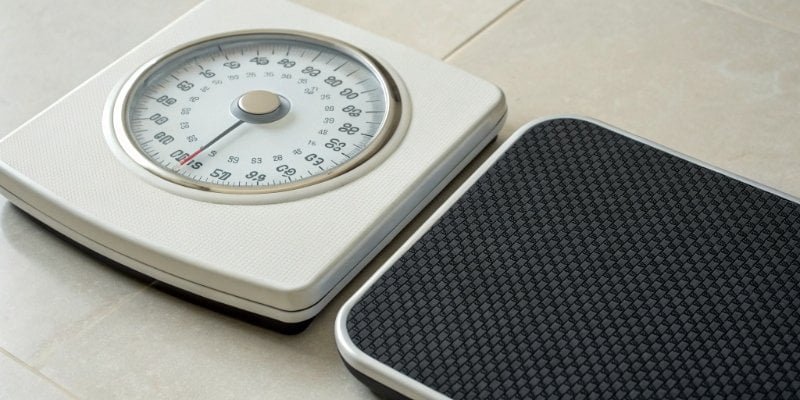
This is one of the most common questions I hear, and it translates directly to the industrial world. For years, a company might use an old mechanical floor scale. One day, they upgrade to a new digital system from us. Suddenly, they find their "100 kg" pallets actually weigh 103 kg. They haven't gotten heavier; they've just gotten a more accurate measurement. For years, they were giving away 3% of their product for free on every shipment because their old scale was lying to them. The move to digital technology isn't about getting a different number; it's about getting the right number, consistently and reliably, every single time. That's not a flaw; that's a direct path to better process control and profitability.
The Difference Between Analog and Digital Technology
The technology inside the scale makes all the difference. Analog scales are simple but prone to error over time. Digital scales are more complex but far more reliable.
| Feature | Analog (Mechanical) Scales | Digital (Electronic) Scales |
|---|---|---|
| Technology | Springs and levers | Electronic load cells and software |
| Precision | Low; sensitive to wear and tear | High; detects very small changes |
| Durability | Springs stretch and wear out over time | Solid-state electronics are very durable |
| Calibration | Drifts easily, needs frequent adjustment | Highly stable, holds calibration longer |
| Features | Basic weight display only | Tare, data output, unit switching, IoT |
Upgrading from an old analog system to a modern digital one is one of the fastest ways to eliminate hidden losses. The return on investment isn't just in new features, but in the accuracy that prevents costly mistakes.
Conclusion
A wrong scale is an inaccurate one. Understanding, testing, and choosing the right technology for your needs are vital for protecting your business from the high cost of bad data.
- Explore the various types of industrial scales and their specific applications. ↩
- Learn about methods to verify scale accuracy and maintain precision in your operations. ↩
- Find out the importance of professional calibration and when it's necessary for your equipment. ↩
- Learn how to conduct a repeatability test to ensure your scale provides consistent readings. ↩
- Gain insights into the technology behind load cells and their role in accurate measurements. ↩


Comments (0)