

Lost or damaged your scale’s power cord? Using the wrong one can destroy your equipment, causing downtime. You can find a replacement, but you must know what to check.
Yes, you can use a different power cord for your scale. However, you must ensure the voltage (V) and the connector type are an exact match. The amperage (A) rating on the new cord must be equal to or higher than the original one.
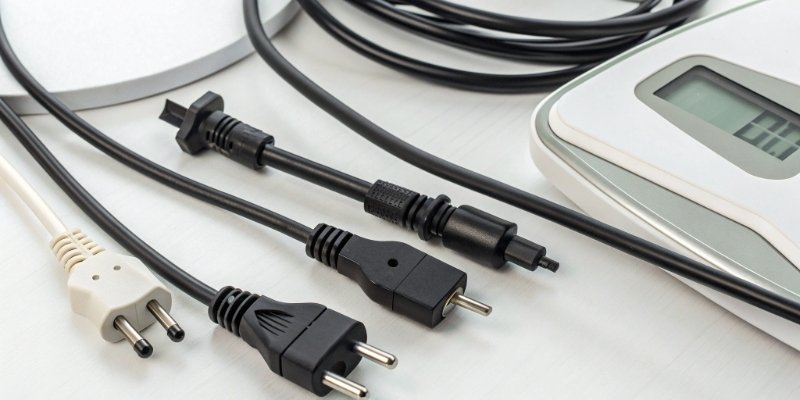
So, you know it's possible to find a replacement. But there's a big difference between finding a cord that fits and finding one that works safely. I’ve seen cheap, incompatible cords cause major problems for our clients, from fried motherboards to inaccurate readings. Let’s walk through the details so you can choose a new cord with confidence and keep your investment safe.
How do l know if a power cord is compatible?
Confused by technical specs like volts, amps, and plug types? Picking the wrong one feels like a gamble with your expensive scale. Don't risk it; let's learn the simple checks.
Compatibility depends on three key things: matching the voltage (V), ensuring the amperage (A) is the same or higher, and getting the right connector. Always check the original adapter or the scale's label for these specs.
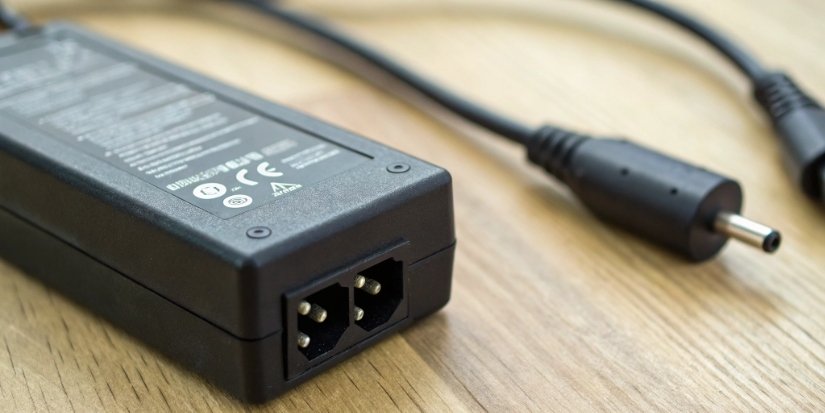
When a client asks me this, I tell them to think of it like matching a key to a lock. It has to be just right, or it won't work, and you might break the lock. For power cord1s, there are three main parts to get right.
Voltage, Current, and Connectors
First, voltage and current are non-negotiable. The voltage (V)2 must be an exact match to what your scale requires. You can usually find this printed on the original power adapter or near the power port on the scale itself. If your scale needs 9V, you must use a 9V adapter. Using a 12V adapter will send too much power and likely burn out the mainboard. Using a 6V adapter is not enough power and will lead to unstable readings or display errors.
Second, the current, measured in amps (A) or milliamps (mA), must be equal to or higher than the original. Your scale will only draw the amount of current it needs. A power adapter with a higher amp rating is perfectly safe. For example, if your scale needs 2A, using a 3A adapter is fine. But using a 1A adapter is not. It will overheat and fail because the scale is trying to draw more power than the adapter can provide.
Finally, the connector must match perfectly. There are many types, like round DC jacks, standard three-prong computer cords, or even USB. A plug that is too loose can cause arcs, power loss3, and is a major fire hazard.
| Parameter | Requirement | Why it Matters |
|---|---|---|
| Voltage (V) | Must be an exact match | Too high damages the scale; too low causes errors. |
| Current (A) | Equal to or higher than original | Too low causes the adapter to overheat and fail. |
| Connector | Must fit securely and match | A loose fit causes power loss and is a fire risk. |
What makes a good quality replacement power cord?
Worried a cheap replacement cord could be a fire hazard or cause data errors? It's a valid concern. I've seen low-quality cords fail in critical moments. Let's cover what defines a safe, reliable cord.
Look for cords with official safety certifications (like CE, UL, or RoHS). A good cord has a pure copper core for better conductivity. Also, choose plugs with solid metal prongs that resist heat better than plastic ones.
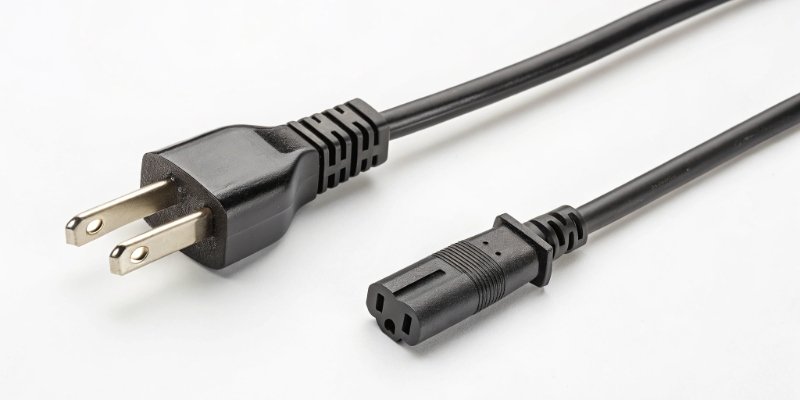
As a manufacturer with 18 years of experience, we know that the small components make a big difference in a product's lifespan and safety. A power cord isn't just a wire; it's a critical safety device. When you're choosing a replacement, don't just look at compatibility. You have to consider quality.
Look for Certification Marks
The easiest way to spot a quality cord is to look for safety certification marks. In Europe, this is the CE mark. In North America, it's often a UL or ETL mark. These logos mean the product has been independently tested to meet strict safety and performance standards. Uncertified electronics have not been tested and can be dangerous. We would never ship a product from our facility without ensuring every component, especially the power supply, is fully certified. This is our promise of reliability to you.
Material Matters: Core and Plug
The materials used inside the cord and at the plug end are crucial. The best cords use a pure copper core4. Copper is an excellent conductor of electricity and handles heat well. Cheaper cords often use aluminum or copper-clad aluminum (CCA), which are less efficient and can overheat under load, posing a safety risk.
Also, inspect the plug itself. High-quality plugs use solid metal prongs. They are durable and maintain a strong, stable connection with the outlet. Some cheap cords have prongs made of folded, thin metal or even plastic coated with a thin layer of metal. These can heat up, deform over time, and lead to a poor or dangerous connection. For industrial equipment that runs hours on end, a stable, cool-running plug is essential for consistent performance.
Are there special considerations for industrial scales?
Think any matching consumer-grade cord will do for your heavy-duty industrial scale? Industrial environments have unique power demands. A standard cord might fail, causing production to stop at the worst time.
Yes. Check for specialized plugs, like three-phase power connectors with four or five pins, which are common in industrial settings. After connecting a new cord, let the scale rest for a few minutes before powering it on to ensure stability.
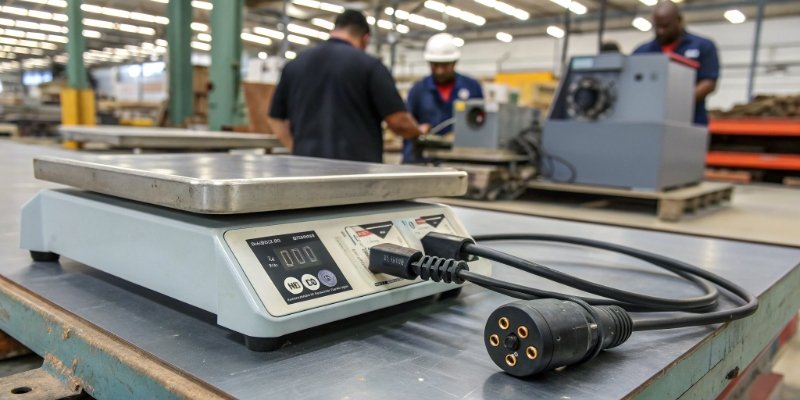
Industrial weighing systems aren't the same as the scale in your office mailroom. They operate in tougher environments and often require more power and stability. This means you have to be extra careful when replacing a power cord.
Understanding Heavy-Duty Plugs
Many high-capacity industrial scales5, like those used in manufacturing or logistics, can't run on a standard wall outlet. They require a three-phase power supply, which delivers more power in a more stable way. These systems use different plugs, which typically have four or five large, round pins. You must make sure your replacement cord has the correct plug for your facility's power outlets. Never try to use an adapter to make a standard cord fit a three-phase socket. This is extremely dangerous and can damage your scale and your building's electrical system.
Best Practices After Replacement
Here’s a tip I always give our customers. Once you’ve plugged in the new, correct power cord, wait about 10 minutes before turning the scale on. This gives the internal power components and capacitors time to charge evenly and stabilize. Powering on immediately can sometimes cause a small, unstable power surge6 that can affect the sensitive electronics. For-precision weighing, this simple step helps ensure your scale gives accurate readings from the very first use. It’s a small habit that protects your investment and ensures data integrity7. Ultimately, the safest choice is always to get a replacement directly from the original manufacturer. As a weighing expert, we provide certified replacement parts that guarantee a perfect match every time.
Conclusion
Yes, you can replace a scale's power cord. Just match the voltage, connector, and use an equal or higher amperage. Always choose quality, certified cords for safety and reliability.
-
Understanding the importance of a compatible power cord can prevent equipment damage and ensure safety. ↩
-
Knowing the correct voltage is crucial to avoid damaging your scale and ensure proper functionality. ↩
-
Understanding power loss can help you avoid issues that affect the performance of your scale. ↩
-
A pure copper core enhances conductivity and reduces overheating, ensuring reliable performance. ↩
-
Industrial scales have specific needs that differ from consumer-grade scales, impacting cord selection. ↩
-
Learning about power surges can help you take precautions to protect sensitive equipment. ↩
-
Quality power cords are essential for maintaining accurate readings and reliable data. ↩



Comments (0)