
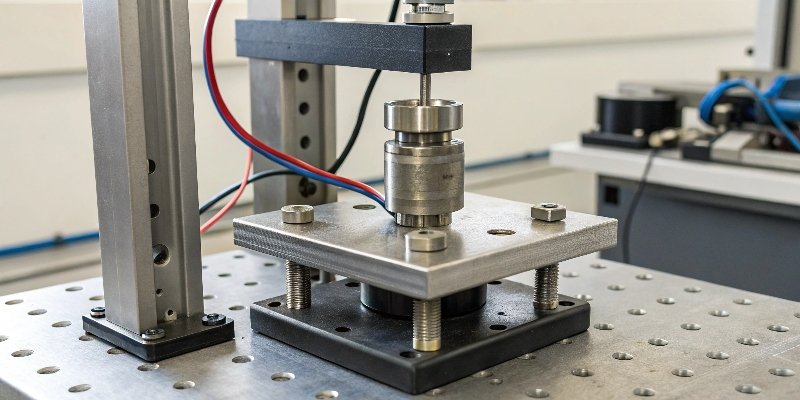
Are you struggling to capture accurate force data from fast-moving processes? This failure leads to unreliable testing and poor system control, but the right sensor can deliver the precision you need.
Yes, you can absolutely use a load cell to measure dynamic force. For high-frequency applications like impacts or vibrations, a piezoelectric load cell is your best choice. It directly converts force into an electrical signal, providing the fast response needed to capture transient force changes accurately.
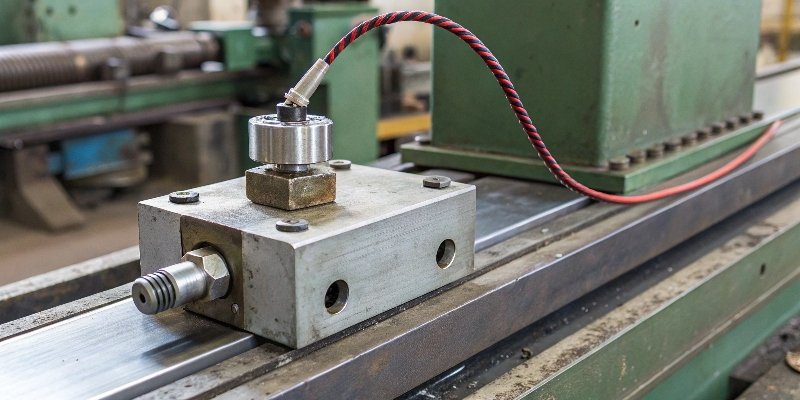
So, we've established that it's possible. But as an engineer who has helped countless partners integrate weighing technology, I can tell you that "possible" and "effective" are two different things. The success of your project depends entirely on choosing the right type of load cell1 and understanding how to use it for dynamic, rather than static, applications. Let’s dive into the details that will make the difference between a successful integration and a frustrating failure.
How effective are load cells for measuring dynamic forces in real-time applications?
Need real-time force data for your smart device, but worry about lag and inaccuracy? Delays can compromise control systems, making your application unreliable. Some load cells offer instant feedback, making them highly effective.
Load cells, particularly piezoelectric types, are very effective for real-time applications. Their high-frequency response, often up to 25 kHz, allows them to track dynamic force changes almost instantly. This is crucial for applications like robotic control, crash testing, and active vibration monitoring systems.
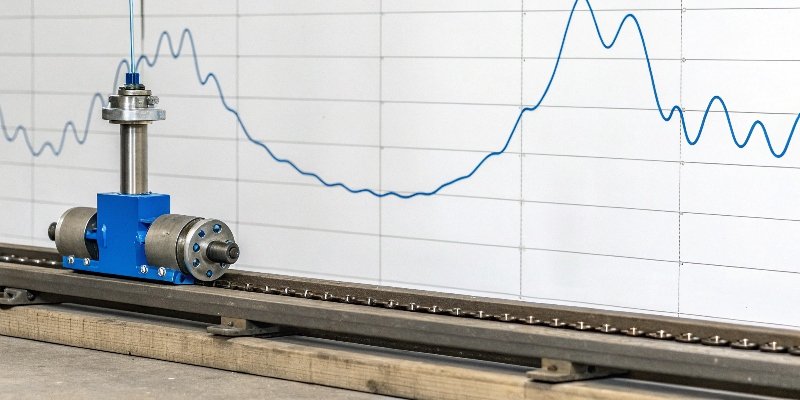
When we talk about effectiveness in real-time systems, we are really talking about speed. Your software can only be as good as the data it receives. If the sensor is slow, your entire system is slow. For dynamic forces, this is where the difference between sensor types2 becomes critical.
I remember working with a client who was developing a sophisticated robotic gripper. Their software was brilliant, but they were using a standard strain gauge load cell. The robot kept either dropping or crushing the objects. The problem wasn't their code; it was data lag. The sensor couldn't report the force changes fast enough for the control loop to react. We switched them to a piezoelectric load cell3, and the problem vanished. The near-instant feedback allowed their software to make micro-adjustments in real time.
Here’s a breakdown of the two main types for dynamic applications:
| Sensor Type | Best Use Case | Response Time | Pros | Cons |
|---|---|---|---|---|
| Piezoelectric | High-frequency impact, shock, and vibration analysis. | Extremely Fast (microseconds) | Wide frequency range, high sensitivity, very durable. | Not suitable for static loads4, requires a charge amplifier5. |
| Strain Gauge | Low-frequency dynamic force6s (e.g., dynamic weighing). | Slower (milliseconds) | Cost-effective, excellent for static and low-frequency loads. | Limited high-frequency capability, can miss transient peaks. |
For your work as a software vendor, integrating with a piezoelectric sensor provides the highest fidelity data for any application involving quick movements or impacts.
What are the limitations of using load cells for dynamic force measurements?
You're ready to use a load cell for dynamic forces, but you're worried about potential pitfalls. Choosing the wrong one could lead to noisy signals, inaccurate data, or even complete system failure.
The main limitations involve frequency response and environmental factors. A load cell's natural frequency must be higher than the force's frequency. Piezoelectric types can 'drift' in static applications, and both types require proper signal conditioning to filter out electrical noise and temperature effects.
No technology is a magic bullet, and it's my job to give you the full picture. Understanding the limitations is just as important as knowing the benefits. It helps you design a more robust system and avoid frustrating troubleshooting sessions later.
First, frequency mismatch is the silent killer of accuracy. Every physical object, including a load cell, has a natural frequency7 at which it wants to vibrate. If the force you're measuring is close to this frequency, you'll get resonance. This will amplify the signal and give you wildly inaccurate, unusable data. The rule of thumb we follow at Weigherps is to choose a load cell with a natural frequency at least 5 to 10 times higher than the highest frequency you expect to measure.
Second, the signal from a dynamic load cell is not plug-and-play. Piezoelectric sensors, for instance, produce a tiny electrical charge, not a clean voltage. You absolutely need a signal conditioner, like a charge amplifier, to convert this charge into a usable signal that your data acquisition (DAQ) system can read. Trying to read it directly will get you nothing but noise.
Finally, think about the environment. Temperature changes can cause a sensor's output to drift. Electromagnetic interference (EMI) from nearby motors or power lines can introduce noise into your data. As a software expert, you know how critical clean data is. This is why we build our systems with robust shielding and recommend proper grounding as a non-negotiable part of any installation.
Can load cells accurately capture fast and transient force changes?
Your project involves sudden impacts or quick bursts of force that need precise measurement. Missing these fleeting events means your data is incomplete, potentially leading to incorrect analysis or product failure.
Yes, piezoelectric load cells excel at accurately capturing fast and transient force changes. Their high resonant frequency and rapid rise time (measured in microseconds) allow them to detect the full peak of events like impacts, shocks, and explosions that would be missed by slower sensors.
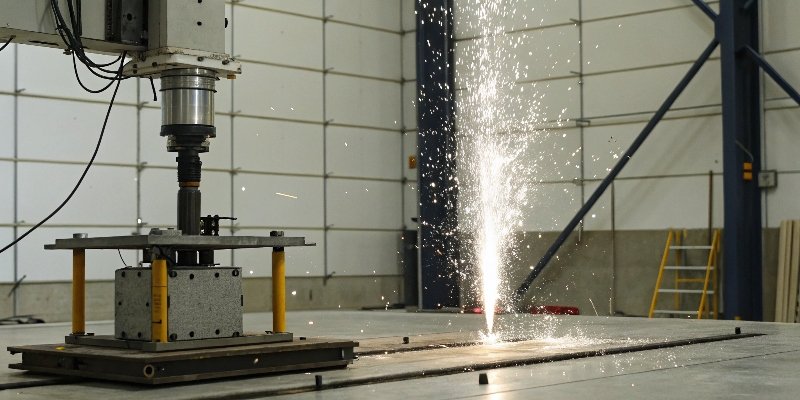
Capturing a transient event is like taking a picture of a hummingbird's wings—you need a very fast shutter speed. If your sensor is too slow, you don't get a blurry image; you miss the peak of the event entirely. You might record a force of 500 N when the actual peak was 1,000 N. For safety-critical applications like automotive crash tests or materials testing, this difference is enormous.
The key specification here is the rise time. This tells you how quickly the sensor can go from 10% to 90% of its full reading when a force is suddenly applied. For piezoelectric sensors, this is incredibly fast. This speed is what allows them to "see" the sharp, leading edge of an impact force.
However, the sensor is only one piece of the puzzle. To accurately capture a transient force, your entire measurement chain must be fast enough. This includes:
- The Sensor: A piezoelectric load cell with a fast rise time.
- The Signal Conditioner: A charge amplifier capable of handling the high-speed signal.
- The Data Acquisition (DAQ) System: The DAQ card must have a high sampling rate, meaning it can take measurements very frequently. You need to sample many times faster than the event itself to reconstruct the signal accurately.
- The Software: Your software must be able to process and log this high-speed data stream without dropping any information.
When you partner with us, we don't just sell you a load cell. We help you look at this entire system to ensure every component is up to the task.
What factors should be considered when using load cells for dynamic versus static force measurements?
You know that dynamic and static measurements are different, but aren't sure what this means for your selection process. Choosing a static-focused load cell for a dynamic job guarantees inaccurate results and a wasted budget.
For dynamic measurement, prioritize high frequency response, fast rise time, and high natural frequency (piezoelectric is best). For static measurement, the key factors are long-term stability, low creep, and high resolution (strain gauge is ideal). The measurement goal dictates the necessary technology.
Think of it like choosing a camera. For a still-life portrait (static force), you want a camera with the highest possible resolution and color accuracy. For capturing a high-speed car race (dynamic force), you need a camera with an incredibly fast shutter speed and frame rate. Both are cameras, but they are optimized for completely different jobs. The same is true for load cells.
As a purchasing manager or technical director for a software company, making the right distinction here is crucial for both performance and cost-effectiveness8. Putting a high-end dynamic sensor in a simple static weighing application is overkill and wastes money. Conversely, using a cheap static sensor for a high-speed control application will cause your project to fail.
Here’s a clear comparison of the factors you should prioritize for each:
| Factor | Static Measurement (e.g., Silo Weighing) | Dynamic Measurement (e.g., Vibration Analysis) | Why It Matters |
|---|---|---|---|
| Technology | Strain Gauge | Piezoelectric | The underlying physics are optimized for each task. |
| Key Spec #1 | Low Creep (minimal signal change under constant load) | High Frequency Response (ability to measure rapid changes) | A static sensor must be stable over time; a dynamic one must be fast. |
| Key Spec #2 | High Resolution (detecting tiny weight changes) | Fast Rise Time (quickly reacting to a force impulse) | Static is about precision; dynamic is about speed of capture. |
| Key Spec #3 | Long-Term Stability | High Natural Frequency (to avoid resonance) | Static applications run for hours/days; dynamic events are over in milliseconds. |
| Cost | Generally lower | Generally higher | Piezoelectric materials and required amplifiers add cost. |
Understanding this table will empower you to ask the right questions and specify the right hardware for your software integration projects.
Conclusion
In short, load cells are highly capable of measuring dynamic forces. The key is to select a piezoelectric sensor for high-speed events and ensure your entire data acquisition system is fast enough to keep up.
-
Understanding load cells is crucial for accurate force measurement in various applications. ↩
-
Explore various sensor types to make informed decisions for your projects. ↩
-
Discover the benefits of piezoelectric load cells for high-frequency applications. ↩
-
Understanding static loads helps in selecting the right load cell for your application. ↩
-
Learn about charge amplifiers to ensure proper signal processing from load cells. ↩
-
Learn about dynamic forces to improve your measurement techniques and applications. ↩
-
Understanding natural frequency is key to avoiding resonance and ensuring accuracy. ↩
-
Learn strategies for selecting load cells that balance performance and cost. ↩


Comments (0)