

Your scale gives you a different number every time, making you doubt its reliability. This inconsistency can disrupt your entire operation, leading to costly errors and wasted products.
Yes, a low battery is a primary cause of scale inaccuracy. When the battery is low, it provides unstable voltage to the scale's sensitive sensors and internal circuits. This directly leads to fluctuating readings, incorrect measurements, and potential display failures, making the scale unreliable.

It’s frustrating when a tool you rely on for precision suddenly becomes unpredictable. As someone who has been in the industrial scale1 business for 18 years, I've seen this issue countless times. A client's entire production line can be thrown into chaos, all because of a simple, overlooked component: the battery. Understanding exactly why this happens is the first step toward preventing it. Let's explore the deep connection between power supply and weighing accuracy.
Can low batteries affect scale?
You notice the low battery light on your scale, but you decide to get one last measurement in. Suddenly, your data is way off. Are these two events connected?
Absolutely. Low batteries directly and negatively affect a scale's function. The reduced and unstable power supply cannot properly energize the core components, like the load cell sensor and the signal converter. This results in fluctuating numbers, incorrect weight data, and an overall unreliable scale.
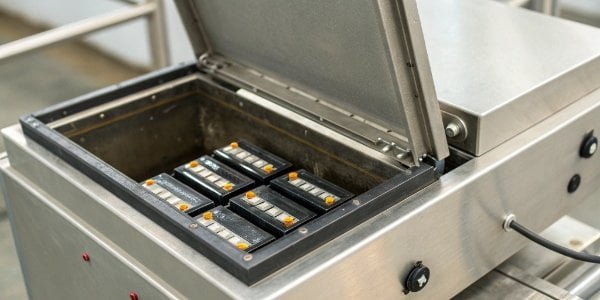
To truly grasp this, we need to look at how a digital scale works. It's not just a simple spring system; it's a precise electronic instrument. The accuracy of this instrument depends entirely on a stable and consistent power source. When a battery's power level drops, its voltage output becomes weak and erratic. In my experience, this is the most common reason for a sudden "unexplained" scale failure. It's not that the scale is broken; it's just not getting the quality power it needs to think clearly.
How Voltage Fluctuations Cause Errors
The heart of a digital scale is its load cell. This sensor converts the physical force of weight into a tiny electrical signal. The scale's internal processor then reads this signal and displays it as a weight. A steady voltage is critical for this process. When the battery is low, the voltage fluctuates. This unstable power has a cascading effect:
- Weak Sensor Signal: The load cell doesn't receive enough power to generate a strong, clear signal.
- Signal Misinterpretation: The scale’s processor struggles to read this weak or "noisy" signal, leading to errors.
- Zero Point Drift: The scale loses its stable reference for "zero." As the voltage shifts, the baseline shifts with it, making every measurement inaccurate from the start.
This table shows how battery level impacts performance:
| Battery Level | Voltage Stability | Sensor Performance | Reading Accuracy |
|---|---|---|---|
| Full | Stable & Consistent | Optimal | High & Reliable |
| Medium | Mostly Stable | Good | Generally Accurate |
| Low | Unstable & Weak | Impaired | Low & Unreliable |
| Very Low | Highly Unstable | Critical Failure | Completely Inaccurate |
What affects the accuracy of a scale?
Your scale is calibrated, but the readings are still wrong. You're losing time and money trying to figure out the problem. What else could be disrupting its accuracy?
Many factors besides batteries affect a scale's accuracy. These include environmental conditions like temperature changes and air drafts, physical issues like an unlevel surface or vibrations, and even radio frequency interference from other devices. Proper placement and regular checks are essential.

A scale is a sensitive instrument. While power is a major factor, its surroundings play a huge role. I often tell our clients to think of the scale's location as part of the system. You can have the best scale in the world, manufactured by us with the highest quality standards, but if it's placed on a shaky floor next to a vibrating generator, you will never get accurate results. Addressing these external factors is just as important as maintaining the scale itself.
Key Factors Disrupting Scale Accuracy
Let's break down the most common culprits we see in the field that can throw your measurements off. By controlling these variables, you can ensure your scale performs as expected.
- Environment: Drastic temperature changes can cause the metal components inside the scale, including the load cell, to expand or contract. This physically alters its measuring ability. Strong air currents from vents or open doors can also create pressure on the weighing pan, affecting readings on highly sensitive scales.
- Physical Setup: The scale must be on a perfectly level and solid surface. If it's tilted, the weight is not distributed evenly across the load cells, leading to a wrong reading. Debris or dirt under the scale can also obstruct its movement and cause errors.
- External Forces: Vibrations from nearby heavy machinery, forklifts, or even footsteps can create "noise" that the load cell picks up as weight. Similarly, Radio Frequency Interference (RFI) from two-way radios or cell phones can disrupt the scale's internal electronics.
This simple table can help you diagnose issues:
| Factor | Description | Solution |
|---|---|---|
| Environment | Temperature shifts, drafts | Place scale in a stable, controlled environment. |
| Surface | Uneven or unstable ground | Ensure the scale is on a flat, level, and solid surface. |
| Vibrations | Shaking from nearby machinery | Isolate the scale or use vibration-damping pads. |
| Interference | Radio waves or static from other devices | Keep other electronic equipment away from the scale. |
Why is my scale suddenly inaccurate?
Your scale worked perfectly yesterday, but today its readings are all over the place. This sudden change is confusing and threatens your process. What could have happened overnight?
Sudden inaccuracy is almost always caused by an abrupt change. The most likely causes are a battery that has finally died, physical damage from an overload, being moved to a new unlevel surface, or debris getting stuck under the platform.

When a reliable piece of equipment fails suddenly, it’s natural to suspect a major breakdown. However, in my 18 years of experience, the cause is usually much simpler. I remember a call from a client whose platform scale was suddenly off by 10 kg. Their team was convinced the load cell had failed. When our technician arrived, he found a small rock wedged under the platform. Once removed, the scale was perfectly accurate again. Before you call for service, always run through a quick checklist of these common, simple issues.
Troubleshooting Checklist for Sudden Inaccuracy
If your scale starts giving you trouble out of the blue, don't panic. Walk through these steps systematically. You can often solve the problem yourself in just a few minutes.
- Check the Power: This is always the first step. Is the low battery indicator on? If it uses a power cord, is it plugged in securely at both the wall and the scale? A loose connection can be just as bad as a low battery.
- Inspect the Area: Look underneath and around the scale. Has any dirt, packaging material, or debris gotten stuck? Was the scale moved, even slightly, to a different spot?
- Level the Scale: Most industrial scales have a spirit level bubble built into the display or frame. Check to see if this bubble is perfectly centered. If not, adjust the scale’s feet until it is.
- Test for Damage: Did something heavy get dropped on the scale? Was it hit by a forklift? Look for any visible dents or damage to the weighing platform or its base.
- Perform a Quick Calibration Check: Place a known weight on the scale (if you have one). If the reading is off, the scale may have gotten shocked and lost its calibration. Running the calibration routine can often fix this.
If you've checked all these things and the scale is still inaccurate, it may be time to contact a professional for service.
Can a bad battery give a false reading?
You rely on your scale for critical measurements that impact your bottom line. But what if the battery itself is the problem, actively creating false data instead of just dying?
Yes, a "bad" or failing battery is a direct cause of false readings. As a battery degrades, its voltage becomes unstable and erratic. This electrical instability feeds directly into the scale's sensitive electronics, causing the sensors to misinterpret weight and produce completely wrong numbers.

There is a difference between a battery that is simply low and one that is "bad." A low battery has a predictable voltage drop. A bad battery, perhaps one with an internal defect or that has been recharged improperly, can have wild and unpredictable voltage spikes and dips. This is even more dangerous for accuracy than a simply low battery. It actively introduces errors into your weighing process, which can be hard to detect. That's why we at Weigherps always advise our clients to use high-quality batteries from reputable brands and to have a proactive replacement schedule.
The Science Behind Bad Batteries and False Data
A faulty battery doesn't just stop working; it poisons the data stream. It creates electrical noise that garbles the true weight signal2, and the scale’s processor can't tell the difference. Here’s a deeper look at the specific errors that result:
- Zero Point Drift: This is a huge problem with bad batteries. The scale's zero reference should be constant. A bad battery with a fluctuating voltage causes this reference to drift up and down. The scale might zero itself at one moment, but a second later, the "zero" has shifted, making any subsequent measurement incorrect.
- Linearity Error: This is a more complex error. A scale with linearity error might be accurate when weighing 10 kg but inaccurate when weighing 50 kg. The error is not consistent across the scale’s capacity. Unstable power from a bad battery makes this problem much worse, as it prevents the scale from applying its correction factors consistently across different weights.
- Signal Noise: Think of the weight signal from the load cell as a clear voice. A bad battery adds static and background noise. The scale's processor hears this garbled message and tries to interpret it, often resulting in a number that jumps around or is completely false.
Conclusion
Ultimately, a low or bad battery is a very common cause of scale inaccuracy. To ensure your measurements are always precise, always use a stable power source and perform regular checks.



Comments (0)