

Unexpected scale downtime can halt your entire operation. This costs you money and valuable time while you wait for a technician to arrive, causing major frustration and delays.
Yes, remote diagnostics on a smart scale significantly reduce downtime. It allows our technicians to identify, troubleshoot, and often resolve issues from a distance. This process eliminates travel time and gets your operations back online much faster than traditional on-site service calls.
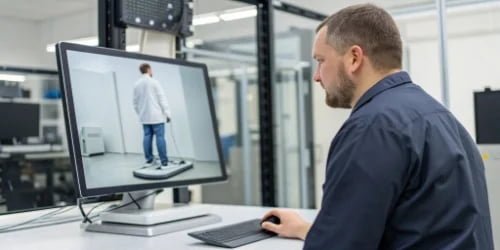
This technology is more than just a convenience; it's a fundamental change in how we approach industrial equipment maintenance. It empowers businesses to move from a reactive "fix it when it breaks" model to a proactive, predictive one. But you might be wondering how this actually works to prevent those costly interruptions in your workflow. Let’s explore how these features keep your business moving forward.
How Do Remote Diagnostics Minimize Downtime in Smart Scale Operations?
Are minor scale errors causing major production delays? Waiting for a service technician is a drain on your resources and halts productivity. We can help you solve problems before they start.
Remote diagnostics minimize downtime by enabling our team to monitor your scale's performance in real time. We can access system logs and diagnostics to identify faults remotely. This often allows for an immediate fix for software issues, preventing a small glitch from becoming a full shutdown.
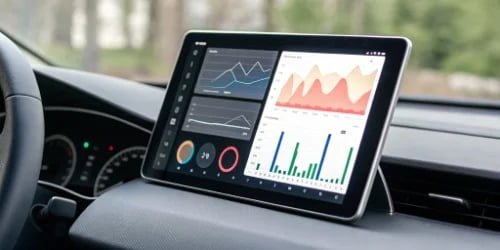
When we connect to your smart scale1, we gain a clear view of its operational health. This process is secure and transparent, giving us the information needed to act quickly and effectively. By analyzing this data, we can pinpoint the root cause of a problem without having to be physically present, saving you critical time.
The Remote Connection Process
Our system uses a secure, encrypted connection to access your scale's diagnostic data2. This is not about broad network access; it's a targeted link that pulls specific performance metrics and error codes. Our technicians see what the scale's internal software is seeing. This allows them to analyze patterns, check for software conflicts3, and review calibration history4. This targeted access ensures your network security is never compromised while providing us with the essential data to make an accurate diagnosis. It’s like having an expert technician looking over the machine's shoulder, 24/7.
Proactive vs. Reactive Maintenance
Remote diagnostics shift the entire maintenance paradigm5 from reactive to proactive. Instead of waiting for a breakdown, our system flags potential issues early. This allows for scheduled maintenance at your convenience, not during a crisis.
| Feature | Reactive Maintenance (Traditional) | Proactive Maintenance (Remote Diagnostics) |
|---|---|---|
| Trigger | Equipment Failure | Data Anomaly or Alert |
| Downtime | Unplanned and Often Long | Minimal and Scheduled |
| Cost | High (Emergency Repairs, Lost Production) | Low (Preventative Measures, No Travel) |
| Efficiency | Low | High |
This proactive approach is especially useful for software vendors who need to ensure their integrated systems maintain high uptime for their clients.
What Are the Benefits of Using Remote Monitoring for Smart Scale Maintenance?
Are unpredictable maintenance costs and sudden repair bills hurting your budget? This uncertainty can be stressful and difficult to plan for. We offer a system that helps you predict needs and cut costs.
The main benefits are lower maintenance costs, longer equipment life, and better operational efficiency. We use performance data to schedule preventative maintenance when it's truly needed. This approach avoids unnecessary service calls and costly emergency repairs, with clients reporting efficiency gains of 30-50%.
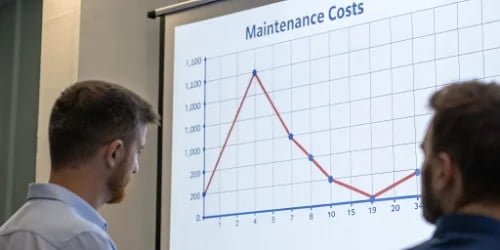
The value of remote monitoring extends far beyond fixing problems. It provides a constant stream of data that helps you understand how your equipment is being used. This information empowers you to optimize workflows, train staff more effectively, and make informed decisions about future equipment needs. It’s about turning your maintenance department from a cost center into a strategic asset for your business.
A Breakdown of Cost Savings
Remote monitoring saves money in several direct ways. First, you eliminate the travel and labor costs associated with sending a technician to your site for minor issues. Second, by catching problems early, you avoid the high cost of major component failures. Third, and most importantly, you drastically reduce the cost of lost production from unplanned downtime6. For industries where every minute counts, this is the most significant financial benefit. These savings add up quickly, providing a clear and rapid return on investment.
Value Across Different Industries
The benefits of reduced downtime are felt across all sectors. Each industry relies on accurate weighing for different reasons, but the need for continuous operation is universal.
| Industry | Primary Benefit of Reduced Downtime | How Remote Diagnostics Helps |
|---|---|---|
| Logistics & Warehousing | Uninterrupted shipment processing | Prevents bottlenecks in receiving and shipping by ensuring scales are always operational. |
| Industrial Manufacturing | Continuous production line operation | Keeps assembly and quality control lines moving by avoiding halts for weighing failures. |
| Healthcare & Pharma | Reliable diagnostic and formulation data | Ensures medical devices and pharmaceutical scales are always available and accurate for patient care and compliance. |
Can Real-Time Diagnostics Enhance the Reliability of Smart Scales?
Do you worry about the accuracy and reliability of your weighing data? Even small errors can lead to compliance failures, wasted materials, and financial losses. We can help you trust your measurements completely.
Absolutely. Real-time diagnostics provide a constant health check on your scale's calibration and core functions. This continuous monitoring ensures both hardware and software are working perfectly together. This gives you consistently accurate and reliable data for all your critical operations and compliance needs.

Reliability isn't just about the scale working; it's about trusting the data it produces every single time. Real-time diagnostics act as a permanent quality control check. The system constantly verifies its own performance against set parameters. If any metric, like temperature or vibration, drifts outside the acceptable range, an alert is triggered. This means that potential sources of error are identified and can be addressed before they impact your data. It provides peace of mind, knowing that your measurements are backed by a system of continuous verification, which is critical for meeting strict industry standards7.
The Importance of Continuous Health Monitoring
Our smart scales are equipped with internal sensors that run continuous self-checks. They monitor everything from battery voltage and load cell stability to software integrity. This information is a constant live feed of the machine's health status. If a potential issue is detected, our system can send an automatic alert to both your team and our support staff. This allows us to intervene immediately, often before your operators are even aware of a potential problem, ensuring maximum uptime and data integrity8.
Data Integrity for Compliance
For many of our clients, especially those in regulated industries, data integrity is non-negotiable. Our quality control process ensures every scale is comprehensively tested for weight, battery, and software performance before it ever leaves our facility. Our products are designed to comply with international certifications like CE. Real-time diagnostics build on this foundation by providing an ongoing record of the scale’s performance and calibration status. This creates an auditable trail, making it much easier to demonstrate compliance during regulatory inspections and ensuring your data is always defensible.
How Efficient Are Remote Troubleshooting Features in Reducing Scale Disruptions?
Are you tired of waiting hours or even days for a technician to show up and fix a simple problem? Every minute of that waiting time is lost productivity and revenue.
Remote troubleshooting is extremely efficient. It can resolve many common software or configuration issues in a matter of minutes, not hours or days. Our technical team can remotely reboot a system, adjust settings, and guide your staff through simple physical checks using a secure connection.

The speed of remote troubleshooting9 transforms how you manage equipment disruptions. A problem that once would have stopped your production for an entire day can now be a minor interruption of just a few minutes. Think about a simple configuration error or a software glitch. In the past, you would have to make a service call, wait for a technician to be dispatched, and then have them diagnose the problem on-site. Now, you can contact our support team, and we can often resolve the issue while we're still on the phone with you. This incredible efficiency is a core part of our 12-month after-sales service guarantee.
Common Issues Solved Remotely
A surprising number of scale issues are not related to hardware failure. They often stem from software, configuration, or user error. These are the kinds of problems that are perfectly suited for remote resolution. Examples include recalibrating the scale after a software update, adjusting communication settings to integrate with another system, or troubleshooting an error code caused by an improper operating procedure. By handling these remotely, we save your on-site team's time for more complex hardware issues.
On-site vs. Remote Resolution
The difference in efficiency between traditional on-site service and remote troubleshooting is dramatic. The timeline and steps involved show a clear advantage for remote support.
| Step | On-site Service Call | Remote Troubleshooting |
|---|---|---|
| 1. Report Issue | Client calls support | Client calls support |
| 2. Initial Diagnosis | Over the phone (limited) | Remote connection for full diagnostics |
| 3. Dispatch | Technician scheduled and dispatched | Not required |
| 4. Travel Time | Hours to days | Instant |
| 5. Resolution | Technician resolves issue on-site | Technician resolves issue remotely |
| Total Time | 24-48+ hours | 15-30 minutes |
This direct comparison makes it clear how remote features dramatically reduce the Mean Time to Repair (MTTR) and get your business back to full productivity.
Conclusion
Remote diagnostics are essential for modern industrial scales. They reduce downtime, cut operational costs, and ensure your business runs with maximum efficiency and reliability, helping you achieve business growth.
-
Learn about the advantages of smart scales in optimizing workflows and reducing costs. ↩
-
Explore how diagnostic data can inform maintenance decisions and improve reliability. ↩
-
Explore common software conflicts and how to resolve them effectively. ↩
-
Learn about the role of calibration history in ensuring accurate and reliable equipment. ↩
-
Understand the shift from reactive to proactive maintenance and its benefits. ↩
-
Learn about the significant effects of unplanned downtime and how to prevent it. ↩
-
Understand the industry standards that ensure equipment reliability and compliance. ↩
-
Understand the importance of data integrity in maintaining compliance and operational trust. ↩
-
Discover how remote troubleshooting can quickly resolve issues and minimize downtime. ↩

Comments (0)