
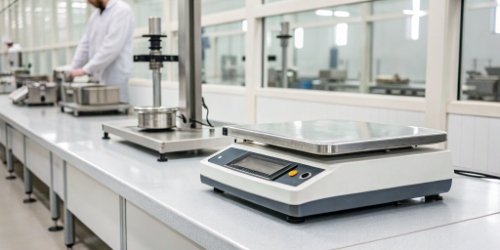
Manual QC checks are slow and create costly errors. This hurts your efficiency and reputation. Imagine a system that automatically ensures every single product meets your quality standards perfectly.
Yes, you absolutely can. Modern industrial weighing scales, like checkweighers, are designed with built-in quality control functions. They automatically weigh every item, compare it to your set standards, and can even reject non-compliant products without stopping your production line, ensuring total consistency.
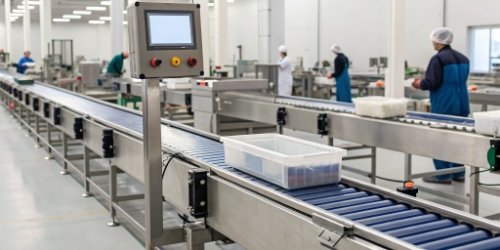
This ability to automate quality control directly on the production line1 is a massive advantage for any manufacturer. It moves quality checks from a random, manual process to a systematic, 100% inspection process. But this technology is more than just a scale that weighs things; it's a smart system that integrates with your entire operation. To truly grasp its value, it's important to understand the components and how they fit together to make your production line smarter, faster, and more reliable. Let's dig into how this automation works.
What is QC automation?
Relying on human eyes and hands for every quality check is slow and often inaccurate. This inconsistency can damage your brand. What if technology could perform these checks perfectly every time?
QC automation uses technology, sensors, and machinery to perform quality inspections without direct human involvement. It leverages systems and software to check products against pre-defined standards, making the process faster, more accurate, and far more dependable than manual inspection.
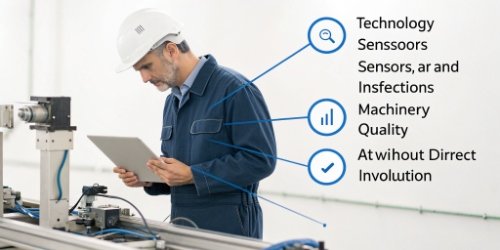
QC automation2 is about building a process that catches errors before they become problems. It creates a system that is both reliable and intelligent. At its core, this involves a few key parts working together.
The Core Components of QC Automation
In a weighing context, automation is simple and powerful. The scale's load cell acts as the primary sensor, capturing the precise weight of each item. The scale's controller unit is the control system3, or the brains, which processes this weight data instantly. If the weight is outside the allowed tolerance, the controller sends a signal to an actuator4, like a rejection arm, which removes the faulty product. This all happens in a fraction of a second.
Benefits Beyond Speed
The most obvious benefit is speed, but the real power lies in the data. Every single weighment is recorded. This gives you a complete data log5 for 100% of your production, which is essential for traceability and process improvement. This data can be sent to your central management systems, like an ERP or MES. This allows you to monitor production efficiency6 in real-time, spot trends, and make smarter business decisions. We design our systems to provide this crucial data output.
| Feature | Manual QC | Automated QC |
|---|---|---|
| Speed | Slow, varies by person | Very fast, constant |
| Accuracy | Prone to human error | Highly accurate and consistent |
| Coverage | Spot checks (e.g., 1 in 100) | 100% of products |
| Data Collection | Manual, often incomplete | Automatic, comprehensive |
| Labor Cost | High, requires staff | Low, frees up staff for other tasks |
How are weighing scales connected to a PLC?
You have valuable weight data on your scale, but your main production line is controlled by a PLC. Trying to make these two systems communicate can be a major technical challenge.
Weighing scales connect to a PLC (Programmable Logic Controller) using standard industrial communication methods. This can be through a simple analog signal, like 4-20mA, or more commonly through digital network protocols like Modbus, PROFINET, or EtherNet/IP for real-time data exchange.
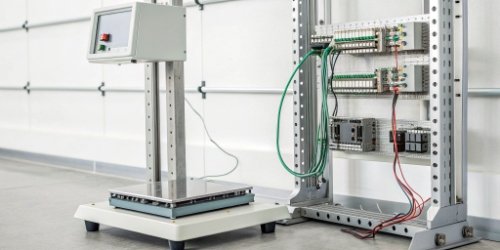
Connecting your scales to a PLC7 is what turns a standalone weighing station into an integrated part of your smart factory. The PLC is the orchestrator of your production line, telling conveyors to run and machines to operate. By feeding it real-time weight data, the PLC can make intelligent decisions, such as sorting products, adjusting fill levels, or flagging an entire batch if it detects a trend of incorrect weights. As a long-time OEM manufacturer, we understand that our clients need flexibility.
Choosing the Right Connection Protocol
The right connection depends on your factory's existing infrastructure and your data requirements. Analog signals are simple and reliable for just sending the weight value. However, digital protocols are far more powerful. They can transmit not just the weight, but also status information, error codes, and configuration parameters, allowing for much deeper integration8 and remote management. As software providers yourselves, you understand the value of rich data. That's why we equip our scales with a range of communication options.
| Protocol | Type | Best For... |
|---|---|---|
| RS-232/RS-485 | Digital | Simple, direct connections for basic data transfer to a nearby computer or PLC. |
| Modbus9 TCP/IP | Digital | Very common for networked systems over Ethernet. It's flexible and widely supported. |
| EtherNet/IP10 | Digital | A high-performance standard for demanding, high-speed applications in North America. |
| PROFINET | Digital | The leading Ethernet-based standard in Europe, designed for fast and precise control. |
We ensure our scales can speak the same language as your PLCs, making integration a smooth process rather than a roadblock.
What is automated quality control?
Doing manual spot-checks on your production line means defective products will inevitably slip through. This inconsistent quality is risky. What if you could guarantee every item is checked automatically?
Automated quality control, in the context of weighing, uses a system like a checkweigher to automatically weigh every single product on a moving conveyor. It instantly compares this weight to a pre-set range and physically rejects any item that is too heavy or too light.

This process transforms quality control from a game of chance into a guarantee of conformity. It is a fundamental function of many modern weighing systems that we produce. It provides a simple pass/fail test for every product, but the true strength lies in how it is customized to the specific product and environment.
How it Works: The Checkweighing Process
The process is seamless and fast. First, an infeed conveyor properly spaces the products to ensure they are weighed one at a time. Then, the product moves over the weighing conveyor, where a high-speed load cell captures its weight. Finally, it moves to the outfeed section. If the weight is within the accepted range, it continues down the line. If not, the controller triggers a rejection device to remove it.
Customizing Rejection for Your Product
The rejection method is not one-size-fits-all. The right mechanism depends entirely on your product's weight, shape, and packaging. This is where our 19 years of OEM experience comes in. We help our clients choose and design the perfect system. For light and unstable products like a bag of chips, a quick puff of air (air-blast) is enough. For heavier, boxed items, a mechanical pusher arm is more reliable. We design custom solutions11 based on these factors.
| Rejection Mechanism | Best for... | Example Products |
|---|---|---|
| Air-Blast | Lightweight, stable items | Bags of snacks, small packets, empty plastic bottles |
| Pusher Arm | Medium-to-heavy, stable items | Cartons, boxes, canned goods, solid blocks |
| Flipper/Diverter Arm | Tall or unstable items | Bottles, jars, stand-up pouches |
| Drop-Down Conveyor | Thin, flat, or delicate items | Packs of sliced meats, cheese, sealed portions |
How to automate a QA process?
You know you need automation, but starting a project feels complex and risky. Choosing the wrong equipment is an expensive mistake. We can help you follow a clear path to get it right.
To automate a QA process with weighing, first define your precise quality goals, including target weight and acceptable tolerances. Next, select a checkweigher with the correct capacity and a rejection system suited for your product. Finally, integrate the system with your production line.

Putting an automated QA system in place is a structured process. As your manufacturing partner12, we guide our clients through each step to ensure the final solution perfectly matches their needs and delivers a solid return on investment13. Here is the framework we use to build successful automation projects.
A Step-by-Step Implementation Guide
-
Define Your Needs: The first step is always analysis. We work with you to understand the product's characteristics, the required speed of the production line (products per minute), and the exact weight tolerances. This defines the project's goals.
-
Consider the Environment: The factory environment is critical. For a client in the food processing industry with a wet, wash-down environment, we use stainless steel construction and IP-rated components to prevent corrosion and water damage. In a dusty environment, like a cement or flour plant, we use dust-proof motors and sealed enclosures to ensure long-term reliability. We design the machine to survive its workplace.
-
Choose the Right Hardware: Based on the needs and environment, we select the hardware. This includes the scale itself, the PLC interface, and, most importantly, the rejection mechanism14 tailored to the product. Our job is to deliver a targeted and cost-effective solution.
-
Integrate and Test: Once the hardware is chosen, our technical team works on integration. This means connecting the scale to your parent control system and ensuring the data flows correctly. Before any system ships, our quality inspection department conducts comprehensive tests on the weight accuracy, battery, software, and rejection system to guarantee it works perfectly right out of the box.
Conclusion
Automating QC with your weighing scales enhances efficiency, guarantees product quality, and gives you critical production data. It is a smart investment for modernizing your operations and driving business growth.
-
Understand the significance of production lines in optimizing manufacturing efficiency. ↩
-
Find out how QC automation can streamline quality checks and enhance accuracy. ↩
-
Learn about control systems and their importance in managing production processes. ↩
-
Discover the role of actuators in automating processes and ensuring product quality. ↩
-
Understand the significance of data logging for traceability and process improvement. ↩
-
Discover strategies to enhance production efficiency and reduce waste in manufacturing. ↩
-
Learn about Programmable Logic Controllers and their role in automating production lines. ↩
-
Understand how integration enhances the efficiency and effectiveness of manufacturing systems. ↩
-
Discover how Modbus protocol enhances communication in industrial automation systems. ↩
-
Learn about EtherNet/IP and its benefits for high-speed industrial applications. ↩
-
Learn about the benefits of custom solutions tailored to specific manufacturing needs. ↩
-
Understand the key qualities to consider when choosing a manufacturing partner for automation. ↩
-
Explore methods to assess the ROI of automation projects in manufacturing. ↩
-
Explore various rejection mechanisms and their applications in quality control. ↩



Comments (0)