

Are you struggling with complex FDA labeling rules? Worried your current system can't keep up with compliance? We understand the challenge of integrating weighing and printing for accurate food labels.
Yes, our industrial scales can. As an OEM/ODM manufacturer, we design custom weighing systems with integrated printers that format and print FDA-compliant Nutrition Facts panels. Our solutions ensure your labels meet all legal requirements directly from the scale, eliminating coordination problems between different devices.

Getting the label right is critical for market access in the United States. It's not just about a sticker; it's about accuracy, compliance, and the efficiency of your entire production process1. A mistake here can lead to costly recalls and damage your brand's reputation. But when your weighing system and printing system work together as one, you remove the risk of error and streamline your workflow. Let's look closer at how this is achieved.
What are the FDA requirements for Nutrition Facts?
Confused by the long list of FDA label rules? Afraid of missing a key detail that could lead to recalls? You need a clear breakdown of the essentials to protect your business.
The FDA requires the label to list serving size, calories, total fat, cholesterol, sodium, total carbohydrates, protein, vitamin D, and potassium. The specific format, font sizes, and daily value percentages are also strictly regulated to ensure clarity and consistency for consumers.
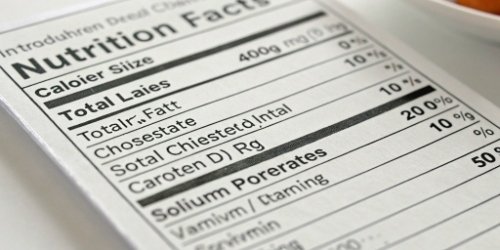
The FDA's goal is to make nutrition information easy for consumers to find and understand. As a manufacturer, this means you must follow a very specific set of rules. Breaking these down helps clarify what your system needs to be able to do.
Core Nutrients and Values
The foundation of the label is the list of mandatory nutrients. The FDA has determined these are the most important for consumers to make informed food choices. Your system must be able to calculate and display these values accurately based on the weight of the ingredients.
| Mandatory Component | Key Requirement |
|---|---|
| Serving Size & Servings | Must be in a large, bold font. |
| Calories | The most prominent number on the label. |
| Macronutrients | Total Fat, Carbohydrate, Protein. |
| Micronutrients | Sodium, Vitamin D2, Calcium, Iron, Potassium3. |
| Added Sugars4 | Must be listed separately under Total Sugars. |
| Trans Fat | Must be listed. |
How Our Weighing Systems Help
Our scales are much more than just weighing devices. We are a source factory, which means we design the entire system. We program the software to automatically format the label according to these strict FDA guidelines. When you input your product's recipe data, our system calculates the nutritional values based on precise weight measurements and then tells the integrated printer to produce a perfect, compliant label every single time. This removes manual data entry and the risk of human error.
What is not legally required on a Nutrition Facts label?
Are you cluttering your labels with unnecessary information? Wasting valuable space and confusing customers? It's just as important to know what you can safely leave off your nutrition panel.
The FDA does not legally require listing calories from fat, Vitamin A, or Vitamin C, as these were removed from the mandatory list in the 2016 update. Additionally, details like insoluble fiber or sugar alcohols are only required under specific circumstances or can be listed voluntarily.
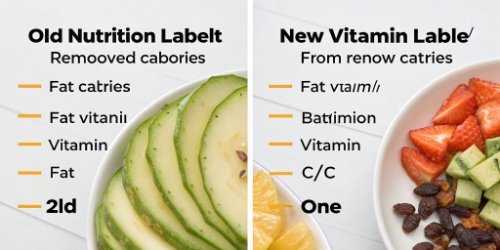
The FDA periodically updates its requirements based on the latest public health research. The 2016 update was a major change aimed at making the label more relevant to today's health concerns. Understanding what was removed helps you create a cleaner, more effective label.
The 2016 Update: What Changed?
One of the biggest changes was the removal of "Calories from Fat." The scientific consensus shifted, showing that the type of fat (e.g., saturated vs. unsaturated) is more important than the total calories5 from fat. Similarly, Vitamins A and C were made voluntary because deficiencies in the U.S. population are now very rare. Keeping them on the mandatory list was taking up space that could be used for more critical information.
Customizing Your Labels with Our OEM Solutions
This is where our flexibility as an OEM/ODM manufacturer6 becomes a huge asset for you. We recognize that sometimes you want to display voluntary information for marketing reasons. For example, if your product is high in Vitamin C, you should be able to highlight that. Our systems are built for this. We can create multiple label templates7 for you. You can have a standard FDA-compliant template and an enhanced version that includes specific voluntary nutrients. Your production line operator can easily select the correct template from the scale's interface, giving you full control over your labeling without compromising on compliance or efficiency.
What is a new requirement to the Nutrition Facts panel is the addition of?
Are your labels outdated? Worried about non-compliance with the latest FDA rules? A single missing line item can get your products rejected by retailers and regulators, costing you time and money.
A key new requirement is the mandatory declaration of "Added Sugars" listed directly under the "Total Sugars" line. Additionally, the mandatory listing of Vitamin D and Potassium is now required, reflecting current public health concerns about these specific nutrients.

These additions were not arbitrary; they were driven by significant health data showing where American diets were falling short. Staying current with these changes is essential for legal compliance.
The "Added Sugars" Rule
This was a landmark change. The FDA introduced this requirement to help consumers see the difference between sugars that are naturally present in ingredients, like fruit or milk, and sugars that are added during processing. This helps people make more informed choices to reduce their intake of sweeteners that don't offer other nutritional benefits. Your system must be able to differentiate between these two sources based on your recipe formula.
Why Vitamin D and Potassium?
Scientific studies showed that many Americans do not get enough of these two nutrients, which are vital for health. Vitamin D is important for bone health, while potassium helps to lower blood pressure. By making them mandatory on the label, the FDA is empowering consumers to identify foods that can help them meet their daily needs. As your partner, we ensure our systems can handle these new data fields. Because we control the hardware and software development, updating our systems to meet new rules like this is a straightforward process, ensuring your production equipment never becomes obsolete.
Who regulates the Nutrition Facts panel?
Unsure who makes the rules for your food labels? Confused about which government agency to follow? This uncertainty can be costly and lead to serious compliance issues down the line.
The U.S. Food and Drug Administration (FDA) regulates the Nutrition Facts panel for most packaged foods and beverages. However, the U.S. Department of Agriculture (USDA) oversees labeling for most meat, poultry, and certain egg products, which have their own specific rules.

Knowing which agency governs your product is the first step toward compliance. While their labeling goals are similar, their specific requirements can differ slightly, and getting it wrong can be a big problem.
The FDA's Role vs. the USDA's Jurisdiction
The FDA's authority comes from the Nutrition Labeling and Education Act8 (NLEA). They cover about 80% of the food supply in the U.S. The USDA's Food Safety and Inspection Service (FSIS) steps in for products that contain a certain percentage of meat or poultry. For example, a can of chicken noodle soup might fall under the USDA, while a box of crackers falls under the FDA. This can be very confusing for companies that produce a wide range of products.
A Unified Solution for Complex Compliance
This is precisely the problem we solve. As an industrial scale manufacturer with 19 years of OEM/ODM experience, we build versatile systems designed for this complexity. We can program multiple label formats into a single weighing station. Whether your operator is weighing and packaging a meat-based chili (USDA) or a vegetable soup (FDA), they simply select the product on the touchscreen. Our system automatically pulls the correct template and prints the appropriate, fully compliant label. We provide a single, reliable hardware solution that handles the regulatory complexity9 for you, so you can focus on production.
Conclusion
Ensuring FDA compliance is simple with the right partner. Our customizable weighing and printing solutions guarantee accurate, regulation-ready nutrition labels for every single product you produce.
-
Understand the critical role of accurate labeling in streamlining your production process. ↩
-
Discover the health implications of including Vitamin D on food labels for consumer awareness. ↩
-
Learn why Potassium is crucial for health and must be included on food labels. ↩
-
Stay informed about the Added Sugars requirement to ensure your labels are compliant. ↩
-
Understand the significance of calorie information on food labels for consumer health. ↩
-
Understand the role of OEM/ODM manufacturers in providing tailored solutions for food labeling. ↩
-
Discover how to create versatile label templates to meet various labeling requirements. ↩
-
Learn about the Nutrition Labeling and Education Act and its impact on food labeling standards. ↩
-
Find strategies to navigate the regulatory complexity of food labeling effectively. ↩



Comments (0)