

Confused by technical terms like "resolution" and "accuracy"? Choosing the wrong industrial scale can cause costly errors and production waste. This guide will help you select the perfect one.
Yes, selecting the right industrial scale hinges on understanding both resolution and accuracy. Resolution is the smallest weight change the scale can display. Accuracy is how close the reading is to the true weight. You need to balance both for reliable and cost-effective measurements.
As a manufacturer with 18 years of experience, I've seen countless clients struggle with these two concepts. It's the most common point of confusion, and getting it wrong can be an expensive mistake. You might buy a scale that’s far too sensitive for your needs, or one that isn't precise enough, leading to problems down the line. I want to help you avoid that. Let's break this down so you can make a confident choice that truly benefits your operation.
What is the difference between resolution and accuracy in industrial scales?
Do the technical specifications on a scale's datasheet leave you scratching your head? Mixing up resolution and accuracy can mean buying a scale that's either overkill or completely useless for your job.
Resolution is the smallest increment a scale displays, like the individual marks on a ruler. Accuracy is how close that measurement is to the real, true value. A scale with high resolution is not always accurate, and this difference is critical.
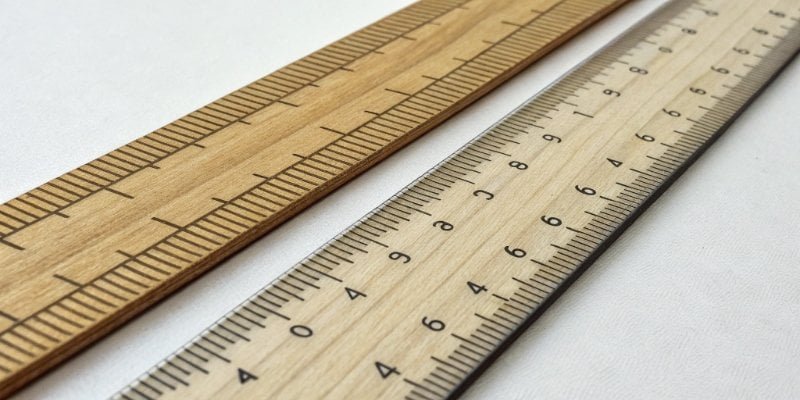
Let’s dive deeper into this. Think of resolution as "readability." If a scale has a resolution of 1 gram, it can only show weight changes in 1-gram steps. It cannot show you 0.5 grams. A scale with a 0.1-gram resolution is ten times more "readable." However, this doesn't mean it's correct.
Accuracy, on the other hand, is about truthfulness. It tells you how close the displayed weight is to the actual physical weight. It is often expressed as an error margin, like ±0.2 grams. This means a reading of 100 grams is guaranteed to be between 99.8 and 100.2 grams. Accuracy is a measure of the scale's overall performance, including factors like electronic quality and sensor design1.
As a manufacturer, we build scales by balancing both. A customer might see a high-resolution display2 and assume it’s highly accurate, but that isn't always the case.
| Feature | Resolution | Accuracy |
|---|---|---|
| What it is | The smallest displayed part of a measurement. | How close a measurement is to the true value. |
| Analogy | The number of decimal places on a display. | How correct the entire number is. |
| Example | A scale displays 10.1 g, 10.2 g, 10.3 g... | A 100 g weight reads between 99.9 g and 100.1 g. |
| Impact | Defines the level of detail you can see. | Defines the reliability of your data. |
How do I determine the required accuracy for my industrial weighing application?
Are you unsure just how precise your new industrial scale needs to be? Overpaying for unnecessary accuracy drains your budget, while underestimating it can ruin product quality or lead to legal issues.
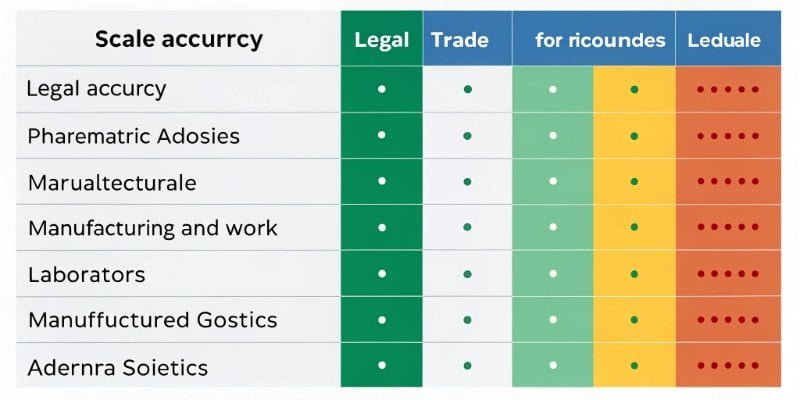
First, identify your main application. Legal-for-trade, pharmaceutical, and laboratory work demand high accuracy, often defined by standards like OIML Class II. General manufacturing and logistics can typically use standard accuracy scales, such as OIML Class III, for their processes.
The best way to determine your needs is to analyze your process. Where are you using the scale? What are the consequences of an incorrect measurement? I once helped a client in the bulk food industry3 who was using an expensive, high-precision lab scale to weigh 25 kg bags of flour. They were overspending on a tool that wasn't built for that environment. We switched them to a durable, Class III floor scale that was more than accurate enough for their needs and much more robust. They saved thousands on the initial purchase and reduced their maintenance costs.
Here’s a simple breakdown of how to think about it:
Application Categories
- High-Precision Work: This includes laboratories, pharmaceutical production, and chemical mixing. Here, a small error can ruin an entire batch. You'll need a scale with a very small error margin, like ±0.1g or better. These are typically OIML Class II4 scales.
- Commercial & Legal-for-Trade: If you sell products based on weight, like produce or packaged goods, you need a government-certified "legal-for-trade" scale. This protects both you and the consumer. Accuracy is non-negotiable and legally mandated.
- General Industrial & Logistics: For internal processes like checking incoming goods, counting parts, or calculating shipping weights, a standard industrial scale5 is usually sufficient. An OIML Class III scale provides a great balance of performance and cost.
| Application | Required Accuracy Level | Common Use Case |
|---|---|---|
| Laboratory / R&D | Very High (OIML Class II) | Formulating chemicals, quality testing |
| Pharmaceutical | Very High (OIML Class II) | Pill manufacturing, ingredient measurement |
| Legal-for-Trade | High (Certified) | Selling bulk goods, retail environments |
| Food Production | Medium to High | Batching ingredients, portion control |
| Logistics / Shipping | Standard (OIML Class III) | Verifying shipping weights, receiving |
| General Manufacturing | Standard (OIML Class III) | Parts counting, internal process checks |
Can an industrial scale be accurate but have low resolution?
It seems contradictory, right? How can a scale be accurate if it has low resolution? This common confusion can lead you to make purchasing decisions on the wrong assumptions, affecting your operational efficiency.
Yes, a scale can definitely be accurate but have low resolution. Imagine a large floor scale that correctly measures a 125.5 kg object, but its display only shows in 1 kg increments, so it reads "126 kg". The measurement is accurate, but you can't see the detail.
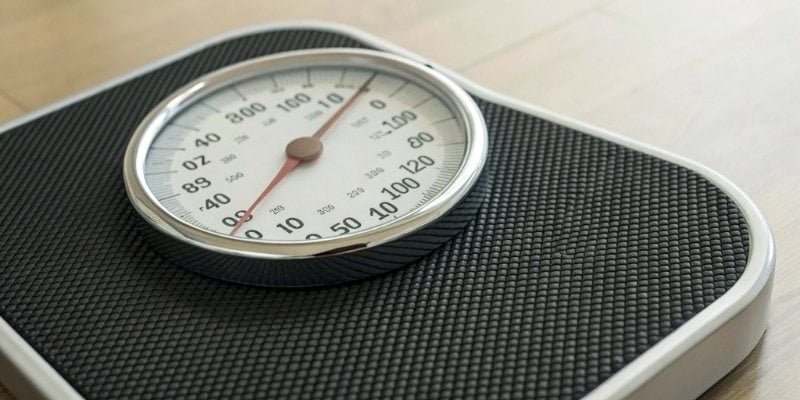
This is a very important concept, especially for heavy-duty industrial weighing. Let's take a practical example. We produce a floor scale with a 1,000 kg capacity and a resolution of 0.5 kg. This means it displays weight in half-kilogram steps: 500.0 kg, 500.5 kg, 501.0 kg, and so on.
If you place a certified 500.2 kg weight on it, the scale will display "500.0 kg". Because the true value is very close to the displayed value (only 0.2 kg off), we consider the scale highly accurate. It is performing its job correctly. However, its resolution is low because it cannot show you the ".2" part of the weight. This is perfectly acceptable for weighing pallets or large containers where that level of detail is unnecessary.
Conversely, a scale can have high resolution but low accuracy. A cheap kitchen scale might show a weight of "50.53 g" (high resolution), but if the true weight is 55.00 g, the scale is highly inaccurate and useless.
This table helps clarify the four possibilities:
| High Resolution | Low Resolution | |
|---|---|---|
| High Accuracy | Ideal. Perfect for labs and formula mixing. | Good. Great for bulk weighing and logistics. |
| Low Accuracy | Misleading. Looks precise but gives wrong data. | Useless. Provides no valuable information. |
What factors impact the accuracy of an industrial floor scale?
Is your new floor scale giving you inconsistent readings? Inaccurate measurements from a floor scale can disrupt your entire supply chain, from receiving raw materials to shipping finished products.
Accuracy is affected by environmental factors like temperature changes, vibrations, and air drafts. Physical issues such as an unlevel surface, debris under the scale, or a damaged load cell also cause major errors. Regular calibration is the key to maintaining accuracy.

In my 18 years, I’ve seen it all. A floor scale’s accuracy is not just about its internal components; its surroundings play a huge role. At Weigherps, we test every scale for weight, battery, and software performance before it leaves our factory. But once it's in your facility, you have to control the environment to maintain that factory-perfect accuracy.
Here are the main culprits I see causing problems:
1. Environmental Factors
- Temperature: Metal components in the load cell6s expand and contract with temperature changes, which can alter readings. Our scales include electronics that compensate for this, but extreme temperature swings can still have an impact.
- Vibrations: Is the scale near heavy machinery or a high-traffic forklift path? Constant vibrations can interfere with the load cells' ability to get a stable reading. If this is an issue, consider scales with vibration-damping feet.
- Air Drafts: For scales with very high resolution, even a strong gust from an open bay door or an HVAC vent can affect the reading.
2. Physical & Installation Issues
- Uneven Ground: Floor scales must be perfectly level. If they are not, the weight is not distributed evenly across all the load cells, leading to inaccurate readings.
- Debris: This is a big one. Dirt, rocks, or even a forgotten zip tie stuck under the scale platform can restrict its movement and throw off measurements. Regular cleaning is essential.
- Component Damage: Overloading the scale is the fastest way to permanently damage the load cells. Even dropping a heavy load from a small height can cause damage that compromises accuracy. This is why we build our scales to be tough and provide a 12-month warranty.
3. Operational Lapses
- No Calibration: Accuracy naturally drifts over time. A scale must be recalibrated regularly using certified test weights—at least once or twice a year, or more depending on use.
Conclusion
Choosing the right scale means understanding both resolution and accuracy for your specific application. This guarantees reliable data, better efficiency, and a great return on your investment in the long run.
-
Learn about the importance of sensor quality in achieving accurate measurements. ↩
-
A high-resolution display can enhance readability and precision in measurements. ↩
-
Discover the right scales to optimize operations in the bulk food sector. ↩
-
This classification indicates high accuracy standards for sensitive applications. ↩
-
Choosing the right industrial scale can prevent costly errors and improve efficiency. ↩
-
Understanding load cells is key to grasping how scales measure weight. ↩


[…] here can cause the blade to wobble or even fly off during use. As a B2B supplier, we ensure our OEM products2 come with clear instructions because we know that end-user safety reflects on the […]
[…] most important advice is to focus on the sensor. For critical components, insist on a high-resolution sensor8, often called 1-in-10,000 resolution or better. This level of precision is what separates an […]