
Are you losing money in ways you can't see? Hidden inefficiencies and inaccurate measurements can quietly drain your profits, leaving you wondering where the money went.
An industrial scale is essential for business success. It helps you cut costs by reducing waste, ensures you meet legal rules, and gives you tight control over your inventory and operations.
Investing in the right tools can feel like a big step. You might worry about the initial cost or the time it takes to integrate new equipment. But the cost of not acting is often much higher. Inaccurate data leads to bad decisions, lost materials, and unhappy clients. Let me show you how a modern industrial scale1 isn't just a piece of equipment; it's a core part of a smarter, more profitable business. We can help you turn measurement data into a powerful tool for growth.
How can an industrial scale improve my company's bottom line?
Are your profits lower than they should be? Manual processes and small measurement errors add up to significant financial losses over time, directly impacting your bottom line.
An industrial scale improves your bottom line by preventing product loss, ensuring accurate charges, and automating labor-intensive tasks. This directly cuts costs and increases revenue, boosting overall profitability.
I saw this firsthand with a client in Vietnam who processes rubber. They faced two big problems. First, they paid workers by the weight of rubber they picked, but all the records and payment calculations were done by hand. It was slow and full of errors. Second, they were losing a lot of rubber somewhere between the collection points and the factory.
We gave them a simple, effective solution. We set up a system where each worker has an IC card.
Before: The Manual Mess
Workers would bring their harvested rubber to a weighing station. An employee would write down the worker's name, the date, and the weight in a logbook. At the end of the pay period, someone had to manually add up all these numbers for every single worker to figure out their salary. This process was a huge source of errors and wasted administrative time.
After: The Automated Solution
With our system, a worker just swipes their IC card at the scale. The scale instantly identifies the worker and records the weight, automatically calculating their pay. The data is secure and accurate. It completely eliminated the manual calculation errors and freed up their administrative staff for more important work. This one change saved them countless hours and ensured every worker was paid fairly and accurately, which directly improved their operational costs.
| Process Step | Manual Method (Before) | Automated Method (After) |
|---|---|---|
| Worker Identification | Written in a logbook | Instant scan of IC card |
| Weight Recording | Manually written down | Automatically captured by scale |
| Payroll Calculation | Done by hand, slow and error-prone | Instantly calculated by the system |
| Data Security | Low (risk of loss or errors) | High (secure digital records) |
Why is accurate weighing essential for regulatory compliance?
Are you worried about fines or legal trouble? Using inaccurate weights for trade or shipping can lead to serious penalties and can damage your company's reputation.
Accurate weighing is essential because many industries are governed by "legal for trade" laws. Certified industrial scales ensure you comply with these regulations, avoiding fines, legal disputes, and product recalls.
When people think of compliance, they often think of complex government rules. But it can be much simpler. It can be about honoring the agreements you make. For my Vietnamese rubber client, paying workers accurately based on weight wasn't just about being efficient; it was about complying with their labor agreements2. Fair pay builds trust and avoids disputes.
But this extends to many other areas. If you ship goods, you must declare the correct weight. Overloading a truck or shipping container is a safety violation. Inaccurate weights can also lead to paying the wrong amount in taxes or tariffs, which can trigger audits and fines. In industries like food or chemicals, recipes require precise measurements. An inaccurate scale can lead to a bad batch, which might need to be recalled, costing a fortune and damaging your brand. A certified scale provides a verifiable record that you are doing things correctly. It’s your proof that you are meeting your obligations, whether they are to your workers, your customers, or government regulators. It’s a tool for building a trustworthy and legally sound business.
How do industrial scales enhance inventory control and operational efficiency?
Do you know exactly how much material you have on hand? Poor inventory tracking leads to waste, stockouts, and inefficient production, creating constant operational headaches.
Industrial scales provide real-time, accurate weight data. This data plugs into your management system, giving you a live view of inventory and streamlining workflows from receiving to shipping.
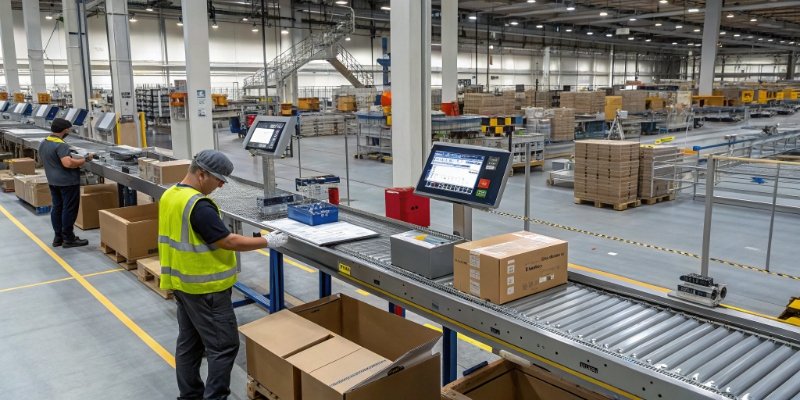
This brings me to the second problem my Vietnamese client faced: rubber disappearing between collection and processing. This was a direct hit to their inventory and profit. The manual system had no way to track the total weight securely once it was loaded onto a truck.
Our solution connected everything. We assigned an IC card to each truck. When a truck was full and ready to leave a collection point, the system recorded the total weight tied to that truck's card. When the truck arrived at the factory, it drove onto a large truck scale, or weighbridge3. The driver swiped the card again, and the system automatically weighed the truck and uploaded the data.
The manager could see both weights in the backend system instantly.
| Data Point | Collection Site | Factory Entrance | System Analysis |
|---|---|---|---|
| Action | Truck is loaded and weighed. | Truck is weighed on weighbridge. | Compares weights automatically. |
| Data Capture | IoT scale4 records total weight. | Weighbridge records arrival weight. | Flags any discrepancy instantly. |
| Result | Secure record of departing inventory. | Secure record of arriving inventory. | Immediate alert for any loss. |
This created a closed-loop system. There was no more guesswork. If a truck left with 10,000 kg and arrived with 9,800 kg, the manager knew immediately. They could investigate the specific truck and driver to find the source of the loss. This is a perfect example of how an integrated weighing system provides total control and makes your entire operation more efficient and secure.
What are the financial risks of not using a certified industrial scale?
Do you think using a cheap, non-certified scale is saving you money? In reality, this decision can expose your business to huge hidden costs and serious financial penalties.
The financial risks are significant. They include losing revenue from under-billing, losing material from inaccurate inventory, paying fines for non-compliance, and wasting labor on manual checks and corrections.
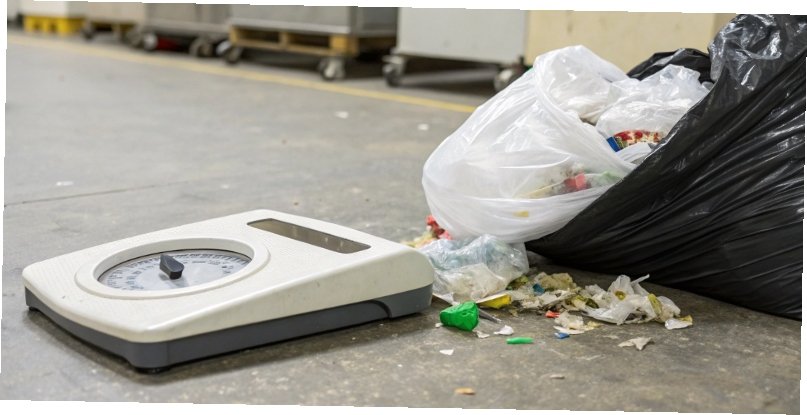
An uncertified or inaccurate scale is a liability, not an asset. Think about selling a product by weight. If your scale is off by just 1%, and you sell 1,000 tons of product a year at $2 per kilogram, you are giving away $20,000 of product for free. The same is true if you are buying raw materials; you could be overpaying for what you receive.
The story of my Vietnamese client highlights these risks perfectly. The financial loss from the disappearing rubber was a direct result of not having a secure, accurate weighing system. The time wasted on manual payroll was a significant labor cost. These weren't small issues; they were major drains on the business. Investing in a certified, integrated weighing system wasn't an expense for them. It was an investment that paid for itself very quickly by eliminating these financial risks5. A certified scale is your insurance against these preventable losses and provides a foundation for profitable growth.
Financial Risk vs. Smart Investment
| Risk of Not Using a Certified Scale | Benefit of a Certified Scale |
|---|---|
| Revenue Loss: Inaccurate billing and product giveaway. | Profit Protection: Ensures you charge and pay correctly. |
| Compliance Fines: Penalties from trade or safety violations. | Legal Security: Provides proof of regulatory compliance6. |
| Material Waste: Poor inventory control7 leads to loss/spoilage. | Inventory Control: Accurate data to manage stock efficiently. |
| Wasted Labor: Time spent on manual checks and correcting errors. | Operational Efficiency: Automates processes and frees up staff. |
Conclusion
Industrial scales are not just for weighing. They are vital tools that cut costs, ensure compliance, and give you control, paving the way for sustainable business growth.
- Explore how industrial scales can enhance efficiency and profitability in your operations. ↩
- Learn about the significance of labor agreements in maintaining fair practices. ↩
- Understand the function of weighbridges in logistics and inventory management. ↩
- Explore the technology behind IoT scales and their benefits for businesses. ↩
- Learn about the hidden costs associated with inaccurate weighing systems. ↩
- Understand the importance of compliance in avoiding legal issues and fines. ↩
- Find out how to manage your inventory effectively to avoid waste and stockouts. ↩

Comments (0)