
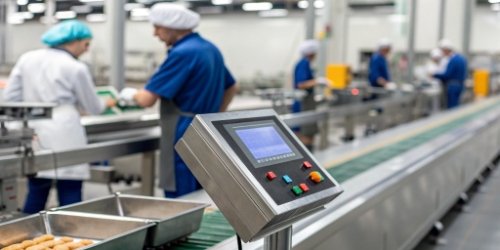
Your production line has manual steps that slow everything down. This process introduces human errors, costing you time and money to fix. A smart scale automates these tasks.
Yes, a single smart scale can eliminate multiple production steps. By integrating weighing, data logging, and system communication, it removes the need for manual recording, data entry, and separate verification. This directly streamlines your workflow, reduces labor, and improves data accuracy instantly.
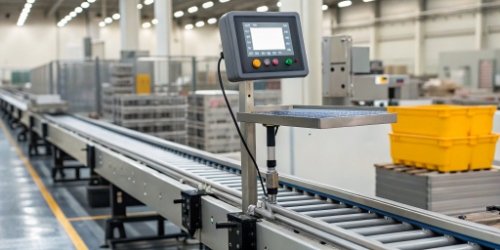
This sounds like a simple fix, but the impact is huge. As experts in industrial weighing for nearly two decades, we’ve seen this transformation firsthand. Clients often ask us how this one piece of equipment can make such a big difference. The answer lies in looking at the details of your daily operations. So let’s explore exactly how these scales can reshape your workflow1 and boost your bottom line.
How Can Smart Scales Streamline Production Processes?
Manual weighing and recording create bottlenecks. Your team wastes time writing down numbers and entering them into a PC, opening the door for costly mistakes that halt production.
A smart scale streamlines your process by combining tasks. It weighs the product, captures the data, and sends it directly to your system in one action. This removes unnecessary manual steps, saving time and preventing errors from ever happening.
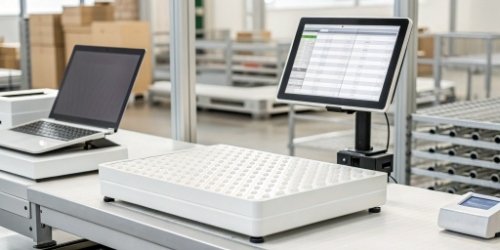
I remember working with a small food packaging company. Their process was holding them back. An employee would weigh a batch of products, jot the weight on a notepad, walk over to a shared computer, and type the numbers into a spreadsheet. This took up a surprising amount of time and, worse, transcription errors were common. A single wrong digit could lead to a whole batch being flagged by quality control2 later.
We helped them install a smart scale3 connected directly to their inventory software. Now, the process is simple and immediate.
From Manual Chaos to Automated Order
The change was dramatic. We helped them map out the "before" and "after" to see just how many steps were cut.
| Before: Manual Workflow | After: Smart Scale Workflow |
|---|---|
| 1. Operator places item on scale. | 1. Operator places item on scale. |
| 2. Operator reads the weight. | 2. Scale instantly sends weight data. |
| 3. Operator writes weight on a log sheet. | |
| 4. Operator walks to the computer station. | |
| 5. Operator enters the weight into a spreadsheet. | |
| 6. A supervisor later verifies the data. |
By integrating one device, we eliminated four distinct steps. The operator now just weighs the item and moves on. The data is instantly and accurately recorded in their system, which is exactly what a software vendor like you needs—reliable hardware that makes your software shine.
What Efficiency Improvements Result from Using Intelligent Weighing Systems?
You know inefficient processes are costing you, but it’s hard to see the exact impact. Slowdowns and mistakes eat into your profits, making it difficult to grow or compete.
Intelligent weighing systems give you measurable gains. They slash weighing times, eliminate data entry errors, and free up your staff for more valuable work. This directly increases your output and reduces operational waste.

When we present solutions to technical directors, we don’t just talk about features; we talk about numbers. Efficiency isn’t just a buzzword; it’s something you can track and measure. For software providers, proving this ROI is critical. You need to show your clients how the combined hardware and software solution delivers real-world results. Upgrading to a smart system creates clear, quantifiable improvements across the board. The small changes add up to a huge impact on the production floor. Let’s break down where you’ll see the biggest wins in your operation.
Tracking Your Gains
You can measure the impact of an intelligent weighing system in three core areas.
1. Real Time Savings
Every second counts in production. If a manual weigh-and-record process takes 20 seconds, and a smart scale does it instantly in 3 seconds, you save 17 seconds per item. Over a shift with 1,000 weighing events, that’s over 4.7 hours of time saved.
2. Drastic Error Reduction
Manual data entry4 has an average error rate of about 1%. That might seem low, but it means 10 incorrect entries for every 1,000 items. Each error requires time to find and fix. An intelligent system reduces this error rate to virtually zero, ensuring data integrity from the start.
3. Better Labor Allocation
The employee who used to spend their day entering data can now focus on quality assurance, packing, or another value-adding task. You’re not just saving time; you’re optimizing your workforce without increasing headcount.
How Do Advanced Scales Simplify Complex Manufacturing Workflows?
Complex tasks like recipe formulation are prone to error. An operator working from a paper list can easily use the wrong ingredient or the wrong amount, spoiling an entire batch.
Advanced scales simplify complex workflows by guiding the operator. Connected to your software, the scale can display instructions and only accept the correct weight for each component, ensuring perfect results every time.

We once worked with a client in the specialty chemicals industry. Their process involved mixing dozens of different ingredients in precise ratios. One small mistake could ruin thousands of dollars worth of materials. Their operators were skilled, but the mental load was high, and mistakes still happened. They needed a system that removed the guesswork. This is where our ability to provide custom hardware for a complete solution becomes so important. We don’t just sell scales; we provide the reliable backbone for sophisticated software operations.
Guiding a Perfect Mix, Every Time
The solution was to turn the scale into an interactive guide. This is a perfect example of how our hardware can empower your software.
The Old, Risky Method
An operator would have a clipboard with a formula sheet. They would have to:
- Read the first ingredient and target weight.
- Manually tare the container on the scale.
- Add the ingredient, trying to hit the exact weight.
- Mark the ingredient as complete.
- Repeat for all other components, hoping no steps were missed or amounts misread.
The New, Simplified Method
With an integrated intelligent scale, the workflow becomes foolproof:
- The operator scans a work order.
- Your software sends the first step to the scale’s display: "Add 10.50 kg of Compound A."
- The scale waits. The system will not proceed until the operator adds the correct ingredient within the specified tolerance. A progress bar on the display makes it easy.
- Once the weight is correct, the data is automatically recorded, and the scale displays the next step.
This simple, guided process makes complex manufacturing easy, accurate, and stress-free.
Can Upgrading to a Smart Scale Reduce Production Steps and Costs?
You are constantly under pressure to reduce operational costs. Investing in new technology feels like a risk, especially if you can’t see a clear path to getting your money back.
Yes, upgrading to a smart scale directly reduces costs by eliminating production steps. It cuts down on labor, minimizes material waste from errors, and lowers the expenses associated with rework and quality control failures.
As a manufacturer with 19 years of OEM/ODM experience, we understand the focus on budget and ROI. Our clients, particularly purchasing managers, need to justify every expense. The beauty of a smart scale is that the return on investment5 is not abstract—it’s visible in your financial reports6. The initial purchase is often paid back within months, not years. This isn’t just about making a process faster; it’s about making your entire operation more profitable and robust. Let’s look at a clear breakdown of where the savings come from and how they accumulate over time.
A Clear Path to Lower Costs and Higher ROI
The financial benefits are straightforward and easy to calculate. By targeting key operational costs, a smart scale provides a powerful return on investment.
| Cost Category | How Smart Scales Reduce It | Potential Savings |
|---|---|---|
| Direct Labor | Eliminates the need for manual data entry4 and reduces time spent on verification. | One employee can be reallocated, saving their full salary from the operational budget. |
| Material Waste | Prevents overfilling and incorrect batch formulation through automated checks7 and guided processes. | Can reduce material loss by 1-3%, a huge saving in high-volume production. |
| Rework & Rejects | Catches weight-related errors instantly at the source, not at the final QC inspection. | Drastically lowers the rate of rejected batches and the cost of rework. |
| Administrative Overhead | Automates the creation of production logs and compliance reports, saving management time. | Frees up several hours per week for supervisors and quality managers. |
This upgrade is more than an expense; it’s an investment in efficiency that pays for itself.
Conclusion
Integrating smart scales eliminates manual steps, reduces costs, and boosts production efficiency. It’s a simple upgrade that delivers a major, positive impact on your company’s entire bottom line.
-
Learn about strategies to optimize workflows for better productivity and reduced costs. ↩
-
Discover how automation can enhance quality control processes and reduce rework. ↩
-
Explore how smart scales can revolutionize your production line by automating tasks and improving accuracy. ↩
-
Explore the challenges of data entry and how they can impact production accuracy. ↩ ↩
-
Learn about the potential ROI from investing in smart manufacturing solutions. ↩
-
Explore how smart technology investments can be tracked through financial reports. ↩
-
Learn how automated checks can prevent costly errors in the production process. ↩



Comments (0)