
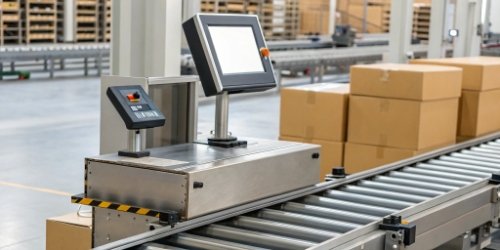
Juggling multiple devices for weighing and labeling slows your line down. This creates bottlenecks and human errors. You can combine these tasks into one swift, accurate process.
Yes, you can. An integrated device streamlines your workflow by cutting out extra steps. It reduces manual work, minimizes mistakes, and synchronizes tasks. This significantly boosts your production line's speed and throughput.
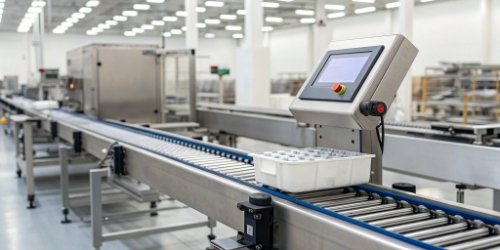
In my 19 years in this industry, I've seen countless operations trying to optimize their workflow. They focus on big machinery but often overlook the small, repetitive tasks. These tasks are where the real delays and errors hide. A single operator moving between a scale, a computer, and a printer can lose precious seconds with every package. These seconds add up to hours of lost productivity. That's why moving to a single, multi-function device1 isn't just a small upgrade. It's a fundamental shift in how you approach efficiency. It empowers your team to work smarter, not harder. Let's explore how this works.
How Does Integrating Weighing, Labeling, and Data Capture Boost Throughput?
Separate stations for weighing and labeling always create delays. Operators waste valuable time moving between tasks. Integrating these functions into one station lets operators work much faster.
Integration boosts throughput by creating a single, fluid motion. An operator weighs an item, and the correct label prints instantly. This synchronization removes wasted movement and data entry errors, making the entire process faster and more reliable from start to finish.
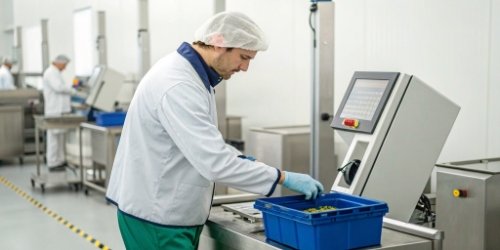
The core idea is simple: humans cannot repeat a single task with the efficiency and accuracy of a machine. My insight is that in industries where people are still essential, we must give them the best tools. Our integrated weighing, printing, and IoT scales2 help operators sync their labeling and weighing actions perfectly. This synchronization is key to boosting throughput3. Let's break down the workflow transformation.
From Clunky Steps to a Single Flow
Think about the traditional process. An operator places a box on a scale, reads the weight, walks to a computer, types in the weight, prints a label, then returns to the box to apply it. Each step is a potential point of failure or delay. With an integrated device4, the process becomes one single action. The operator places the box on the scale, and the correct label prints out immediately, ready to be applied.
Eliminating Human Error
Manual data entry is a huge source of errors. A simple typo can lead to incorrect shipping fees, lost packages, or compliance fines. An integrated system captures the weight data directly from the scale and sends it to the printer. There is no manual entry, so the chance of a data error becomes virtually zero. This is crucial for software providers whose systems rely on accurate data from the hardware.
| Traditional Workflow Steps | Integrated Workflow Steps |
|---|---|
| 1. Place item on scale. | 1. Place item on scale. |
| 2. Read display. | 2. Label prints instantly. |
| 3. Walk to PC. | 3. Apply label. |
| 4. Manually enter weight. | |
| 5. Print label. | |
| 6. Return to item. | |
| 7. Apply label. |
This table clearly shows how you can cut more than half the steps from the process. This directly translates to higher throughput per operator.
What Benefits Come from Combining Weighing and Labeling in a Single Device?
Mismatched labels cause costly returns and rework. This often happens when weighing and labeling are disconnected. A combined device ensures the right label is always on the right package.
The main benefits are improved accuracy, reduced operational costs, and a smaller footprint. You eliminate labeling errors, save money on rework, and free up valuable workspace by replacing multiple devices with a single, efficient unit.
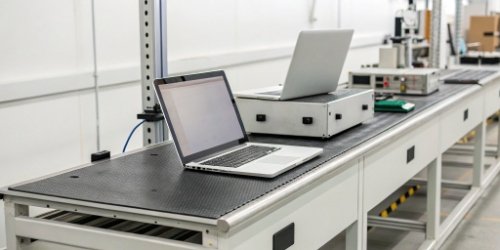
When speaking with purchasing managers, the conversation always turns to Total Cost of Ownership (TCO)5. A lower upfront price for separate devices can seem appealing, but the long-term costs tell a different story. The benefits of an integrated solution go far beyond just speed; they hit the bottom line directly. As a manufacturer, we build our custom solutions around these core benefits because we know they are what drive real value for our partners.
Drastically Reduced Errors
The number one source of shipping errors6 I see is incorrect labeling. This happens when an operator weighs one package but accidentally prints or applies the label for another. An integrated system makes this nearly impossible. The scale is locked to the printer until the cycle is complete. The weight is recorded, the label is printed, and only then is the system ready for the next item. This simple lock-step process ensures a one-to-one match every time, protecting your data integrity and your customers' satisfaction.
Significant Cost and Space Savings
Let's look at the physical and financial footprint. If you have separate scales, computers, and printers, you need more bench space, more power outlets, and more data cables. Each device also requires its own maintenance7 and potential service contract.
| Cost Factor | Multi-Device Setup | Integrated Device |
|---|---|---|
| Footprint | High (3+ devices) | Low (1 device) |
| Power Usage | High (3+ outlets) | Low (1 outlet) |
| Maintenance | 3 separate contracts | 1 service contract |
| Training | Complex, multi-step | Simple, single-step |
An integrated device combines these into one compact unit. This not only frees up valuable workspace but also reduces energy consumption and simplifies maintenance. You have one device to service, one supplier to call, and one system for your team to learn.
How Can a Multi-Function Device Improve Production Efficiency?
Is your production line held back by inefficient processes? Manual data entry and multiple steps are slow and error-prone. A multi-function device automates these tasks, boosting your overall production efficiency.
A multi-function device improves efficiency by automating the weigh-print-apply sequence. It reduces labor needs, minimizes training time for new operators, and provides real-time data for better production management, optimizing your entire operation.
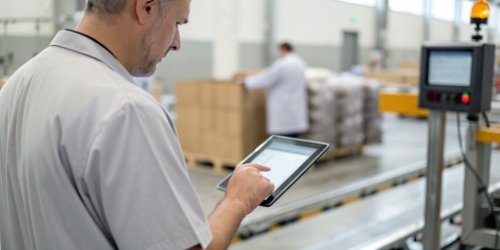
For technical directors at software companies, efficiency is about more than just speed. It's about data, integration, and control. An efficient production line8 provides clean, real-time data9 that can be used to make smarter business decisions. This is where our IoT-enabled scales really shine. They aren't just hardware; they are data collection points for your sophisticated software systems. The goal is to make the hardware invisible and the data flow seamless.
Streamlined Operator Training
I remember visiting a new client who was struggling with high employee turnover on their packing line. They spent days training new hires on a complicated multi-step process. We replaced their setup with our integrated scales. Training time for new operators dropped from two days to less than an hour. The intuitive, single-step process is easy to learn and hard to get wrong. This reduces the strain on your training resources and gets new team members productive almost immediately.
Real-Time Data for Decision Making
A multi-function device with IoT capabilities doesn't just weigh and print. It captures critical data with every single transaction. This includes weight, timestamp, operator ID, and more. This data can be sent directly to your cloud-based software or ERP system in real time. Managers can then use this information to:
- Monitor throughput per station or per operator.
- Identify bottlenecks in the production line.
- Track inventory levels with precise weight data.
- Generate performance reports automatically.
This is how we help our software partners empower their customers. We provide the reliable hardware that fuels their data analytics10 and business intelligence platforms.
What Are the Advantages of Using One Device for Weighing, Labeling, and Data Capture?
Managing different suppliers for scales, printers, and scanners is a huge headache. Compatibility issues and blame games are very common. Simplify your supply chain with one reliable, all-in-one device.
The key advantages are a single point of contact for support, guaranteed compatibility, and a lower total cost of ownership. You simplify procurement, reduce integration headaches, and benefit from a seamless system designed to work together.

This topic is especially important for purchasing managers and technical directors. Your biggest concerns are often compatibility, support, and long-term reliability. When you buy separate components from different manufacturers, you become the systems integrator. If something goes wrong, the scale company blames the printer company, who blames the software. As an OEM/ODM provider with 19 years of experience, we eliminate this problem entirely by providing a complete, verified solution.
The Power of a Single Partner
Having a single point of contact is a massive advantage. Our after-sales department supports the entire unit—scale, printer, software interface, and all. There's no finger-pointing. We take full responsibility because we built and tested the entire system. Our quality control department checks every single unit for weight accuracy, software function, and hardware durability before it ships.
This table summarizes the challenges of a fragmented approach versus the benefits of an integrated solution from a single partner like us.
| Factor | Multi-Device Setup (The Pain) | Integrated Device (The Solution) |
|---|---|---|
| Procurement | Multiple vendors, complex contracts | Single vendor, simplified purchasing |
| Integration | Compatibility risks, custom drivers | Guaranteed compatibility, easy-to-use API |
| Support | Blame-shifting between vendors | Single point of contact for all issues |
| Maintenance | Multiple service contracts | One service agreement, streamlined parts |
| Updates | Inconsistent firmware/software updates | Coordinated updates for the entire system |
For software vendors, this means you can confidently recommend a hardware solution to your clients, knowing it will integrate smoothly with your system. We work with our partners to create tailored solutions that meet their specific market needs, ensuring a win-win outcome.
Conclusion
Combining weighing, labeling, and data capture in one device boosts your throughput, cuts errors, and simplifies operations. It is a smart investment for a more efficient and profitable production line.
-
Discover the benefits of multi-function devices in streamlining production processes. ↩
-
Explore the functionality of IoT scales and their impact on modern manufacturing. ↩
-
Find out effective methods to boost throughput and enhance overall productivity. ↩
-
Explore how integrated devices can streamline your production process and enhance efficiency. ↩
-
Understand the concept of TCO and its importance in evaluating production investments. ↩
-
Learn about the causes of shipping errors and effective strategies to reduce them. ↩
-
Explore ways to streamline maintenance processes for manufacturing equipment. ↩
-
Discover key elements that influence production line efficiency and how to improve them. ↩
-
Learn how real-time data can enhance decision-making and operational efficiency. ↩
-
Discover how data analytics can drive improvements in manufacturing efficiency and decision-making. ↩


Comments (0)