

Are you struggling to manage sales, track inventory, and handle customer data? This manual chaos leads to lost revenue and wasted time, holding your business back from its true potential.
Yes, most retail stores need a Point of Sale (POS) system. It’s much more than a cash register. A POS streamlines sales, automates inventory tracking, manages customer data, and provides powerful reports, making it an essential tool for efficiency, accuracy, and business growth.

A POS system acts as the central hub of your entire retail operation. In my 19 years of manufacturing industrial weighing solutions, I’ve seen firsthand how automation and accurate data can revolutionize a business. A POS brings this same power from the factory floor to your sales counter. It’s the key to making smarter decisions and unlocking your store's full potential. Let's explore how this system can specifically help you.
Do retail stores use POS systems?
Are you still using a traditional cash register and a notepad for inventory? You might be falling behind competitors who leverage data to make smarter, faster business decisions every single day.
Yes, almost all modern retail stores use POS systems. From small independent boutiques to massive multinational chains, they have become the standard technology. They are essential for staying competitive by streamlining operations and improving the customer experience.

The shift from simple cash registers to integrated POS systems marks a huge change in retail. In my work providing weighing solutions, we help businesses move from manual recording to automated, accurate data collection. A POS system does the exact same thing for a retailer. It's not just about processing payments anymore. It’s about gathering valuable information with every single transaction. This technology is no longer a luxury; it's a fundamental tool for survival and growth in today's market. Think of it as the brain of your store, connecting sales, inventory, and customers in one smart system.
To understand the difference, look at this comparison:
| Feature | Traditional Cash Register | Modern POS System |
|---|---|---|
| Sales | Records cash totals only | Tracks sales by item, time, employee |
| Inventory | Manual counting required | Real-time, automatic updates |
| Reporting | Basic end-of-day summary | Detailed reports on trends, profits |
| Payments | Cash, maybe basic card | All types: credit, debit, mobile, gift cards |
| Customers | No tracking | Builds customer profiles and history |
Why is a POS system important in retailing?
Are you making critical business decisions based on guesswork or a gut feeling? This often leads to overstocking unpopular products while running out of your bestsellers, directly hurting your bottom line.
A POS system is important because it provides the hard data needed for smart decision-making. It goes beyond simple transactions to offer deep insights into sales trends, inventory levels, and customer behavior, empowering you to boost efficiency and profit.
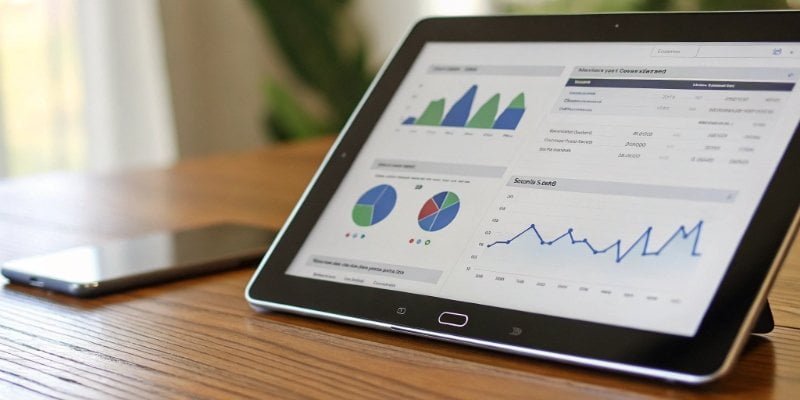
A POS system is the engine for a data-driven retail strategy1. It turns every sale into a valuable piece of information. In the industrial sector, my clients rely on our precise weighing systems to eliminate waste and optimize production. A POS brings that same level of precision and control to your store. It helps you manage key areas of your business with accuracy instead of assumptions.
Key Areas of Impact
- Accurate Inventory Management: The system automatically deducts sold items from your stock. You get real-time inventory levels2. This means you can set up alerts for when products are running low, preventing stockouts of popular items. You also avoid tying up cash in slow-moving products.
- Insightful Sales Reporting: You can easily see which products sell best, what your busiest hours are, and even which employees are your top performers. This information is gold. You can use it to create more effective promotions, optimize staffing schedules, and train your team.
- Enhanced Customer Relationships: Many POS systems include CRM (Customer Relationship Management) features. You can build a database of your customers, track their purchase history, and create loyalty programs3. This helps you turn one-time shoppers into repeat customers.
Do you require POS?
Are you wondering if your small business truly needs to invest in a POS system? You might think the manual way is fine, but the hidden costs of errors and wasted time add up quickly.
You require a POS if you want to grow your business, manage inventory accurately, reduce human error, and understand your sales data. For any store beyond a small hobby operation, it becomes a necessity for efficient management and scaling.

The decision to get a POS system is about looking forward. Where do you want your business to be in a year? Or five? While a simple cash box might work for a weekend market stall, it actively holds back a business with growth potential. As an OEM manufacturer, we design solutions for clients who want to scale. The tools they use are critical for that growth. A POS system is one of those foundational tools for a retailer. It automates the tedious tasks that consume your time, so you can focus on bigger things, like marketing, customer service, and strategy. It prepares your business for a bigger future. Ask yourself these questions to see if you're ready:
| Ask Yourself... | If You Use a Manual System | If You Use a POS System |
|---|---|---|
| Do I know my best-selling product? | Guess based on observation | Know instantly from reports |
| How long does inventory count take? | Hours or days of manual work | A few clicks for a real-time report |
| Can I easily run a sale? | Manually change every price tag | Apply discounts system-wide in seconds |
| Do I know who my best customers are? | Rely on memory | Identify and reward them through data |
If the "Manual System" column feels too familiar, it's a clear sign you require a POS.
Is a POS system worth the money?
Does the price tag of a new POS system make you hesitate? It's natural to worry that the cost won't deliver a good return, leaving you with an expensive, underused piece of tech.
Yes, a POS system is worth the money. Its return on investment comes from increased efficiency, lower labor costs, fewer expensive errors, and data-driven strategies that directly boost sales, quickly outweighing the initial setup cost.

Thinking about a POS system as a cost is the wrong approach. It’s an investment. In my industry, clients invest in our custom weighing systems because the cost of not having them—through product giveaway, inaccurate billing, or inefficiency—is far greater. The same logic applies directly to a POS. The money you "save" by sticking with a manual system is often lost through hidden drains on your profit. You lose money from pricing errors4, from time spent on manual counts that could be spent on selling, and from missed sales because you were out of stock on a hot item. A POS system plugs these leaks. It pays for itself by making your entire operation more profitable and giving you back your most valuable asset: your time.
The Real Return on Investment (ROI)
| Costs to Consider | Benefits & Savings |
|---|---|
| Hardware (terminal, scanner) | Time saved on inventory (Labor Savings) |
| Software subscription (monthly/annual) | Reduced stockouts/overstocking (Better Cash Flow) |
| Payment processing fees | Increased sales from promotions (Higher Revenue) |
| Staff training time | Fewer checkout errors (Reduced Losses) |
Conclusion
A POS system is a vital investment for any modern retailer. It transforms your store into a data-driven, efficient, and profitable business, laying the foundation for future growth and success.



Comments (0)