

Your powerful software needs accurate data, but manual entry is slow and full of errors. This undermines your product's value. A physical weighing device can bridge this gap and automate everything.
Yes, they absolutely do. A physical device provides accurate, automated data input for your software. It eliminates manual errors, boosts efficiency, and gives your clients a complete, user-friendly solution. This directly elevates your software's perceived and actual value in the market.
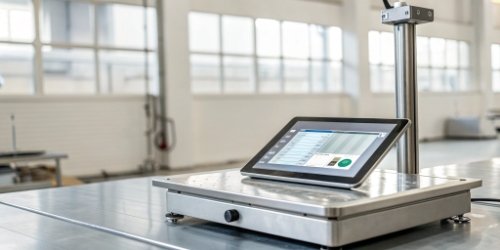
It's clear that a hardware-software combination is powerful, but you might be wondering what specific benefits this integration actually brings to the table. I can tell you from my experience that it's much more than just simple convenience. It's about transforming your software from a standalone program into the core of a complete, tangible solution for your clients. Let's break down exactly how this powerful combination works and why it's a game-changer for your business and theirs.
What Advantages Do Physical Devices Offer When Paired with Weighing Software?
Are you seeing your software's full potential go untapped due to poor data input? Inaccurate manual entries undermine your software's value and your client's trust. Integrating a physical device ensures data integrity.
The biggest advantage is creating a complete, end-to-end solution. It boosts data accuracy by eliminating human error, increases operational speed through automation, and enhances the overall user experience. This makes your software offering more valuable and competitive.

As a software provider, your expertise is in writing elegant code and creating powerful user interfaces, not in manufacturing industrial-grade hardware. I've seen many software companies struggle when they try to build their own devices. It's a huge drain on time, money, and resources that could be spent improving your core product. Partnering with a hardware expert like us allows you to focus on what you do best. You deliver a robust, complete solution without the headaches of hardware development and production. It’s about creating a unified system where the whole is far greater than the sum of its parts. This synergy is what clients are truly looking for: a simple, reliable solution to a complex problem.
Key Advantages of a Unified System
| Feature | Software Only | Software + Weigherps Hardware |
|---|---|---|
| Data Accuracy | Prone to human error during manual entry. | ~99.9% accurate, automated data capture. |
| Efficiency | Slow, labor-intensive process. | Instant, real-time data1 flow. |
| User Experience | Fragmented; requires switching between tasks. | Seamless, integrated workflow. |
| Product Value | Limited by the quality of input data. | Enhanced by reliable, real-time analytics. |
How Can Complementary Devices Enhance the Functionality of Weighing Software?
Is your software just a data log for past events, not an active tool? Without real-time input, your software can't drive immediate action. A connected device transforms it into a dynamic command center.
They enhance functionality by providing real-time, accurate data streams. This unlocks advanced features like automated inventory management, process control based on weight thresholds, and detailed analytics. Your software evolves from a passive repository into an active, intelligent operational tool.

Think about the possibilities this opens up. Your software is no longer just for record-keeping; it becomes the brain of an operation. I remember a project with a client who developed amazing inventory software. Their customers loved the interface, but they still had to manually count items and update the system at the end of each day. This lag meant the data was always slightly out of date. By integrating our IoT scales, their software could finally show live stock levels. When an item was placed on or removed from the scale, the database updated instantly. This single change completely transformed their product's value proposition. It enabled features like low-stock alerts, automated reordering, and precise consumption tracking. Your software can do the same, moving from simply logging data to actively controlling and optimizing a client's entire workflow.
From Data Logging to Process Control
- Automated Inventory Management: Connect our scales to your software to track stock levels in real time. Eliminate manual counting and prevent stockouts.
- Quality Control: Your software can use weight data to automatically check if products meet specifications, flagging any that are over or under the target weight.
- Process Automation: Set weight-based triggers in your software. For example, once a container on a scale reaches a target weight, your software could automatically trigger the next step in the production line.
Why Might Clients Benefit from Integrating Physical Devices with Weighing Software?
Your clients want simple, effective solutions, not more complexity. Juggling separate software and hardware from different vendors creates headaches, training issues, and support nightmares. An integrated system solves this.
Clients benefit from a seamless, all-in-one solution. They get increased efficiency, reduced operational errors, and a single point of contact for support. This simplifies their workflow, boosts their confidence, and improves their return on investment (ROI).

From the end user's perspective, a unified solution is a dream come true. We've all been there, caught in the middle of two suppliers blaming each other for a problem. When we partner with a software company, we present a unified front. The end user gets a single, effective solution and a clear support path. This builds immense trust and brand loyalty, not just for us, but for you as the software provider. It also drastically reduces training time. Instead of teaching their team how to use a scale and then how to input that data into your software, they learn one simple, integrated process. This faster ramp-up time means they start seeing the return on their investment much sooner. Ultimately, it makes your software "stickier" because it's deeply embedded in their daily physical operations.
Simplifying the Client's Operations
| Aspect | Before Integration (Separate Vendors) | After Integration (Unified Solution) |
|---|---|---|
| Workflow | disjointed: Weigh -> Record -> Manually Enter | Seamless: Weigh & data is auto-captured |
| Support | Confusing; multiple points of contact. | Simple; one point of contact for the system. |
| Error Rate | High potential for transcription errors. | Near zero, as data transfer is automated. |
| Training | Requires learning multiple systems. | Requires learning one integrated process. |
What Factors Should Be Considered When Adding Physical Devices to Weighing Software Solutions?
Choosing the wrong hardware partner can create more problems than it solves. Incompatibility, poor quality, and a lack of support can damage your reputation and frustrate your customers.
Key factors include compatibility, reliability, and customization. Ensure the device's API or data output is easy to integrate. The hardware must be durable and certified. Look for a partner who can customize the device to match your software and branding.

Finding the right partner is the most critical step. Your reputation is on the line. You need a manufacturer who understands the importance of seamless integration2 and robust support. With my 19 years of OEM/ODM experience, I can tell you that a good partner provides more than just a product; they provide a service. This starts with clear technical documentation3 (APIs, SDKs) and responsive support to make the integration process smooth for your developers. The hardware itself must be reliable and certified with international standards like CE, ensuring it works flawlessly in your clients' environments. Most importantly, look for a partner who is willing to customize. We see ourselves as an extension of your team, ready to modify firmware or even add your logo to the hardware. This creates a cohesive, branded solution that reinforces your company's image as a comprehensive solution provider.
Checklist for a Hardware Partner
- Technical Integration: Do they provide a simple API, SDK, or communication protocol (e.g., Wi-Fi, Bluetooth, Serial) that your team can easily work with?
- Hardware Quality & Certification: Is the device built to last? Does it have the necessary certifications (like CE) for your target markets?
- Customization Capability: Can they meet your specific needs? This could be anything from custom firmware to adding your brand's logo to the device.
- Supplier Reliability: Do they have a proven track record? What does their after-sales service and warranty look like? You need a partner who will be there for the long term.
Conclusion
Integrating physical weighing devices isn't just an add-on; it completes your software solution. This partnership enhances functionality, boosts client satisfaction, and gives you a powerful competitive edge.



Comments (0)