

Confused about your product's compliance status? The certificate looks official, but an old date makes you nervous. I'll explain exactly how expiration works and what you need to know.
Yes, a Certificate of Conformity (CoC) typically has an expiration date. Most certificates are valid for one to five years. Once expired, they are no longer valid, and the product may need to be recertified to meet current standards and regulations.

But the expiration date printed on the paper is just one part of the story. The real-world usability of that certificate depends on several other factors. If the regulations themselves change, a certificate can become invalid even before its printed expiry date. Staying compliant means more than just checking a single date. Let's dive into what this means for the industrial scales you purchase and use.
Can I use a scale out of the box if it has a Certificate of Conformity?
You've just unboxed a new industrial scale with a CoC. You assume it's ready for action, but this assumption can cause major issues. I'll clarify what you must check first.
Generally, you can use a certified scale out of the box if the certificate covers that exact model and the unit has not been damaged or modified. However, always verify these details before putting it into service to ensure full compliance and accuracy.

Digging Deeper into "Ready to Use"
A Certificate of Conformity1 isn't a simple green light. It’s a technical document that states a product met specific standards at the time of manufacturing. Here’s what you need to confirm before you start weighing.
Check the Certificate's Scope
The certificate must match the product in your hands. A common mistake I've seen is assuming a certificate for a product series covers all variations. Check that the model number2 on your scale is explicitly listed on the certificate. A certificate for model "WPS-100" might not apply to model "WPS-100A" if the 'A' version has different components.
Inspect for Damage or Modifications
The certificate is only valid for the product as it left the factory. Any changes can void it.
- Shipping Damage: A hard knock during transit could affect the scale's accuracy or safety, invalidating its certified status. Always perform a visual inspection upon arrival.
- Post-Factory Changes: If a distributor or even your own team adds a new bracket or modifies the software, the original CoC no longer applies.
Local Verification Requirements
For scales used in commercial transactions (where you sell goods by weight), a manufacturer's CoC is often just the first step. Many regions require additional local certification3.
| Certification Type | Purpose | Who Performs It |
|---|---|---|
| Manufacturer's CoC | States the product design meets international/regional standards. | The manufacturer (like us) or a third-party lab. |
| Local Legal-for-Trade Verification | Confirms a specific unit is accurate on-site before commercial use. | A local weights and measures official4. |
Are all Certificates of Conformity the same?
You're looking at certificates from different suppliers. You see CE, UL, OIML, and they all seem official, but are they interchangeable? This confusion can lead to purchasing the wrong product. I'll break down the key differences.
No, Certificates of Conformity are not all the same. They vary significantly based on the country, the standards they certify against, and the body that issues them. A CE mark for Europe is completely different from a UL mark for the United States.

Understanding the Differences
Thinking all certificates are equal is a trap I've seen many buyers fall into. It can result in a product that's illegal to sell or use in your market. As a manufacturer for global brands, we handle these distinctions every day. Here’s a simple breakdown.
Regional Mandates
Different economic zones have their own rules. The certificate you need is determined by where you plan to sell or use the product.
- CE (Conformité Européenne): This is mandatory for most products sold in the European Economic Area (EEA). It's a declaration by the manufacturer that the product meets EU safety, health, and environmental requirements.
- UL (Underwriters Laboratories): This is a popular certification in North America, focusing on product safety. While technically voluntary, many retailers and regulations require it.
- Other Marks: You'll also encounter UKCA (for Great Britain), FCC (for electronic emissions in the U.S.), and others.
Focus of the Standard
Certificates also certify compliance with different types of standards. An industrial scale might need multiple certifications.
- Metrology: OIML5 R 76 is a global standard for the performance of weighing instruments.
- Electrical Safety: IEC/EN 61010-1 covers safety requirements for electrical equipment for measurement and control.
- Electromagnetic Compatibility (EMC): This ensures the device doesn't interfere with other electronics.
| Aspect | CE Marking (EU) | UL Marking (North America) |
|---|---|---|
| Geography | mandatory for the European Economic Area | Primarily for the USA and Canada |
| Nature | Often a self-declaration by the manufacturer | Always requires third-party testing by a lab like UL |
| Primary Focus | Broad health, safety, and environmental protection | Primarily electrical and fire safety |
What specific information should I look for in a Certificate of Conformity for industrial scales?
You're holding a CoC, but it's a dense document. You're worried about missing a critical detail hidden in the technical language. I'll point out the exact information you should focus on immediately.
On a CoC for an industrial scale, you must find: the manufacturer's name, the exact product model, the list of specific standards it meets (e.g., OIML R 76, EN 61010-1), the issue and expiry dates, and an authorized signature.

Reading a Certificate Like an Expert
Over my 18 years in this industry, I've reviewed thousands of certificates. They don't have to be intimidating. You just need to know where to look. Think of it as a checklist to protect your business. Here are the key sections I always verify first.
Identification Information
This section links the document directly to your physical product.
- Manufacturer: The full name and address should be clear.
- Product: The model number is crucial. It must match your scale exactly. Sometimes, it will also include a range of serial numbers. If your scale’s serial number isn't in that range, the certificate isn't valid for your unit.
Statements of Compliance
This is the core of the certificate. It lists the "harmonized standards6" or "directives" the product complies with. For an industrial scale, you should look for entries like:
- Non-Automatic Weighing Instruments (NAWI) Directive: For scales used in trade in the EU.
- EMC Directive 2014/30/EU: Ensures the scale won't be affected by or cause electromagnetic interference.
- Low Voltage Directive (LVD) 2014/35/EU: Confirms the electrical safety of the product.
- OIML R 76: An international recommendation for metrological characteristics.
Dates and Authority
These details give the certificate its legal power.
- Issue Date: When the certificate was granted.
- Expiry Date: The "use by" date for the certification.
- Issuing Body: Was it a self-declaration by the manufacturer or issued by a third-party Notified Body? For some regulations, a third-party certificate is required.
- Signature: It must be signed by a person with the authority to declare conformity on behalf of the manufacturer.
Which regulations require a Certificate of Conformity (e.g., CE, UL)?
You need to import and use industrial equipment. Ignoring a key certification could halt your shipment at customs or lead to fines. I'll explain which regulations are mandatory versus just strongly recommended.
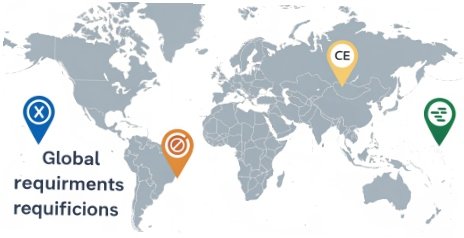
Regulations like the EU's CE marking are mandatory; you cannot legally sell products like industrial scales in the EU without it. Others, like UL in the US, are technically voluntary but often required by customers, insurers, or inspectors to ensure safety.
Navigating the Regulatory Maze
The rules depend entirely on your market. What is essential in one country might be irrelevant in another. As a global OEM/ODM provider, we create custom solutions with the right certifications for our clients' markets. Here's how to think about it.
Mandatory by Law: The CE Mark
In the European Union, the government itself mandates compliance. The CE mark7 is not optional for products that fall under its directives, which includes almost all electronic industrial scales. The manufacturer must produce a Declaration of Conformity (which is a specific type of CoC) and be able to provide the technical file to authorities upon request. Placing a non-compliant product on the market is illegal. This is a hard-and-fast rule.
Voluntary but Commercially Essential: The UL Mark
In the United States, the legal framework is different. The government doesn't mandate a UL mark8 for most products. However, the system works differently in practice.
- Workplace Safety (OSHA): Requires equipment to be tested by a Nationally Recognized Testing Laboratory (NRTL), of which UL is the most famous.
- Retailers and Insurers: Major distributors and insurance companies will often refuse to list or cover a product without an NRTL mark for liability reasons.
So, while it's not a federal law in the same way as CE, UL effectively becomes mandatory for doing business.
Your Procurement Strategy
When you buy equipment, you must take charge of this. Never assume a supplier knows the specific rules for your end-use market. Always specify the required certifications (e.g., "Must be CE marked and OIML R 76 certified") in your purchase order. This protects you and ensures the product you receive is legal and fit for purpose.
Conclusion
Certificates of Conformity do expire. Always check a certificate's validity date and ensure it corresponds to your specific product model, meets current standards, and is appropriate for your market's regulations.
-
Understanding the significance of a CoC can help ensure compliance and safety in product usage. ↩
-
Learn how the model number ensures the certificate applies to your specific product. ↩
-
Find out why local certification is crucial for commercial transactions involving scales. ↩
-
Explore the responsibilities of weights and measures officials in ensuring compliance. ↩
-
Discover the significance of OIML standards for industrial scales and compliance. ↩
-
Understanding harmonized standards is key to ensuring compliance with regulations. ↩
-
Understanding the CE mark can help you navigate compliance in the European market. ↩
-
Learn about the UL mark's role in ensuring product safety in North America. ↩


Comments (0)