
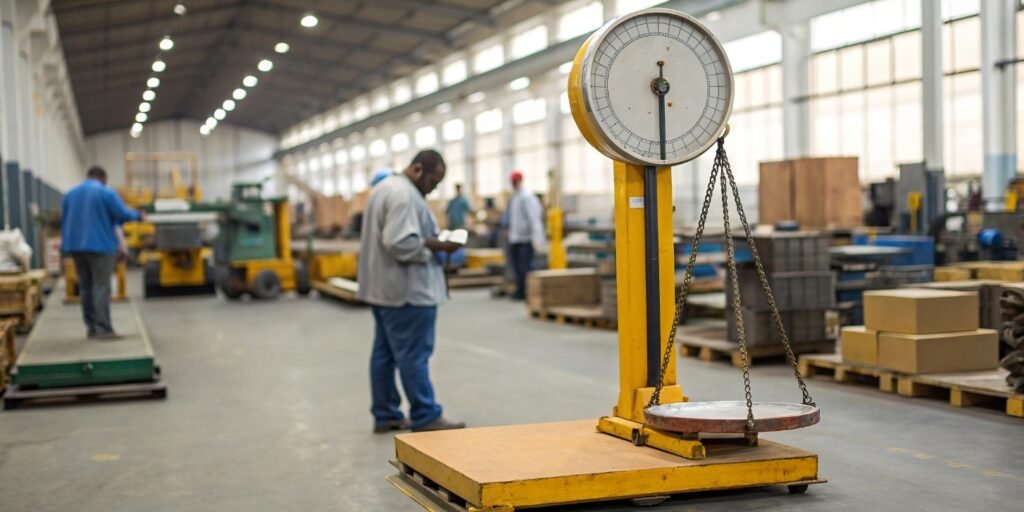
Struggling with high labor costs for repetitive tasks? Manual checks are slow and error-prone, draining your budget. An industrial scale automates this, saving money and boosting your production line's efficiency.
Yes, your industry likely needs an industrial scale. It solves critical problems like reducing labor costs by automating repetitive tasks, eliminating human error in product weighing for better quality control, improving efficiency on production lines, and ensuring compliance with weight regulations. It directly impacts your bottom line.
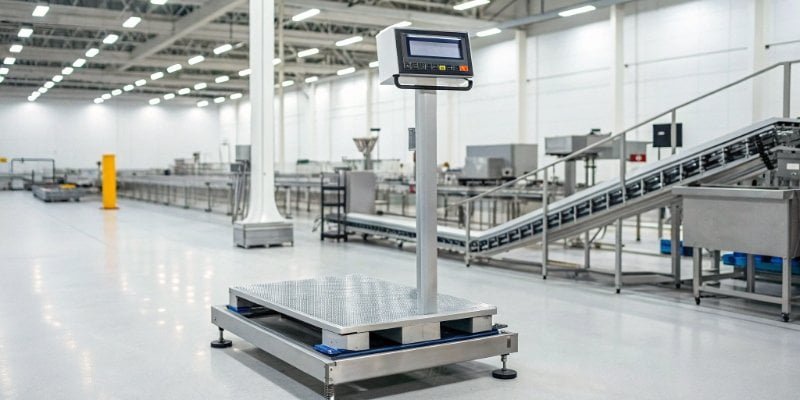
I've seen firsthand how a simple change can revolutionize a business. The idea of replacing manual labor with a machine might seem complex, but it's often simpler and more impactful than you think. Let's explore how this applies to different industries and the specific problems you might be facing right now.
How can we solve problems in the manufacturing industry?
Your manufacturing line is under pressure to produce more for less. Manual checks and material waste silently drain your profits. Industrial scales automate these processes, boosting output and ensuring consistent quality.
You can solve manufacturing problems by using industrial scales for process automation. They ensure precise material measurement, automate quality control checks like checkweighing, reduce waste, and provide data for optimizing your entire production flow. This leads to higher efficiency and lower operational costs.
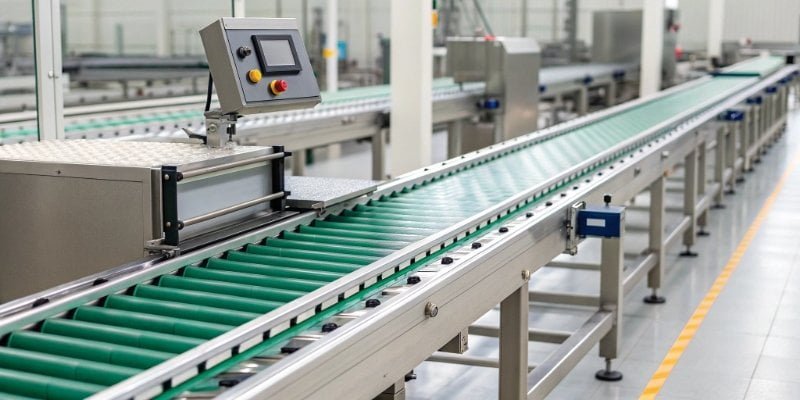
I remember a client who had a simple but costly problem. He had an employee whose only job was to watch a bucket fill with a product and say when it was full. This is a classic manufacturing bottleneck. It's a repetitive, thoughtless task. The most expensive cost in many plants today is labor, and that employee could get distracted, leading to overfills or underfills. We introduced a simple checkweigher1. Now, the machine handles that task perfectly every time, freeing up that worker for a more valuable role.
Automating Repetitive Tasks
Any task on an assembly line that doesn't require complex thought is a candidate for automation. An industrial scale2 can be that automaton. It doesn't get tired, it doesn't get distracted, and it performs its task with consistent precision. This frees up your valuable human workers for more complex, value-added jobs. If a machine can replace even one person's repetitive task, it's worth considering.
Key Problems and Solutions
Let's look at common issues and how a scale provides a direct solution.
| Manufacturing Problem | Industrial Scale Solution |
|---|---|
| Inconsistent product weight | Automated checkweighing to reject out-of-spec items |
| Material over/underuse | Precise batching scales for accurate ingredient mixing |
| Manual labor for sorting | Scales with sorting functions based on weight |
| Lack of production data | IoT-enabled scales3 that record every weigh-in |
This shift isn't just about replacing one person; it's about making your entire process more robust, reliable, and profitable.
What does a small scale industry require?
As a small business, you might feel that high-tech tools are out of reach. This limits your ability to scale and compete. But targeted industrial scales are affordable and essential for growth.
A small-scale industry requires cost-effective tools that maximize efficiency and ensure quality. This includes reliable bench scales for accurate measurements, simple counting scales to manage inventory, and basic checkweighers to standardize product output. These tools provide a quick return on investment and support growth.

We work with many small businesses, and a common myth is that industrial scales are too expensive or complex. That's simply not true anymore. The goal for a small industry isn't to automate everything at once. It's about finding the one or two areas where a single piece of equipment can make the biggest impact. We believe in providing clients with targeted and cost-effective weighing solutions tailored to their individual needs.
Focusing on Core Needs
You don't need a massive, integrated system to start. You need to solve your most immediate problem. Is it inaccurate parts counting for inventory? A simple counting scale can solve that. Is it giving away free product because of inconsistent package weights? A basic bench scale or checkweigher pays for itself in months by eliminating that loss.
Essential Scales for Small Operations
Here's a breakdown of how different scales serve the fundamental needs of a growing business.
| Scale Type | Application in Small Industry | Benefit |
|---|---|---|
| Bench Scale | General purpose weighing, portion control | Ensures product consistency |
| Counting Scale | Inventory management, parts kitting | Saves time, prevents shortages |
| Floor Scale | Receiving/shipping large items | Verifies shipment weights accurately |
| Checkweigher | Final package quality control4 | Protects brand reputation, stops loss |
The key is to start small, solve a real problem, and then build on that success as your business grows. Each step empowers you to compete more effectively.
What are the problems faced by industries?
Your industry faces a storm of rising costs, strict rules, and fierce competition. Ignoring these threats can sink your business. Smart industrial scales give you the control to navigate successfully.
Industries face problems like high operational costs, inconsistent product quality, supply chain inefficiencies, and the need to comply with strict regulations. Labor shortages and the pressure to increase output with fewer resources are also major challenges that impact profitability and growth across all sectors.
Over my 18 years as an OEM/ODM manufacturer, I've seen the same core problems appear in almost every industry, from manufacturing to logistics to food processing. While the products are different, the operational headaches are surprisingly similar. It usually comes down to control—or a lack of it.
The Challenge of Compliance
Whether it's the CE mark in Europe or other international standards, regulations are a major hurdle. For products sold by weight, compliance is non-negotiable. A faulty scale can lead to huge fines, product recalls, and a damaged reputation. This is why at our company, every product undergoes comprehensive testing before shipment. It must pass our quality inspection department's checks to ensure it meets standards like CE. This is about giving you peace of mind. Your weighing equipment must be a source of confidence, not risk.
Managing Costs in a Competitive Market
Every gram of wasted material, every minute of unnecessary labor, adds up. The industries that thrive are the ones that are obsessed with efficiency.
- Labor Costs: As mentioned, this is often the biggest expense. Automation is the direct answer.
- Material Costs: Precise batching and reduced overfill stop you from giving away product for free.
- Quality Costs: Catching a bad batch early with a checkweigher is far cheaper than a product recall.
Effectively, an industrial scale becomes a cost-management tool. It provides a real-time, accurate picture of what's happening in your most critical processes, allowing you to make smart, data-driven decisions5.
What is the most significant challenge faced during the scaling phase of abusiness?
Your business is finally taking off, but your manual processes are breaking under the pressure. This chaos risks your quality and reputation. Scalable systems, like IoT scales, are key to managing growth.
The most significant challenge during the scaling phase is maintaining quality and efficiency as volume increases. Processes that worked for a small team often fail under pressure, leading to inconsistencies, bottlenecks, and a loss of control over the operation. This can damage customer trust and profitability.

Growth is exciting, but it's also dangerous. The biggest trap I see businesses fall into is trying to handle 10 times the volume with the same manual processes they used at the start. It never works. What was manageable for one person becomes chaos for a team. Consistency is the first thing to go, followed quickly by quality.
When Manual Processes Fail
Imagine counting inventory by hand when you have 100 items. Now imagine doing it with 10,000. Imagine manually checking the weight of 50 packages a day versus 5,000. The systems break. You lose visibility, and you lose control. This is the single biggest challenge of scaling: your foundational processes are no longer strong enough to support the weight of your success.
The Power of Data-Driven Scaling
This is where technology like IoT and automation becomes essential, not just a luxury. It's how we empower our customers to achieve that next leap.
| Scaling Challenge | Manual Process | IoT Weighing System Solution |
|---|---|---|
| Maintaining Quality | Spot checks, human inspection | 100% automated checkweighing on every item |
| Tracking Production | Paper logs, spreadsheets | Real-time data sent to a central dashboard |
| Managing Inventory | Manual counts | Connected scales update inventory automatically |
| Process Bottlenecks | Guesswork, personal observation | Data analysis identifies exact choke points |
As a company that specializes in industrial weighing, automation control, and IoT weighing, our vision is to help you use this technology. We want to revolutionize your conventional weighing and achieve a win-win situation.
Conclusion
In short, industrial scales solve real problems. They cut labor costs, boost efficiency, and provide the data-driven control you need to grow your business successfully in a competitive world.
-
Learn how checkweighers can protect your brand reputation by ensuring quality. ↩
-
Discover the advantages of industrial scales in improving accuracy and efficiency in production. ↩
-
Explore how IoT-enabled scales can provide real-time data for better decision-making. ↩
-
Understand essential quality control practices to maintain product standards and customer satisfaction. ↩
-
Discover how data-driven decisions can enhance efficiency and reduce errors. ↩

Comments (0)