
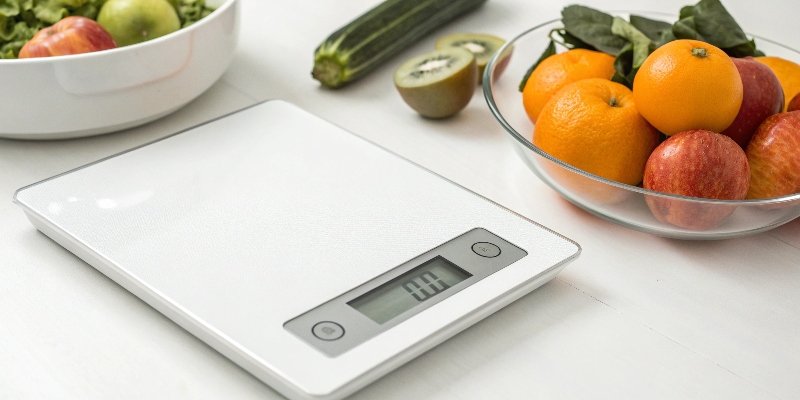
Your business relies on precise measurements, but a small error can cause huge problems. An inaccurate scale silently drains your profits and damages your reputation with every single weighment.
Yes, a scale's accuracy is absolutely critical. It ensures fair trade, maintains product quality, and complies with legal regulations. For any business, precision weighing is the foundation for profitability and customer trust.
I've been in the weighing industry for over 18 years, and I've seen firsthand how a seemingly minor inaccuracy can snowball into a major financial disaster. It’s not just about the numbers on the display; it's about the trust your customers place in you and the health of your bottom line. We will explore why accuracy is not just a feature, but a necessity. Let's dive into what makes a scale accurate and how you can ensure your equipment is always performing at its best.
Why is accuracy so important for a weighing scale?
You might think a tiny error on your scale is no big deal. But over hundreds or thousands of transactions, those small miscalculations add up, leading to significant financial losses.
Accuracy is vital because it guarantees fair commercial transactions, meets legal and regulatory standards, and ensures consistent product quality. It is the bedrock of operational integrity, preventing financial loss and building trust.
The importance of accuracy is not just a concept; it has real-world consequences that I see every day. It directly impacts your finances, your legal standing, and the quality of your products.
The Financial and Legal Impact
I once worked with a client in the scrap metal business who was losing thousands of dollars a month. The problem? His uncalibrated truck scale1 had an error of just 5%. That small percentage meant he was overpaying for every load he bought. For businesses involved in trade, accuracy is legally mandated. Weighing equipment is categorized into different accuracy classes2 by organizations like the OIML (International Organization of Legal Metrology).
| Class | Typical Error Range | Common Application |
|---|---|---|
| I | ±0.1mg | Scientific labs, precious metals |
| II | ±1mg | High-value industrial and trade |
| III | ±5mg | General industrial weighing, trade |
| IV | >±5mg | Rough weighing, mechanical scales |
Using a scale from the wrong class, like a Class IV scale for a trade settlement that requires Class III, can lead to serious legal disputes and fines.
Quality Control and Consistency
In manufacturing, accuracy is everything. Think about producing a chemical mixture, a food recipe, or a plastic compound. If your ingredient measurements are off because of an inaccurate scale, the entire batch can be ruined. This not only wastes materials but also damages your reputation if a subpar product reaches the customer. Precise measurements ensure that every product you make meets the same high standard, every single time. It's the key to consistency and customer satisfaction.
What are the most common causes of weighing scale inaccuracy?
You place an item on your scale and trust the number it shows. But what if that number is wrong? This hidden problem could be silently costing you money and efficiency.
The most common causes of inaccuracy are a low-quality sensor, environmental factors like temperature or interference, improper calibration, and physical damage from overloading. Regular checks and a controlled environment are crucial for reliable readings.

A scale is a sensitive instrument, and many factors can throw it off. Understanding these issues is the first step toward preventing them. From my experience building and servicing scales, the problems almost always boil down to a few key areas.
The Heart of the Scale: The Sensor
The load cell3, or sensor, is the most critical component for accuracy. Its quality determines the scale's performance. High-quality sensors, like a C3 grade sensor, have a maximum error of just 0.02% of the full scale. Cheaper sensors simply can't offer this level of precision. But even the best sensor can be damaged. I’ve seen cases where a floor scale was consistently overloaded by 30%. This not only created inaccurate readings but also shortened the sensor's lifespan by 50%. Physical shock or dropping heavy items can cause permanent, non-linear deformation, making the scale unreliable at any weight.
Your Working Environment
Your scale doesn't operate in a vacuum. Its surroundings have a huge impact.
- Temperature: Most industrial C-grade sensors are designed to work accurately between -10°C and 40°C. Operating outside this range can cause the metal to expand or contract, leading to false readings.
- Humidity: High humidity (above 80% RH) can cause condensation inside the electronic components, leading to short circuits and malfunction.
- Electromagnetic Interference: Placing a scale too close to large motors, transformers, or welding equipment can interfere with the electronic signals from the load cell, causing the display to flicker or show incorrect values.
Calibration and Maintenance
A scale is only as accurate as its last calibration. Many users perform a simple single-point calibration, which is okay for general use but can still leave an error of around ±0.1%. For higher precision, a multi-point calibration4 using standard weights (like at 1/3 and 2/3 of the scale’s capacity) is necessary to reduce the error to as little as ±0.01%. Regular maintenance is also vital. Simply cleaning debris from under a floor scale and checking its limiters weekly can prevent many common accuracy issues.
How can I test if my weighing scale is accurate?
You suspect your scale might not be telling the truth. But you can't just guess; you need a reliable way to check it without calling in an expensive technician every time.
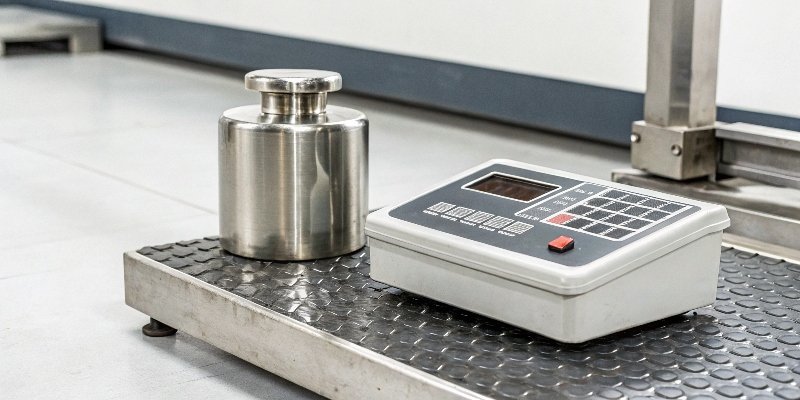
The best way to test a scale is with a certified calibration weight. Place the weight on the scale and see if the reading matches. For a quick check, you can use an object with a known, consistent weight.
Testing your scale doesn't have to be complicated. Over the years, I've taught clients a few simple methods to verify their scale's performance. These tests give you confidence in your measurements and help you spot problems before they become costly.
The Gold Standard: Using Certified Weights
For any business that relies on accurate weights for trade or manufacturing, there is no substitute for a set of certified calibration weight5s. These are masses manufactured to an extremely precise weight. The process is straightforward. First, make sure the scale is on a level surface and reads zero. Then, place a standard weight, for instance, a 20kg weight, on the center of the platform. The display should read exactly 20.00kg. If it doesn't, the scale needs to be calibrated. For larger scales, we recommend a quarterly check using weights that test different points of the scale's capacity. This confirms the scale is accurate not just at one point, but across its entire weighing range.
Quick Sanity Checks
You may not always have a certified weight handy. For a quick, non-critical check, you can use items with a known weight. A new, unopened bag of sugar or flour from the store is often very close to its stated weight. Another common trick is to use money; for example, a U.S. nickel weighs exactly 5 grams. While this method isn't suitable for official calibration, it's a great way to spot a major problem quickly. If a 1kg bag of sugar reads 1.2kg on your scale, you know you have an immediate issue that needs addressing.
The Repeatability Test
An accurate scale must also be consistent. A simple way to test this is through a repeatability check. Take one object—it doesn't matter what it weighs, as long as it's stable—and place it on the scale. Note the reading. Then remove the object and let the scale return to zero. Repeat this process 5-10 times. Each time you place the object on the scale, the reading should be exactly the same. If the numbers jump around, it's a sign that the load cell is failing or there's an electronic issue.
What should I look for when buying a highly accurate weighing scale?
You need to buy a new scale, and the options are endless. Choosing the wrong one means you'll face the same accuracy problems all over again, wasting both time and money.
When buying an accurate scale, focus on the OIML accuracy class that matches your application (e.g., Class III for trade). Check the sensor specifications (like C3 grade) and look for features like temperature compensation.

Helping clients choose the right equipment is a huge part of what we do at Weigherps. An informed choice upfront saves a world of trouble later. It's not about buying the most expensive scale; it's about buying the right scale for your specific job.
Match the Class and Sensor to Your Needs
The first thing to determine is what level of accuracy you require. As we discussed, OIML classes define this for you. If you are using the scale for commercial trade, you legally need a Class III scale or better. For industrial process control, we always recommend a scale with a C3 grade sensor or higher. This ensures an error rate of 0.02% or less, which is critical for product consistency. Don't pay for Class I lab-grade precision if you're weighing shipping pallets, but don't cut corners with a low-grade sensor if your product formula depends on it.
Look for Features That Protect Accuracy
A good scale has built-in features to maintain its accuracy in real-world conditions. One of the most important ones I recommend for clients in factories with fluctuating temperatures is a temperature compensation6 module. This feature automatically adjusts for the expansion or contraction of the load cell, ensuring a stable reading whether it's a cold morning or a hot afternoon. Also, check that the scale offers a simple, user-friendly multi-point calibration procedure. This empowers you to keep the scale accurate without needing a service call every time.
Consider Build Quality and Support
Finally, accuracy depends on durability. A scale with a flimsy platform or poor overload protection will get damaged easily and lose its precision. Look for a robust construction that can handle the daily rigors of your workplace. Beyond the hardware, consider the manufacturer's support. At Weigherps, we provide a 12-month warranty and full technical support because we know that our relationship with the customer doesn't end at the sale. A reliable partner who can help with maintenance, calibration, and troubleshooting is just as important as the scale itself.
Conclusion
Ultimately, a scale's accuracy is not a luxury; it is the core of its function. Choosing the right class, maintaining it properly, and performing regular checks ensures reliability and protects your business.
-
Find out how a calibrated truck scale can prevent costly errors in the transportation industry. ↩
-
Understanding accuracy classes can help you choose the right scale for your specific needs. ↩
-
Understand the role of load cells in ensuring precise measurements in weighing scales. ↩
-
Discover how multi-point calibration can enhance the accuracy of your weighing scales. ↩
-
Learn how certified calibration weights can help you verify the accuracy of your scales. ↩
-
Learn how temperature compensation features can maintain accuracy in fluctuating environments. ↩

Comments (0)