

Struggling with inconsistent product fills and high material waste? These issues eat into your profits and damage your reputation. It's a common manufacturing problem with a clear solution.
Understanding these weights is key. Net weight ensures product consistency, tare weight helps control packaging costs, and gross weight manages shipping. Smart weighing systems use this data to automate and optimize every step, directly boosting production yield.
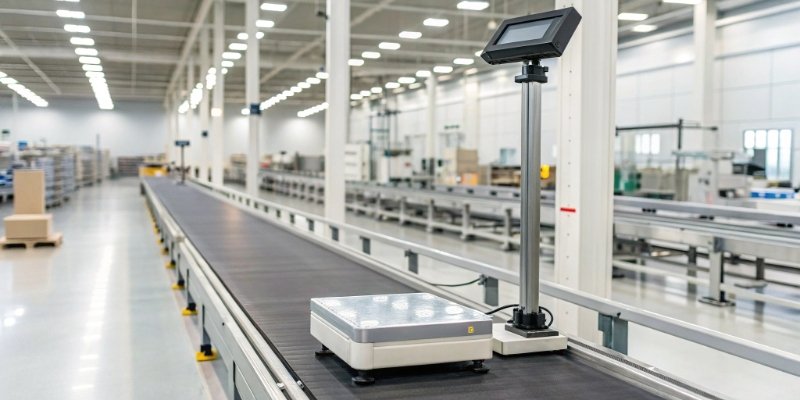
It all seems very simple on the surface, but the impact of mastering these three weights is huge. Over my 18 years in the industrial weighing business, I've seen countless companies transform their output by getting these basics right. It’s the foundation for efficiency. Let's explore exactly how tracking each weight can directly boost your production yield1s and cut down on waste. Stick with me, and I'll show you how we help our partners turn simple weight data into tangible profit.
How does accurately tracking net weight contribute to higher production yields?
Are you giving away free product with every overfill? Or are you frustrating customers with underfilled packages? This inconsistency directly lowers your yield and hurts your brand image over time.
Accurate net weight tracking ensures every single product meets its exact specification. This process eliminates overfilling, which wastes material, and underfilling, which creates rejects. The result is more sellable products from the same amount of raw material.

I often call net weight2 the "money weight" because it represents the actual product the customer is paying for. Getting it wrong costs you money in two ways. First, through wasted material, and second, through rejected products. Smart weighing systems provide the precision needed to nail this every time. I remember a client in the food industry who was losing thousands of dollars per month on their snack packaging line due to overfills. By integrating a smart scale that tracked net weight in real-time and automatically adjusted the filling machine, they cut their average overfill from 5% down to less than 1%. That 4% savings went directly back to their bottom line, improving their overall production yield without changing anything else.
The True Cost of Inaccuracy
The impact of imprecise net weight control ripples throughout your operation. It's not just a minor annoyance; it's a major drain on resources.
- The Impact of Overfilling: Consistently giving away even a tiny amount of extra product adds up to a significant material loss over thousands or millions of units. This is a direct hit to your Cost of Goods Sold (COGS).
- The Cost of Underfilling: Underfilled products often must be rejected by quality control3, reworked, or scrapped entirely. This wastes not only the material but also the labor and machine time invested in producing them.
| Scenario | Without Precise Control | With Smart Net Weight Control |
|---|---|---|
| Material Usage | High and unpredictable | Optimized and consistent |
| Product Rejects | High rate of rejects | Minimized rejects |
| Customer Satisfaction | Potentially low and inconsistent | High and reliable |
| Production Yield | Lower than potential | Maximized |
What role does tare weight play in reducing material waste in manufacturing?
Is inconsistent packaging weight throwing off your filling process? You might be overcompensating for heavy containers or bottles, leading to wasted product and inaccurate net weights across the board.
Accurately measuring tare weight allows your system to subtract the container's weight precisely every time. This ensures the net weight, your actual product, is correct, preventing overfills caused by compensating for unknown packaging variations.
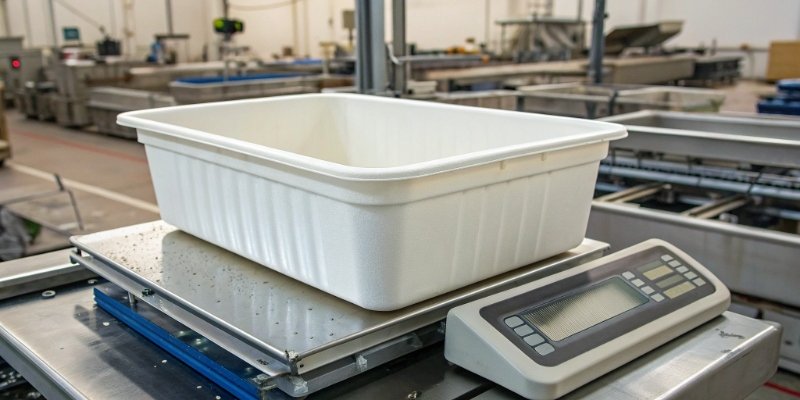
The tare function is a simple but powerful tool for accuracy. Many people think its only job is to measure an empty box. But in advanced manufacturing, it’s much more. A chemical company we worked with needed to create complex batches by mixing multiple liquid ingredients into a large vat. Before, their operators weighed each component separately and then added it to the mix, a slow and error-prone process. We helped them implement a system using a single, large floor scale. The system automatically tared the scale after each ingredient was added. This allowed the operator to pour the next ingredient until the display showed the correct target weight, drastically speeding up the process and virtually eliminating batching errors.
More Than Just an Empty Box
Understanding tare is crucial for process control, especially when dealing with variations or multiple components.
- Eliminating Packaging Variance: Bottles, jars, and boxes can all have slight weight differences from the supplier. An intelligent system can tare each individual container before filling, ensuring the net weight is perfect regardless of the container's weight.
- Streamlining Batching Processes: In industries like chemicals, food, or pharmaceuticals, the tare function is essential for additive weighing. Instead of using multiple scales, a single scale can be used to measure a sequence of ingredients into one container, with the scale being "tared" after each addition. This simplifies the workflow, reduces equipment costs, and improves the accuracy and consistency of every single batch. It makes complex recipes easy to follow.
How can smart weighing systems use gross, net, and tare data to optimize processes?
Are your teams manually recording weights on clipboards and trying to connect the dots later? This slow, error-prone process makes it impossible to see the big picture and optimize your production line effectively.
Smart weighing systems integrate these three weights into a single data stream. They use this data to automate quality control, provide real-time feedback to filling machines, track inventory accurately, and create detailed traceability reports for compliance.

This is where my work gets really exciting. As a provider of IoT weighing solutions4, we help companies turn their scales from simple measurement devices into intelligent data hubs. The real power isn’t just in measuring one weight; it's about how the gross, net, and tare data work together. A smart system at the end of a production line can weigh the final packaged product (gross weight), subtract the known packaging weight (tare weight), and instantly verify that the net weight is within tolerance. If it's not, the system can automatically flag or reject the item and, more importantly, send feedback to the filling station upstream to adjust itself. This creates a self-correcting loop that constantly optimizes for peak efficiency.
From Data Points to Process Control
For our partners who are software vendors, this integrated data stream is invaluable. It provides the raw information needed to build powerful management and analytics tools.
- Real-Time Process Control: Data from the scale can be fed directly into your PLC or MES, allowing for automated adjustments that keep the production line running within specification without human intervention.
- Data for Traceability and Compliance: Every weight record—gross, net, and tare—can be logged with a timestamp and product ID. This creates a complete audit trail5, which is essential for quality recalls and regulatory compliance in many industries.
| Data Point | Application | Optimization Benefit |
|---|---|---|
| Net Weight | Real-time filler adjustment | Reduces over/under fills, maximizes yield |
| Tare Weight | In-process batching | Faster, more accurate recipes |
| Gross Weight | End-of-line QC & shipping | Verifies final product, optimizes logistics |
| All Three | Analytics & Reporting | Identifies trends, root cause analysis |
Why is differentiating between gross and net weight critical for cost analysis?
Are your shipping costs surprisingly high? Or are you unsure exactly how much raw material actually goes into each finished product? Mixing up gross and net weight can completely obscure your true costs.
Differentiating them is absolutely vital. Net weight determines your raw material cost and the value of your product. Gross weight determines your shipping and logistics costs. Analyzing them separately allows you to pinpoint and control costs in both production and distribution.
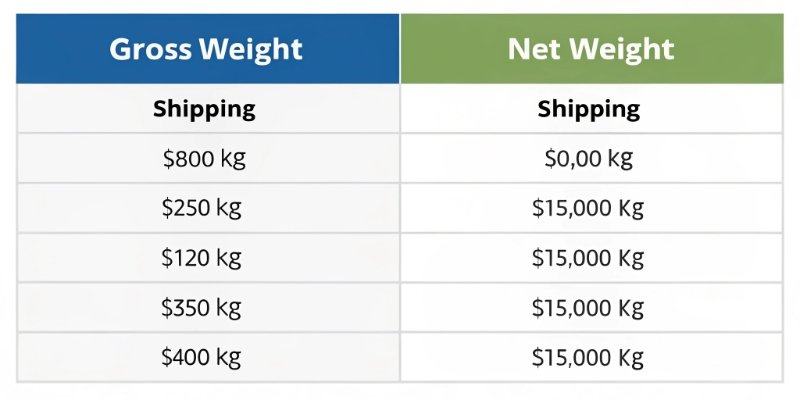
For any Purchasing Manager or Technical Director, a clear understanding of costs is non-negotiable when it comes to proving ROI. I once consulted for a cosmetics client that was launching a new face cream. They initially based their production cost on the final boxed product (gross weight). This was a mistake. We helped them re-evaluate by using data from a smart weighing system. We isolated the cost of the formula itself based on the net weight. We calculated the cost of the glass jar and box from the tare weight. Finally, we used the gross weight to get precise shipping quotes. This detailed breakdown gave them a much clearer view of their profit margin and allowed them to set a more competitive and strategic price point.
Building a Clear Financial Picture
Separating these costs allows you to make smarter business decisions and justify technology investments.
- Calculating Cost of Goods Sold (COGS): Your COGS is primarily based on the net weight of the materials used. Using gross weight inflates this number and gives you an inaccurate picture of production efficiency.
- Optimizing Shipping and Logistics: Shipping carriers charge based on gross weight or dimensional weight. By understanding your precise gross weight, you can negotiate better rates, avoid surcharges, and optimize how you pack pallets and trucks.
- Informing Your Pricing Strategy: Knowing the distinct costs associated with the product (net) and its delivery (gross) enables you to price your products more intelligently to protect your margins while remaining competitive.
Conclusion
Mastering gross, net, and tare weight with smart systems isn't just about accuracy. It's about turning data into higher yields, lower costs, and a stronger competitive edge.
-
Exploring factors affecting production yield can help identify areas for improvement and cost savings. ↩
-
Understanding net weight is crucial for maximizing production yields and minimizing waste. ↩
-
Effective quality control ensures product consistency and reduces waste, enhancing overall efficiency. ↩
-
IoT weighing solutions enhance data accuracy and operational efficiency in manufacturing. ↩
-
An audit trail ensures traceability and compliance, which are vital for quality assurance. ↩



[…] good. You also weigh the waste material. This data, fed directly into your ERP, gives you a precise cost-of-goods-sold (COGS)3 that accounts for material loss and production […]
[…] number one source of shipping errors6 I see is incorrect labeling. This happens when an operator weighs one package but accidentally […]