

Inaccurate weighing seems like a minor detail in a big operation. But this small error can lead to massive losses, from damaged profits to serious health crises.
Yes, accurate weighing is universally important. A tiny error in one measurement can have huge, cascading consequences across industries. In pharmaceuticals, food, and logistics, precision weighing is essential for ensuring safety, quality, profitability, and legal compliance. It is the foundation of trust in business.

It's easy to overlook something as fundamental as weighing. We do it every day, whether we're checking our luggage at the airport or buying vegetables at the market. But in the industrial world, this simple action is magnified. A single gram can be the difference between success and failure, profit and loss, or even safety and danger. At Weigherps, we've spent 18 years building systems that manage this critical detail, and we've seen firsthand how vital it is.
Let's break down why this 'small detail' is actually a cornerstone of modern industry. We will look at a few key areas where precision is not just a preference, but an absolute necessity. Understanding this is the first step toward building a more reliable and profitable operation.
Why is proper weighing so critical in pharmaceutical practice?
Think about a tiny miscalculation in a prescription. That small error could lead to an ineffective treatment or, even worse, cause severe side effects. This is why pharmaceutical weighing demands perfection.
In pharmaceuticals, proper weighing ensures patient safety and drug efficacy. The active ingredients in medicine are potent. Even a microgram's difference can change a drug from a cure into a poison, making accurate measurement a non-negotiable part of the entire process.

When we talk about pharmaceuticals, we are talking about people's health. There is no room for error. I once spoke with a client who runs a pharmaceutical R&D lab. He told me that one single weighing error during a clinical trial could invalidate months of research and cost millions of dollars. That story always stuck with me. The active pharmaceutical ingredients1 (APIs) in modern medicines are incredibly powerful. Getting the dosage right is everything. This is where accurate data becomes essential. Every single weight measurement creates a data point. This data is the backbone of quality control2, ensuring that every pill in a batch has the exact same amount of API. It's also critical for regulatory bodies3 like the FDA. They require complete traceability. If there is ever a problem, manufacturers must be able to trace a product back through every step, including the exact weight of each component.
The Link Between Weight, Data, and Patient Safety
Inaccurate weighing4 doesn't just create a bad product; it creates dangerous data and breaks the chain of trust.
| Error Type | Direct Consequence | Broader Impact |
|---|---|---|
| Under-weighing an API | Ineffective Dose | A patient's condition doesn't improve, leading to loss of trust in the medicine and doctor. |
| Over-weighing an API | Toxic Overdose | The patient may suffer from severe side effects, permanent harm, or even death. |
| Inconsistent Weighing | Batch-to-Batch Variation | The product becomes unreliable and unpredictable, leading to massive product recalls and brand damage. |
This is why we build our precision scales with extreme stability and connectivity in mind. The scale must not only be accurate, but it must also integrate flawlessly with a client’s data management system.
What is the fundamental importance of measuring and weighing in general?
We weigh things daily without much thought. But in business, this simple act decides profit, shows fairness, and builds customer trust. Let's see how weighing supports the entire world of commerce.
Measuring and weighing are the foundation of fair trade and quality control. From buying groceries to shipping tons of steel, weight determines value. Accurate measurements ensure customers and businesses get exactly what they pay for, which builds trust and a stable economy.
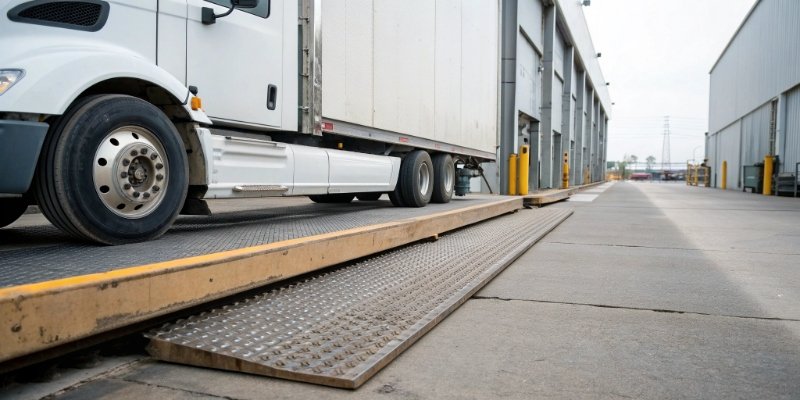
At its core, business is an exchange of value. For many goods, that value is directly tied to weight. If a scale is wrong, someone is losing money. This applies to every level of the supply chain5. A farmer selling grain, a factory buying steel, or a customer buying cheese—all depend on accurate weight for a fair transaction. This principle is why "legal for trade" certifications exist for weighing equipment. It provides a common standard of truth that everyone can trust. As a manufacturer of industrial scales for over 18 years, we have seen this principle in action thousands of times. Our clients aren't just buying a scale; they are buying certainty. They need to know that the raw materials they receive are what they paid for and that the products they ship are accurately billed.
The Pillars of Commerce: Fairness, Quality, and Efficiency
Beyond simple fairness, weighing is a powerful tool for business optimization6. In manufacturing, precise weighing of raw materials is the first step to a consistent final product. It minimizes waste by ensuring you use exactly what you need—no more, no less. In logistics, weight is everything. Our truck scales, for example, help companies optimize shipping loads to maximize fuel efficiency and avoid fines for being overweight. Accurate inventory management, often done with floor scales and pallet scales, prevents stockouts and reduces carrying costs. An accurate scale isn't just a compliance tool; it's a profit and efficiency driver for any modern business.
Why is accurate weighing and measuring vital in food processing?
A recipe has slightly off measurements at home. The result might be a bad meal. But in industrial food processing, this can ruin taste, texture, and even pose a serious food safety risk.
In food processing, accurate weighing ensures product consistency, safety, and regulatory compliance. It guarantees every package has the same taste and nutritional value. It also controls costs by minimizing ingredient waste and ensuring fair pricing for the consumer.

The food on our tables goes through a long journey, and weighing is a critical step at almost every stage. This starts right at the farm. My grandfather was a farmer, and he always taught me that weighing your seeds, fertilizer, and the final harvest accurately can be the difference between a profitable year and a total loss. This same principle of precision is magnified in a food processing plant. Customers expect that their favorite brand of cookies or soda will taste exactly the same every time they buy it. This consistency is achieved by precisely weighing and mixing ingredients according to a formula. A small deviation in the amount of sugar, salt, or leavening agent can completely change the final product's taste and texture, leading to customer complaints and damaged brand loyalty.
From Consistency to Compliance
Beyond taste, accurate weighing is a matter of public health7 and legal responsibility. Many food products contain potential allergens. The amount of these ingredients, like nuts or gluten, must be strictly controlled and accurately reported on the nutritional label8. Failure to do so can have severe health consequences for consumers and lead to product recalls and huge legal penalties for the company. Furthermore, regulations require that the net weight printed on a package is accurate. Consistently under-filling packages is illegal and cheats the customer. Consistently over-filling packages means you are giving away product for free, which directly hurts your profits. An accurate, reliable weighing system is the only way to walk this fine line, ensuring compliance while protecting your bottom line. It turns the simple act of weighing into a powerful tool for quality control and financial management9.
Conclusion
Accurate weighing is never a minor detail. It is a critical foundation for safety in pharmaceuticals, fairness in trade, and consistency in the food we eat, ensuring trust and quality everywhere.
- Discover the role of active pharmaceutical ingredients in medicine and the importance of precise measurement. ↩
- Delve into how quality control processes rely on accurate measurements to ensure product safety. ↩
- Find out how regulatory bodies like the FDA enforce standards for accurate weighing in pharmaceuticals. ↩
- Explore the significance of accurate weighing in ensuring safety, quality, and compliance across multiple sectors. ↩
- Understand the critical role of accurate weighing in ensuring a smooth and efficient supply chain. ↩
- Discover how precise weighing can enhance efficiency and profitability in various industries. ↩
- Explore the connection between accurate weighing and public health standards in food safety. ↩
- Learn about the regulations that require accurate weighing for truthful nutritional labeling. ↩
- Explore how accurate weighing systems can enhance financial management and profitability. ↩



Comments (0)