
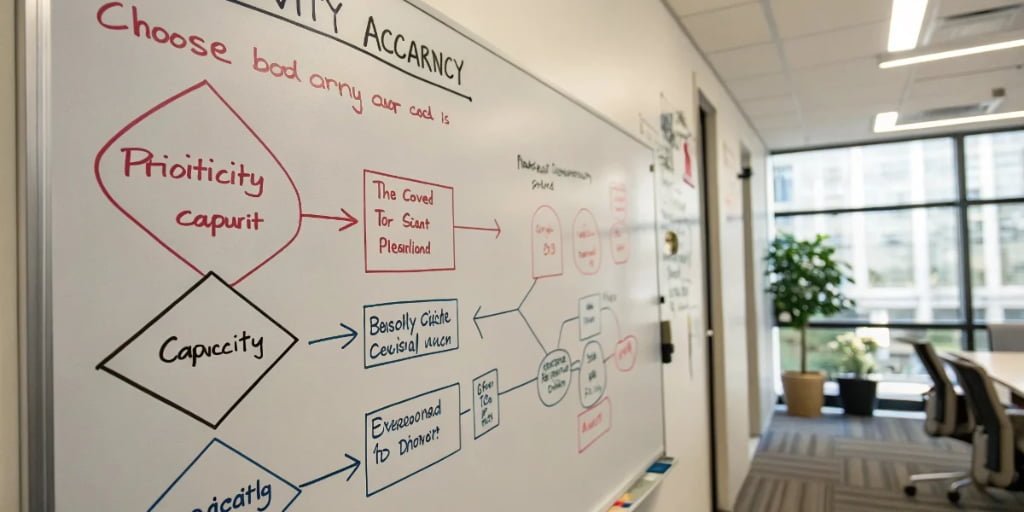
Choosing a scale on a tight budget is stressful. Picking wrong—capacity or accuracy—can lead to major financial or operational problems. The key is identifying which factor impacts you most.
With a limited budget, prioritize the feature that protects you from the biggest risk. If small errors lead to large financial losses, choose accuracy. If you must weigh heavy items to operate at all, choose capacity. It is about minimizing your biggest potential cost.
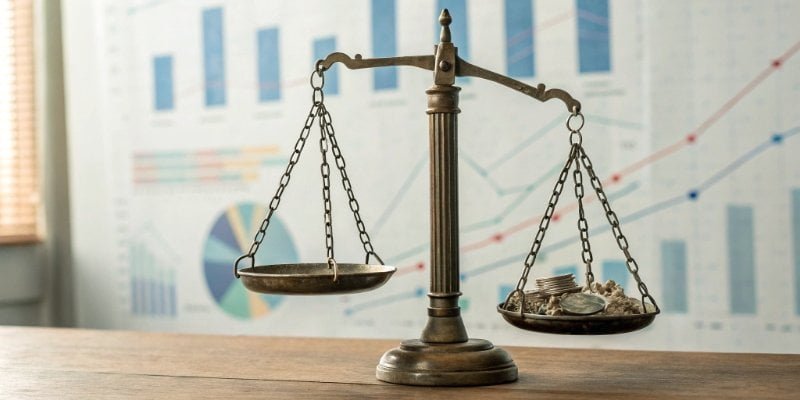
It sounds simple, but the real devil is in the details of your specific business. I've seen clients struggle with this exact problem for many of my 18 years in this industry. That first choice is just the beginning. The decision isn't just about the scale1 itself; it's about your entire operation and what a mistake in either direction could cost you. To make the right call, we need to break this down further and look at your unique situation.
How do I determine the right balance between weighing capacity and accuracy for my specific needs?
You know you need the right balance, but the spec sheets are confusing. This confusion often leads to expensive guesswork. Let’s create a clear framework to find your fit.
Determine your absolute heaviest item—that's your minimum capacity. Then, calculate the financial cost of a small weighing error. If that cost is high, you need higher accuracy. This balance is unique to your application and its financial risks.

I always tell my clients to start with capacity2. It is a simple yes-or-no question: can the scale weigh your product? If your absolute heaviest packaged item is 80 kg, a scale with an 80 kg capacity is already at its limit. You need a safety margin3. A good rule ofthumb is to choose a capacity that is 20-30% higher than your maximum expected load. So, for an 80 kg product, a 100 kg or 120 kg scale is a much safer, more durable choice.
Step 1: Define Your Capacity Needs
First, list the heaviest items you will weigh, including any containers or packaging. This is your absolute maximum weight.
Step 2: Evaluate Your Accuracy Requirements
Next, we look at accuracy4. This is all about money. Ask yourself, "What does a 1% error cost me?" I worked with a client in the chemical mixing industry where a tiny error ruined an entire batch, costing thousands. For them, accuracy was everything. In contrast, a scrap metal client just needed a rough estimate. A table can help clarify this.
| Scenario | Impact of Small Error | Priority |
|---|---|---|
| Pharmaceuticals | High. Can mean batch failure or incorrect dosage. | Accuracy |
| Bulk Grains | Low. Small variations average out over large volumes. | Capacity |
| Precious Metals | Extremely High. Tiny amounts are worth a lot. | Accuracy |
| Scrap Metal | Very Low. Price is based on rough tonnage. | Capacity |
By asking these two simple questions, you can quickly find the right starting point for your scale selection.
What is the long-term financial impact of sacrificing accuracy for higher capacity?
You see a high-capacity scale that is cheap but not very accurate. This seems like a good deal now. But hidden costs can secretly drain your profits over time.
Sacrificing accuracy for capacity often causes a long-term financial drain. You might face product giveaway, batch failures, fines for non-compliance, and damage to your brand's reputation. These hidden costs can easily exceed the initial savings.
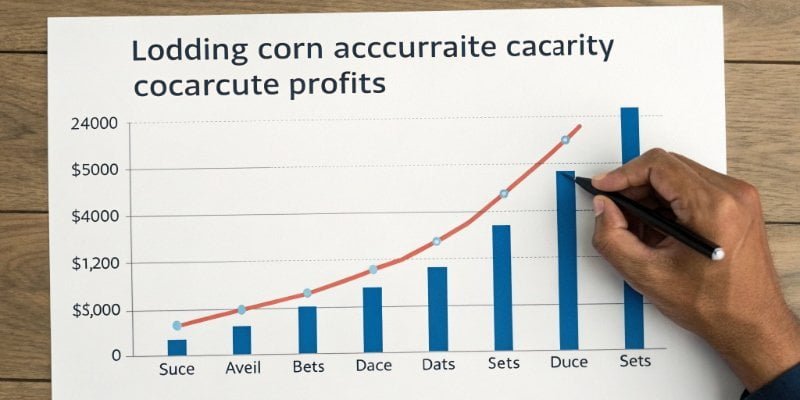
Over the years, I've seen this play out many times. A client in the coffee business bought a high-capacity scale for their 50-pound bags to save about $500. But the scale's inaccuracy meant they were giving away an average of 2 ounces of coffee in every bag. They didn't notice for a year. That "small" error cost them over $10,000 in lost product. This is a classic case of product giveaway5.
The Slow Burn of Product Giveaway
When you fill packages, an inaccurate scale can cause you to consistently overfill. A few grams here and there seems like nothing. But when you multiply that by thousands of units per day, the losses add up fast. You are essentially giving your product away for free.
The Sudden Shock of Compliance Failures
Then there are the compliance risks. For our clients in regulated industries like food or chemicals, an inaccurate scale isn't just a cost—it's a legal liability. An audit that finds your scales are out of compliance can lead to huge fines, forced recalls, and even a temporary shutdown. The damage to your brand's reputation can be even more costly.
| Cost Factor | Initial Savings | Long-Term Costs (Example) |
|---|---|---|
| Scale Purchase | Saved $500 | -$500 |
| Product Giveaway | $0 | -$10,000 / year |
| Compliance Fine | $0 | -$25,000 (one-time) |
| Brand Damage | $0 | Incalculable |
The initial savings are quickly forgotten when these much larger, long-term costs appear.
When is investing in a high-accuracy scale a better long-term value than a high-capacity one?
A high-accuracy scale often has a higher price tag. You might wonder if it's overkill for your needs. But choosing capacity instead can sometimes be the more expensive choice in the end.
A high-accuracy scale is a better long-term value when your product is expensive, small errors create large financial losses, or your industry has strict compliance standards. It protects profits, ensures quality, and builds customer trust.
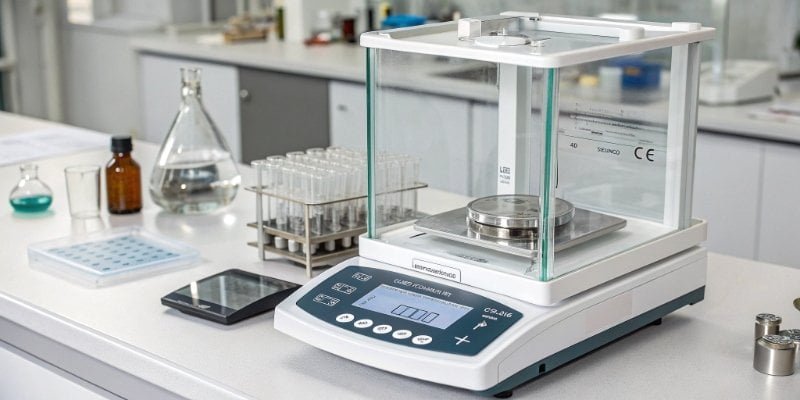
The answer is simple: you invest in accuracy when the cost of being wrong is higher than the cost of the scale. This is true in a few key situations that I see regularly with our clients, many of whom are software vendors integrating our scales into complex systems.
High-Value Materials
First, if you handle high-value materials6, accuracy is not negotiable. I work with clients in the electronics sector who measure tiny amounts of expensive coatings for circuit boards. For them, a $5,0 procrastinate over a $50,000 batch. The scale pays for itself in one go by preventing a single mistake. The same is true for pharmaceuticals, precious gems, or specialty chemicals.
Strict Regulatory Environments
Second, regulations matter. If your products are sold by weight (legal-for-trade) or are subject to strict quality control, accuracy isn't optional. It is a requirement. We provide scales with international certifications like CE because we know our clients cannot afford compliance issues. The cost of a fine or a product recall far outweighs the investment in a compliant, accurate scale.
This checklist can help you decide.
| You should invest in accuracy if: | Yes / No |
|---|---|
| The material you weigh is expensive per gram/ounce. | |
| A small weighing error could ruin an entire batch. | |
| Your products are sold based on weight. | |
| Your industry is regulated (e.g., food, pharma, medical). | |
| Your customers demand precise specifications. |
If you answer "Yes" to any of these, a high-accuracy scale is a smart long-term investment.
Can process improvements help me meet accuracy requirements without sacrificing necessary capacity?
You need both capacity and accuracy, but the budget says no. You might feel stuck between two bad choices. But what if a smarter process, not a better scale, is the answer?
Absolutely. Process improvements can often bridge the gap. Techniques like staged weighing or using a smaller, more accurate checkweigher can help you achieve precision without upgrading your main high-capacity scale. It requires a smarter workflow.
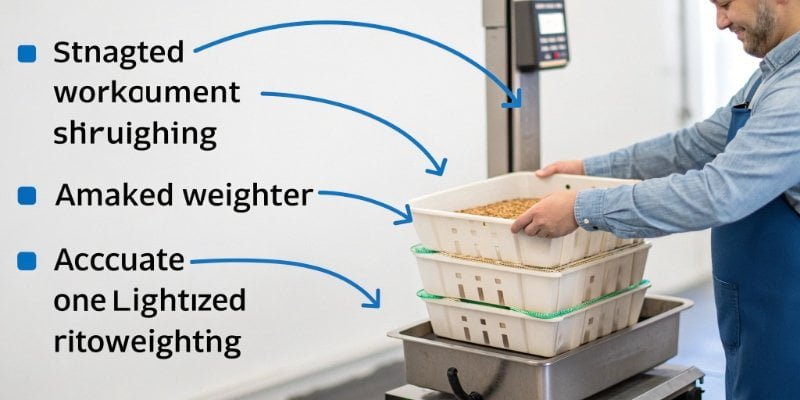
Yes, and this is where we, as weighing experts, can get creative. I love helping clients with this exact problem. You don't always need one perfect, expensive scale that does everything. Sometimes, changing your process is far more effective and less expensive.
The Two-Scale Method
One common solution is the "two-scale method7." Use a robust, high-capacity, lower-accuracy scale for the bulk filling. For example, fill a container to 95% of its target weight. Then, move that container to a smaller, less expensive, but highly accurate scale for the final "top-off." This combination gives you the best of both worlds: high capacity for the heavy lifting and high accuracy for the critical final measurement.
Leveraging Software and Data
Even better, we can bring in technology. As a software vendor, you know that data is powerful. This is where our expertise in IoT weighing comes in. We can connect our scales to software that uses Statistical Process Control (SPC)8. The system monitors weights over time, spots trends, and can automatically flag a filling machine that is drifting out of spec. This proactive approach prevents errors before they cost you money.
| Aspect | Standard Process (One Scale) | Improved Process (Two Scales + Software) |
|---|---|---|
| Hardware Cost | High (for one high-cap, high-acc scale) | Moderate (one high-cap, one low-cap scale) |
| Accuracy | Good | Excellent |
| Speed | Fast | Slightly Slower, but can be automated |
| Error Detection | Manual, requires operator attention | Automated, proactive alerts |
This is how we leverage technology to revolutionize weighing and achieve step-by-step growth. It's about working smarter, not just spending more.
Conclusion
Ultimately, choosing between capacity and accuracy is a risk assessment. Analyze your costs, regulations, and processes to find the most cost-effective weighing solution for your unique business needs.
-
Explore this link to find top-rated scales that balance accuracy and capacity for your needs. ↩
-
This resource will guide you in selecting the appropriate scale capacity for your specific requirements. ↩
-
Discover the importance of having a safety margin in scale capacity for better accuracy. ↩
-
Learn why accuracy is crucial in weighing scales and how it can impact your business. ↩
-
Understand the concept of product giveaway and how it can lead to significant losses. ↩
-
Find out why high-accuracy scales are essential for handling high-value materials. ↩
-
Explore the two-scale method and how it can optimize your weighing process. ↩
-
Learn how SPC can enhance your weighing accuracy and efficiency. ↩


Comments (0)