

A last-minute shipping error creates stress. A simple wrong weight on a label causes chaos, costing you time and money. What if you could easily prevent this costly mistake?
Shipping a product with the wrong weight can lead to carrier fines, delivery delays, and very unhappy customers. It disrupts your entire supply chain, from inventory records to final delivery, and can seriously damage your business's reputation and bottom line.

I remember a time early in my career when a whole pallet of goods was returned to our warehouse. The reason? A tiny error on a weight label. It was a complete nightmare. That simple mistake created a chain reaction of problems that took our team weeks to sort out. Understanding the full impact of these errors is the first step to preventing them from happening to you. You'll want to read on to see just how deep this problem can go.
What Are the Consequences of Shipping Products with Incorrect Weights?
You think a small weight difference is not a big deal? Carriers can reject your shipments or add large fines, turning a profitable order into a sudden loss. It's a risk you cannot afford.
The main consequences are financial penalties from carriers, rejected shipments, and even legal issues if the product is regulated by weight. It also leads to major supply chain disruptions and significant damage to your professional reputation with your clients.
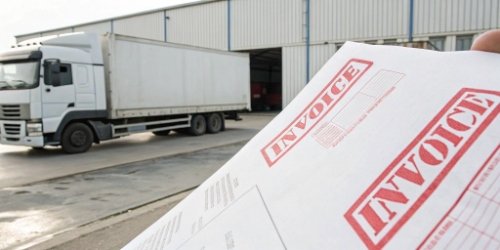
The fallout from a wrong weight1 label goes far beyond a simple correction. We have seen how these small mistakes can snowball into company-wide problems. It affects your finances, your operations, and the trust your customers have in you.
Financial Hits
The most immediate consequence is financial. Shipping carriers like UPS, FedEx, and DHL have automated systems to check package weights. If they find a difference, they don't just correct the shipping charge. They often add a penalty fee on top of it. These fees can add up quickly across many shipments. Then you have the administrative cost of your team investigating the chargeback and correcting the invoice.
Operational Chaos
When a carrier rejects a shipment, your operations grind to a halt. The product comes back to your warehouse, creating unplanned work. Your team must stop their normal tasks to receive the return, find out what went wrong, create a new label, and arrange a new pickup. This wastes valuable labor hours and delays other important orders, causing a bottleneck in your entire fulfillment process.
Damaged Reputation
Your customers and business partners expect accuracy. A wrong weight label seems unprofessional. If it causes delays or extra fees for them, it looks like you are careless. If it happens more than once, they may start looking for a more dependable supplier. We've seen businesses lose valuable contracts over repeated, small errors like this.
| Consequence Type | Specific Impact | Example |
|---|---|---|
| Financial | Carrier Surcharges & Fees | A carrier charges a $50 penalty for each mislabeled package in a shipment. |
| Operational | Shipment Delays & Rework | A truck is held at a depot for 24 hours for re-weighing, delaying 100 orders. |
| Reputational | Loss of Customer Trust | A key retail client stops ordering from you because of repeated shipping mistakes. |
How Can Incorrect Weight Labels Affect Shipping Costs and Customer Satisfaction?
Are unexpected shipping fees eating into your profits? Incorrect weights are a common reason for this. They lead to surprise charges that can frustrate you and your customers, who might also face annoying delays.
Incorrect weights directly increase costs through carrier fines and re-billing for any under-declared weight. For customers, this mistake can cause delivery delays, unexpected customs fees, and frustration, which quickly erodes their satisfaction and trust in your service.

The connection between accurate weights, shipping costs, and happy customers is very direct. An error in one area immediately creates a problem in the others. From my experience in this industry for nearly 20 years, this is one of the easiest areas to improve but also one of the most overlooked.
The Ripple Effect of Shipping Costs
Carriers use the greater of two numbers to determine shipping costs: the actual weight and the dimensional weight (based on the package size). If you understate the actual weight, their systems will catch it. You will then get a bill for the difference plus a penalty fee. These unexpected costs destroy your profit margins. On the other hand, if you overstate the weight, you are simply overpaying and giving money away to the carrier. I once audited a company and found they were overpaying for shipping by nearly 15% a year, all because their master weight data2 was wrong.
The Customer's Perspective
Think about your customer. They place an order and get a tracking number with an expected delivery date. But their package gets held at a sorting facility because of a weight issue. Now, it will arrive two days late. Or even worse, it gets stuck at customs, and they get a surprise bill for extra taxes based on a re-weighed package. They don't blame the carrier or the customs office. They blame you, the shipper. This bad experience directly impacts their view of your brand and makes them less likely to order again.
| Issue | Impact on Shipping Cost | Impact on Customer Satisfaction |
|---|---|---|
| Understated Weight | Carrier penalties, re-billing fees. | High. Results in delivery delays, frustration. |
| Overstated Weight | Overpaying for shipping, lower profit. | Low. Customer is unaware, but you lose money. |
| Customs Discrepancy | Fines, inspection fees, holds. | Very High. Causes severe delays and unexpected fees. |
What Steps Can Prevent Shipping Errors Due to Wrong Weight Labels?
Do you feel like you're always putting out fires caused by shipping mistakes? These errors seem small but they create huge problems. There is a systematic way to stop them from happening in the first place.
To prevent these errors, you must have a clear Standard Operating Procedure (SOP) for weighing and labeling. Use calibrated, high-quality scales. Most importantly, integrate your scale directly with your printing and shipping software to eliminate manual data entry errors.
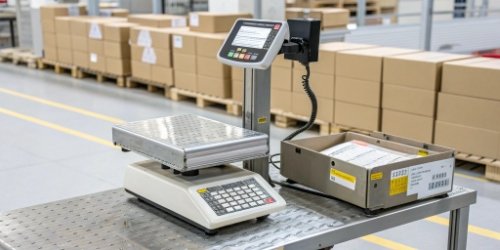
Based on my insight, you have to fix this problem at the source. Finding an error when the package is on the shipping dock is too late. It has already caused disruption. The best approach is to build quality control3 right into your packing process. This involves your people, your processes, and your technology.
Start at the Source
The most effective place to guarantee accuracy is on the production or packing line, not at the final shipping station. The moment a product is packed and sealed, its weight should be captured and recorded correctly. This requires a clear process. Either a dedicated team member is responsible for weighing, or it is a mandatory step in the packing checklist. This simple process change prevents errors from moving downstream.
Technology is Your Best Friend
People are creative and great at solving problems, but we are not good at repetitive tasks like typing numbers. This is where technology is the perfect tool. An integrated weighing and label printing system works simply. It gets the exact weight from the scale and sends that data directly to the label printer or shipping software. There is no manual typing, so there are no typos. At Weigherps, we design these kinds of "weighing solutions" for our clients. We have helped many software providers and manufacturers integrate our scales with their systems to eliminate human error and speed up their lines.
Training and Regular Audits
Your team needs to understand why weight accuracy is so important. Train them on the proper procedures. Show them the costs associated with errors. Then, you need to check the process. Perform regular, random audits. Each day, pull a few packed boxes from the line and double-check their weight and label. This simple check keeps everyone focused on quality and helps you catch any small problems before they become big ones.
| Prevention Step | Description | Key Benefit |
|---|---|---|
| Strict SOPs | Documented, step-by-step instructions for weighing all packages. | Creates consistency and makes everyone accountable. |
| Integrated Scales | Scales that automatically send weight data to other systems. | Completely eliminates manual data entry mistakes. |
| Regular Audits | A manager spot-checks a few weighed packages every day. | Catches process breakdowns or equipment issues early. |
How Does Labeling the Wrong Weight Impact Logistics and Inventory Management?
Is your inventory count always a little bit off? You might not think to check it, but wrong weight labels could be corrupting your system data, making your logistics and planning a constant headache.
Incorrect weights create bad data in your Warehouse Management System (WMS) and ERP software. This leads to inaccurate inventory valuation, bad demand forecasting, and inefficient use of warehouse space, disrupting your entire logistics operation from the inside out.
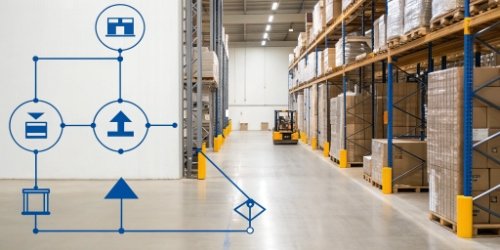
This is an issue that really resonates with the Technical Directors we work with. The hardware, like our scales, is just one part of the puzzle. The data it generates is what runs your whole operation. If that data is flawed from the beginning, the advanced software you rely on cannot do its job correctly.
The Data Integrity Problem
Your WMS and ERP are the brains of your operation, and they need accurate data to work. Weight is a key piece of data. It is often used for slotting, which is deciding the best place to store an item. It is used to calculate future shipping costs. And it's used for capacity planning4 in trucks and containers. When the weight in your system is wrong, all these calculations and decisions are also wrong. It is a perfect example of the "garbage in, garbage out" principle. Bad data leads to bad outcomes.
Flawed Forecasting and Planning
Your company likely uses historical shipping data, including weights, to forecast future costs and logistical needs. If your historical data is wrong, your forecasts will be wrong. You might set your shipping budget too low, or allocate the wrong amount of space on a cargo plane. This forces you to make expensive, last-minute changes to your plans. Accurate weight data from the start makes all your future planning much more reliable.
Warehouse Inefficiency
Many modern warehouses use weight to check for accuracy. For example, a picker scans an item, and the system knows the total package weight should be 5kg. If the scale reads 5.5kg, the system flags an error, thinking the picker grabbed the wrong item or quantity. But if the master data of 5kg was wrong in the first place, you get constant false alarms. This slows down your team and, even worse, trains them to ignore the warnings, which means real mistakes will be missed.
| System | Impact of Incorrect Weight Data | Real-World Problem |
|---|---|---|
| WMS | Inaccurate item slotting, false picking errors. | Packers are slowed down by system alerts for correct picks. |
| ERP | Flawed inventory valuation, incorrect financial reports. | The company's asset value is misstated on its balance sheet. |
| TMS | Incorrect carrier selection, poor load planning. | A truck is sent that is too small for the actual weight of the load. |
Conclusion
In short, accurate weight labeling is not just a shipping detail. It is fundamental to your costs, customer loyalty, and operational efficiency. Fixing it at the source is key.
-
Exploring the impact of wrong weight on shipping costs can help you avoid financial pitfalls. ↩
-
Understanding the importance of accurate weight data can improve your logistics operations. ↩
-
Learning about quality control can help you maintain high standards in your shipping processes. ↩
-
Understanding capacity planning can help you optimize your shipping and storage. ↩



Comments (0)