

Struggling to get consistent, accurate measurements? Inaccurate weighing can lead to wasted materials and quality control issues. Understanding the science behind precision scales is the first step to solving this.
At its heart, an ultra-precision scale uses a highly sensitive sensor to convert physical force into an electrical signal. This signal is then processed by advanced electronics and software, all housed within a design that protects it from environmental interference, to deliver extremely accurate weight readings.
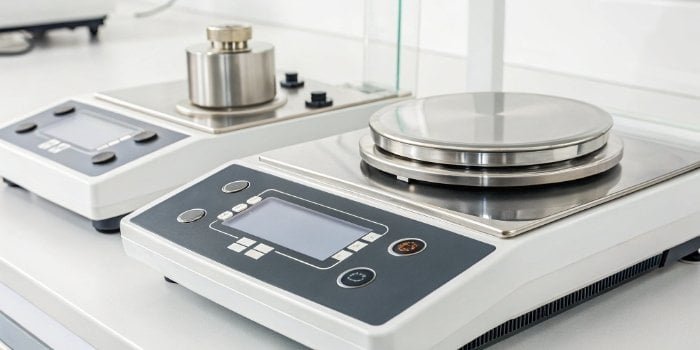
Precision weighing often seems like magic, but it’s a field I’ve dedicated my career to at Weigherps. For nearly two decades, we've been building the systems that power industries. The difference between a standard scale and an ultra-precision one isn't just one component; it's a complete system working in perfect harmony. It's about more than just the final number on the display. It's about the trust you can place in that number. Let's break down the science and technology that make this level of accuracy possible, so you can make a more informed choice for your business.
How do high precision scales work?
They look like simple boxes, but their internal workings are incredibly complex. Choosing the wrong one because you don't understand the technology can be a costly mistake. Let’s demystify it.
A high-precision scale works by using a sophisticated sensor, typically an electromagnetic force restoration (EMFR) cell, to precisely counteract the weight on the pan. Smart electronics then measure the electrical current needed to do this, converting it into a highly accurate and stable weight reading.
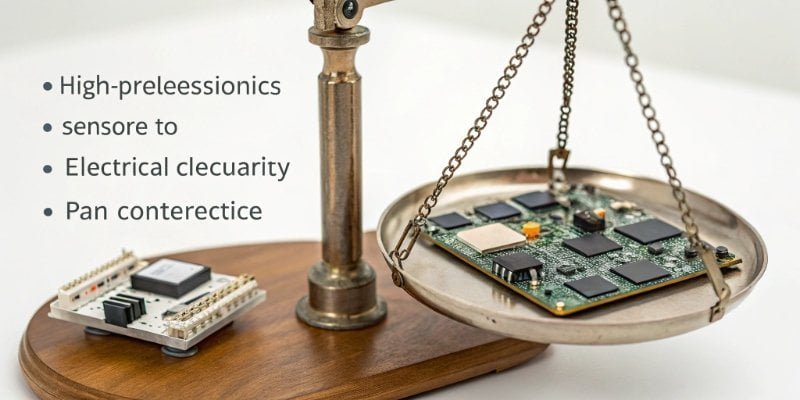
In my experience, thinking of a precision scale as a single object is a mistake. It’s better to think of it as a team of three specialists working together. First, you have the core component, the sensor. Then you have the brains, which are the electronics and software. And finally, you have the body, which is the mechanical design and housing. Each part is critical for achieving that final, precise result. If one part fails, the entire system's accuracy is compromised. It’s this system-level approach that we focus on in our designs.
The Core: The Sensor
The heart of any high-precision scale is its sensor. For basic scales, this might be a strain gauge load cell. But for ultra-precision, we rely on Electromagnetic Force Restoration (EMFR)1 technology. An electromagnet generates a force to perfectly balance the weight on the pan. The amount of electrical current required to achieve this balance is directly proportional to the mass. This method is incredibly sensitive and stable, allowing for measurements in fractions of a milligram.
The Brains: The Electronics
The raw signal from the sensor is useless without powerful electronics to interpret it. This is where the Analog-to-Digital Converter (ADC)2 comes in. It translates the analog electrical signal into a digital value. As a software expert, you know how crucial clean data is. Our firmware then applies sophisticated filtering algorithms to remove noise from vibration3s or electrical interference. This ensures the final reading on the display is both stable and accurate.
The Body: The Mechanics
Finally, the mechanical structure protects the delicate internal components. This includes a heavy, stable base to absorb vibrations, adjustable leveling feet to ensure the scale is perfectly flat, and a draft shield4 to protect the weighing pan from even the slightest air currents5. A simple breath or air conditioning vent can throw off a measurement, so this physical protection is not optional; it's essential for reliable performance.
Which scale is the most precise?
You see "high precision" advertised everywhere, but the term can be misleading. Picking a scale that isn't precise enough for your application means inaccurate results and wasted money. So, what truly defines precision?
The most precise scales available are microbalances and analytical balances. These instruments use EMFR technology and are designed to measure mass in the sub-milligram range. They achieve this through extreme sensitivity, advanced electronics, and complete isolation from environmental factors like air currents and vibrations.

When customers ask me this question, I always reframe it to "What is the most precise scale for your needs?" The answer depends entirely on the application. A microbalance that can weigh a single particle of dust is useless for weighing 50kg pallets, and an industrial scale is too coarse for laboratory work. Understanding the different classes of precision is key. Over the years, we've developed solutions for countless specific needs, and it always starts with defining the required level of precision first.
Analytical vs. Precision Balances
In the world of high precision, we generally talk about two main categories. Analytical balances are the top tier, offering readability6 from 0.1mg down to 0.001mg. They are always enclosed in a draft shield and are used for quantitative chemical analysis and other exacting tasks. Precision balances are a step below, with readability typically ranging from 1g to 0.001g (1mg). They offer higher capacity7 than analytical balances8 and are used in quality control9 and formulation.
The Key Specifications: Readability and Capacity
To compare scales, you need to understand two main specifications. Readability is the smallest increment a scale can display. Capacity is the maximum weight it can measure. An ultra-high precision scale will have very fine readability but often a lower capacity.
Here’s a simple table to illustrate the differences:
| Scale Type | Typical Readability | Typical Capacity | Common Use Case |
|---|---|---|---|
| Microbalance | 0.001 mg (1 µg) | 1 g - 10 g | Particulate matter analysis, filter weighing |
| Analytical Balance | 0.1 mg - 0.01 mg | 50 g - 500 g | Chemical formulation, density determination |
| Precision Balance | 1 mg - 100 mg | 200 g - 8 kg | Quality control, sample preparation |
| Industrial Scale | 1 g - 100 g | 15 kg - 600 kg+ | Shipping, inventory, batching |
Ultimately, the "most precise" scale is the one whose readability and capacity match your specific weighing tolerance.
Are digital scales 100% accurate?
We all want perfect, error-free data. It's tempting to think a digital display shows an exact, undeniable truth. But believing in 100% accuracy can lead to overconfidence and critical errors.
No, no digital scale is 100% accurate. Every measurement instrument has an associated margin of error or "measurement uncertainty." The goal of a high-quality scale is to make this uncertainty so small that it becomes insignificant for the intended application. Accuracy is maintained through proper calibration.

This is a really important concept that I discuss with clients all the time, especially those from technical backgrounds like software development. In software, you strive for bug-free code, but in the physical world, perfection is an asymptote—something we approach but never truly reach. Instead of chasing "100% accuracy," we focus on "proven reliability within a defined tolerance." This is a much more practical and honest way to approach precision manufacturing. It’s about building a system you can trust to perform repeatably and accurately, every single time.
Understanding Accuracy vs. Precision
These two terms are often used interchangeably, but they mean very different things.
- Accuracy is how close a measurement is to the true, correct value.
- Precision (or repeatability) is how close multiple measurements are to each other, regardless of whether they are accurate.
You can have a scale that is very precise but not accurate. For instance, it might read 10.05g for a 10.00g weight every time. It's precise, but it's off by 0.05g.
Factors That Affect Accuracy
A great scale can still give inaccurate readings if not used correctly. As manufacturers, we design to minimize these, but users must be aware of them.
- Temperature: Drastic temperature changes can cause internal components to expand or contract, affecting readings.
- Vibration: A nearby machine or even heavy foot traffic can introduce noise.
- Air Currents: An open window or HVAC vent can exert force on the weighing pan.
- Calibration Drift: Over time and with use, all scales drift from their initial calibration.
The Importance of Calibration
This is the single most important factor for maintaining accuracy. Calibration is the process of testing a scale against a known, certified mass and making adjustments to correct any deviations. For critical applications, this should be done regularly. A scale is only as accurate as its last calibration. This is why we a provide comprehensive service and stress the importance of a regular maintenance schedule.
What are the most reliable weighing scales?
You need a scale that just works, day in and day out. An unreliable scale that needs constant service or gives fluctuating readings can halt production and ruin product batches. So how do you find one you can count on?
The most reliable scales are those built with high-quality components, robust construction, and stable, well-tested software. They come from reputable manufacturers who stand behind their products with strong warranties and accessible, expert technical support, something we pride ourselves on at Weigherps.

Reliability is the foundation of our entire business. For 18 years, we've been the OEM/ODM partner for brands worldwide because they know our products won't fail them in the field. For a software provider like yourself, reliability means stable code and seamless integration. For us, it means the exact same thing, but applied to hardware and firmware. It's about thinking through every potential point of failure and engineering a solution for it. Reliability isn't an accident; it's the result of rigorous design, testing, and a commitment to quality.
Build Quality and Materials
A reliable scale starts with a solid foundation. We use durable materials like die-cast aluminum for the housing and stainless steel for the weighing pans to resist corrosion and wear. Crucially, we also incorporate overload protection into the sensor design. This prevents accidental damage if an object that's too heavy is placed on the scale, which is a common cause of failure in cheaper models. Every product we ship has passed a battery of physical tests to ensure it can withstand the rigors of an industrial environment.
Software Stability and Integration
As a software vendor, you understand this better than anyone. Unreliable firmware can cause a scale to freeze, produce erratic readings, or fail to communicate with other systems. We have a dedicated technical team that develops and stress-tests our software to ensure it is rock-solid. We also design our IoT scales with clear communication protocols (like RS232 or TCP/IP) to make integration with your software systems as smooth as possible. Stable software is non-negotiable for a reliable weighing system.
Manufacturer Reputation and Support
A product is only as reliable as the company that stands behind it. A manufacturer with a long history, international certifications like CE, and a transparent quality control process is a good indicator of reliability. We provide a 12-month warranty on all our products and have dedicated after-sales and technical teams ready to assist. When you choose a partner, you're not just buying a piece of hardware; you're investing in the support ecosystem that ensures it works for the long term.
Conclusion
Choosing a high-precision scale means understanding it's a complete system. Focus on the sensor quality, robust build, and a reliable manufacturing partner to ensure you get the accuracy your business depends on.
-
Discover how EMFR technology enhances the accuracy of high-precision scales. ↩
-
Understand how ADCs convert analog signals to digital for precise measurements. ↩
-
Learn about the impact of vibrations on scale readings and how to mitigate them. ↩
-
Understand how draft shields protect measurements from environmental factors. ↩
-
Discover how air currents can affect scale accuracy and ways to minimize their impact. ↩
-
Learn about readability and its importance in choosing the right scale for your needs. ↩
-
Explore the concept of capacity in scales and its relevance to your weighing requirements. ↩
-
Discover the unique features of analytical balances and their specific uses. ↩
-
Explore the quality control processes that ensure the accuracy and reliability of precision scales. ↩



Comments (0)