
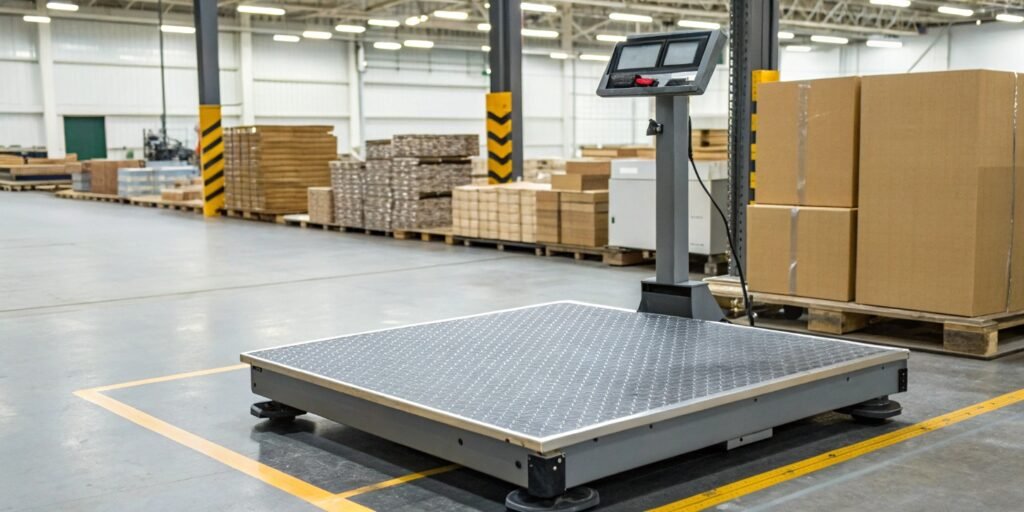
Worried that inaccurate weighing is hurting your bottom line? Standard scales often fail, leading to costly errors. Industrial scales offer the specific, reliable accuracy you need for precision tasks.
The accuracy of an industrial scale is defined by its specific design and application. Scales are customized with particular sensors, components, and software to meet the unique precision requirements of different industries, ensuring they can absolutely meet your measurement needs when chosen and configured correctly.
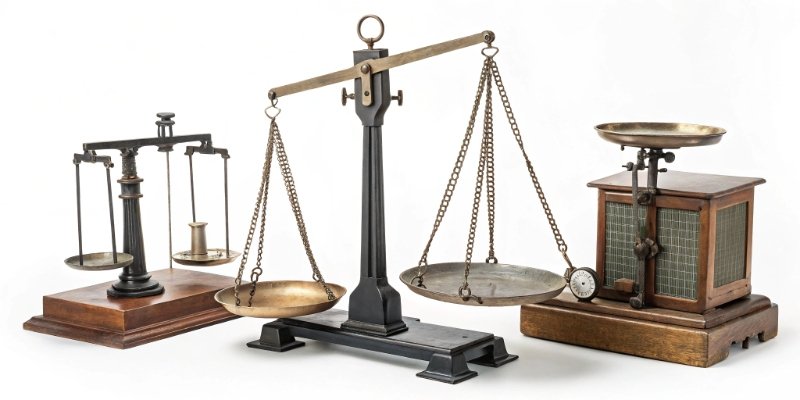
The question of accuracy1 is the first one I get from almost every client. As a purchasing manager or technical director, you know that a measurement error can ripple through your entire operation. It can mean wasted materials, a subpar final product, or even compliance failures. The simple answer is yes, they are incredibly accurate. But the real, helpful answer is that "accuracy" isn't a single value. It's a specification that we, as manufacturers, design to meet a specific job. Your job. Over my 18 years in this industry, I've seen firsthand that the right scale isn't just a tool; it's a foundational part of a successful production process. Let's look deeper into what that means for you.
How accurate are industrial weighing scales?
Confused by technical specs like readability and capacity? Choosing wrong means either inaccurate results or overspending. Industrial scale accuracy is a tailored solution, not a one-size-fits-all number.
The accuracy of an industrial scale is defined by its readability, capacity, and accuracy class (e.g., Class II, III). Unlike household scales, they are engineered for specific tasks. Their accuracy is a precise match for an industry's specific tolerance levels, from grams to tons.
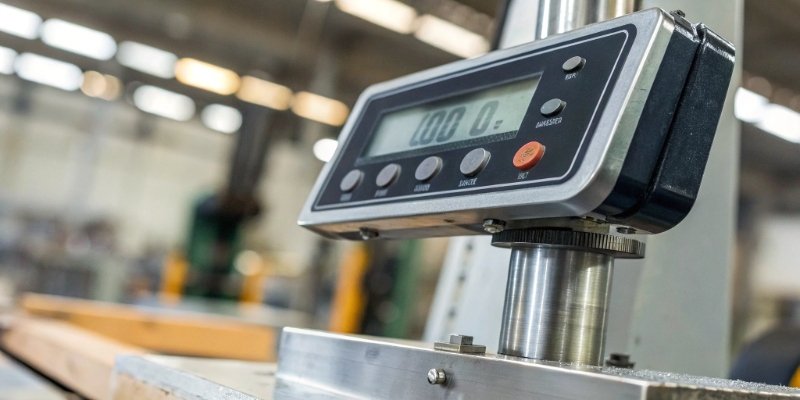
When we talk about the accuracy of a standard industrial scale, we're discussing a balance of several factors. It's not about finding the "most accurate" scale in the world; it's about finding the scale that is perfectly accurate for your task. For a partner like a software vendor, this is critical. Your systems rely on the data our scales provide, so that data must be both correct and relevant.
Understanding Accuracy vs. Readability
Many people use "accuracy" and "readability2" interchangeably, but they are very different. Readability is the smallest increment the scale's display can show (e.g., 0.1 kg). Accuracy, however, is how close the measured weight is to the true, actual weight. A scale can have high readability but poor accuracy. Our job at Weigherps is to ensure both are aligned with your needs.
The Role of Customization
This is where our experience shines. We don't offer a one-size-fits-all product. For a logistics company weighing large pallets, a scale with a 2000 kg capacity3 and 0.5 kg readability is perfect. For a food processing plant portioning ingredients, a scale with a 30 kg capacity and 0.005 kg readability is necessary. We customize the load cells4, indicators, and even the software interface to match the job. This ensures you aren't paying for precision you don't need, or worse, using a scale that isn't precise enough.
Key Factors Influencing Accuracy
The scale itself is only part of the equation. Its performance is also affected by its environment and use.
| Factor | Impact on Accuracy | Our Solution |
|---|---|---|
| Environment | Vibrations, air drafts, and temperature shifts can cause readings to fluctuate. | We design scales with features like vibration dampening5 and temperature compensation6 and advise on ideal placement. |
| Load Cell Quality | This sensor is the heart of the scale; its quality dictates the scale's potential for accuracy. | We select high-quality, durable load cells specifically rated for the scale's intended capacity and environment. |
| Software Integration | Data transfer from scale to system must be flawless to be useful. | Our R&D team works directly with clients to create custom communication protocols, ensuring seamless and error-free data integration with your software. |
How precise are precision scales?
Do you need to measure tiny amounts with absolute certainty? A regular industrial scale might not handle it, risking the integrity of your formulas or quality checks. Precision scales provide that next-level accuracy.
Precision scales, also called precision balances, are incredibly precise. They are a category of industrial scales designed to measure small masses to a high degree of readability, often to 0.01g, 0.001g, or even finer, making them essential for laboratories and quality control.

When we move into the realm of laboratories, pharmaceuticals, or high-tech component manufacturing, the need for precision becomes extreme. A standard floor scale won't do. You need a precision scale or an even more sensitive analytical balance. I remember working with a client in the cosmetics industry whose formulas depended on adding a few grams of a very expensive pigment to a large batch. For them, a 0.5g error was the difference between a perfect product and a rejected batch.
Precision vs. Analytical Balances
While both are for high-precision tasks, there's a key distinction.
- Precision Scales: These typically have a higher capacity than analytical balances7 and offer readability from 0.1g to 0.001g. They are workhorses in labs and quality control stations where you need a mix of capacity and high precision.
- Analytical Balances: These are the most sensitive instruments. They usually measure to at least 0.0001g (0.1mg) and almost always feature a draft shield—a clear enclosure to protect the weighing pan from even the slightest air current, which could affect the result.
Applications Demanding High Precision
For a software provider, your clients are likely in fields that depend on this level of accuracy. By integrating with a reliable precision scale, your software becomes the brain for these critical operations.
- Pharmaceuticals: Compounding drugs where every milligram matters for patient safety.
- Chemicals: Mixing volatile compounds where precise ratios are crucial for reactions.
- Aerospace & Electronics: Measuring small components to ensure they meet strict weight and balance specifications.
- Quality Control: Taking small samples from a large batch to test for consistency and quality.
Our role is to provide a scale that delivers reliable data, allowing your software to manage inventory, enforce recipes, and create compliance documentation automatically.
How to calibrate an industrial weighing scale?
Noticing your scale's readings are drifting over time? This drift can cause major compliance and quality issues downstream. Regular, proper calibration is the simple fix to maintain accuracy and trust.
To calibrate an industrial scale, you must use a certified, known weight. By entering the scale's calibration mode and placing the test weight on it, the internal software adjusts itself to ensure its readings are accurate. This process maintains measurement integrity and compliance.
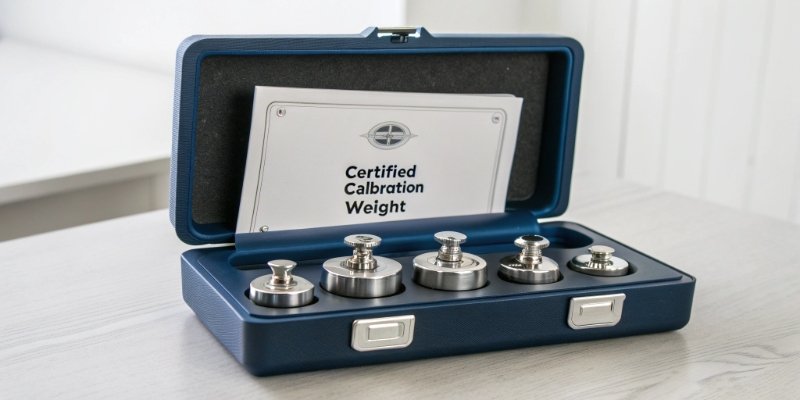
A scale is a precision instrument, and like any instrument, it can drift out of alignment over time. This can happen due to regular wear and tear, temperature changes, or even a sudden impact. Calibration isn't a "set it and forget it" task; it's a crucial part of maintenance. Neglecting it is like never changing the oil in your car—it will eventually lead to a breakdown. For your business, that breakdown a costly production error or a failed audit.
Why Calibration is Non-Negotiable
Accuracy directly impacts your bottom line. An uncalibrated scale can lead to giving away products for free (overfilling) or failing to meet label weight requirements (underfilling). In industries governed by regulations like ISO or NIST, documented calibration is a requirement for doing business. It provides a traceable record that proves your measurements are accurate and reliable. As a software provider, ensuring your customers are prompted or required to calibrate can be a powerful feature that adds value and security to your system.
A General Calibration Process
While specific steps vary by model, the basic process is consistent:
- Preparation: Place the scale on a level, stable surface and allow it to warm up for about 30 minutes. Ensure there are no drafts or vibrations.
- Zeroing: With nothing on the scale, press the "Zero" or "Tare" button to establish a zero point.
- Enter Mode: Follow the manual's instructions to enter calibration mode. This usually involves pressing a specific sequence of buttons.
- Apply Weight: The display will prompt you to place a specific calibration weight on the scale. It is crucial to use a certified, correct mass for this step.
- Confirm: The scale will perform an internal adjustment and then indicate that the calibration is complete. Remove the weight and return to normal weighing mode.
The Importance of Professional Service
While users can perform routine checks, true, certified calibration should be handled by a professional. Our after-sales service team uses weights that are traceable to international standards. We provide documentation for your records, which is essential for audits. This ensures not only that your scale is accurate but also that you can prove it. This is a core part of our commitment to being your long-term, reliable weighing expert.
Are digital scales 100% accurate?
Do you trust that "digital" means "perfectly accurate"? This common assumption is risky, as small, hidden errors can add up. The truth is no scale is 100% accurate, but it operates within a known, acceptable tolerance.
No, digital scales are not 100% accurate. Every measurement device has a small, acceptable margin of error known as tolerance. A high-quality, calibrated industrial digital scale minimizes this tolerance to a level that is insignificant for its intended purpose, ensuring reliable results.
The idea of 100% accuracy is a myth in the world of measurement. Every instrument, from a simple ruler to the most advanced atomic clock, has a degree of uncertainty. The goal in industrial weighing is not to achieve impossible perfection but to understand and control this uncertainty. A quality digital scale provides results that are consistently and reliably within a specified, acceptable tolerance. That's what makes it a professional tool.
Understanding 'Tolerance'
Tolerance is the permissible limit of error. For example, a scale weighing a 100 kg load might have a tolerance of +/- 0.05 kg. This means any reading between 99.95 kg and 100.05 kg is considered accurate and acceptable. This tolerance is determined by industry standards and the specific application. For your work as a software company, your system can be programmed to understand these tolerances. Our scales can communicate this data, allowing your software to make smarter decisions, such as flagging a measurement that falls outside the acceptable range.
The Digital Advantage
While not perfectly accurate, digital scales8 are far superior to older mechanical or analog models for several reasons:
- Repeatability: They provide the same reading for the same weight over and over again.
- Clarity: The digital display eliminates human guesswork.
- Connectivity: This is the most important advantage for you. Digital scales can output data directly to computers, PLCs, and cloud software. Our IoT-enabled scales9, for instance, can feed data directly into your systems, enabling real-time inventory management, production monitoring10, and automated quality control. This empowers your clients to revolutionize their conventional weighing processes.
Our Commitment to Quality
We know that your software and your clients' operations depend on the reliability of our hardware. That's why every single scale we produce undergoes a comprehensive testing protocol in our quality inspection department before it ships. We test its performance with certified weights, check its battery and power functions, and verify its software communication. Only after a scale passes every test does it earn the Weigherps name. This ensures that when you integrate with our products, you are integrating with a partner you can trust.
Conclusion
Industrial scale accuracy is not a single number but a tailored solution. With proper selection, customization, and calibration, you can achieve the exact precision your business requires for success.
-
Understanding accuracy is crucial for selecting the right scale for your needs. ↩
-
Learn about readability and its importance in achieving precise measurements. ↩
-
Discover how scale capacity impacts measurement accuracy and application. ↩
-
Understanding load cells is key to grasping how scales achieve accuracy. ↩
-
Learn how vibration dampening features enhance measurement stability and accuracy. ↩
-
Discover how temperature compensation ensures consistent readings in varying conditions. ↩
-
Understanding the differences can help you choose the right scale for your needs. ↩
-
Explore the advantages of digital scales over traditional models for better accuracy. ↩
-
Discover how IoT technology can revolutionize weighing processes and data management. ↩
-
Learn how accurate scales contribute to efficient production and inventory management. ↩



Comments (0)