
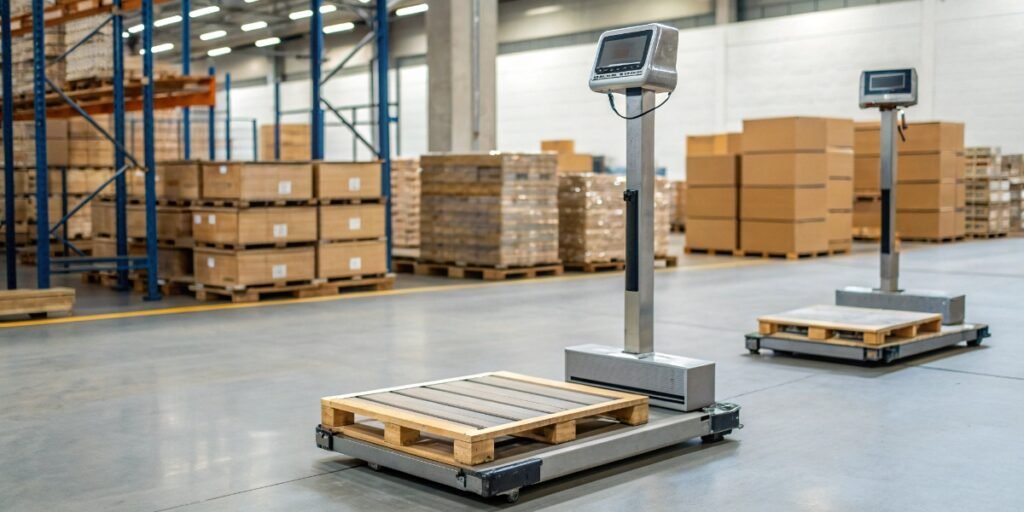
Are hidden shipping fees slowly draining your profits? These small overcharges and penalties add up quickly, creating a significant, invisible expense that hurts your bottom line without you even realizing it.
An accurate shipping scale is your first line of defense against hidden costs. It ensures you declare the correct weight, preventing carriers from imposing expensive penalties for under-declarations or rounding up weights. This precision stops overpayment and protects both your profits and your customer relationships.
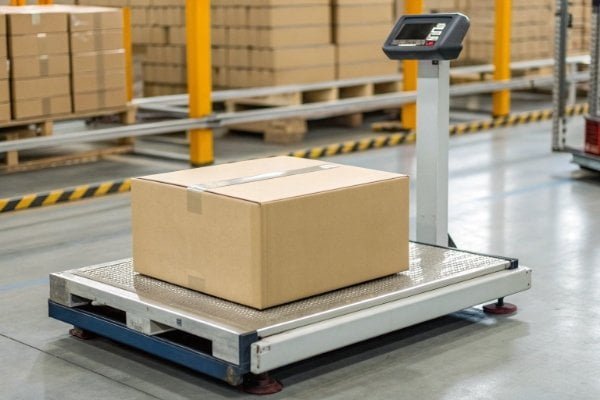
You might think that a few ounces here or there doesn't matter much. It's easy to dismiss small inaccuracies as just part of doing business. But these tiny errors are the root cause of many unexpected charges that can surprise you on your final invoice. The truth is, what you can't measure, you can't control. Let's dig deeper into how precision weighing gives you back that control and plugs the leaks in your budget.
Is it okay to overestimate shipping weight?
You want to avoid penalties, so you add a little extra weight to your shipping declaration, just in case. But this "safe" strategy is actually costing you money on every single package.
No, it is not a good practice. While overestimating weight helps you avoid penalties for underpayment, it means you are consistently overpaying for postage. This directly erodes your profit margins and can make your pricing uncompetitive. It's a costly habit that hurts your business.

The Ripple Effect of "Just a Little Extra"
Intentionally overstating weight seems like a harmless insurance policy, but the costs are very real. I once worked with a client who thought adding 100g to every shipment was a clever way to avoid carrier disputes1. They didn't realize they were throwing away thousands of dollars a year. They were paying for phantom weight on every single box that left their warehouse. This overpayment doesn't just affect your direct shipping costs. It also inflates any cost calculations you pass on to your customers. If a client discovers they've been consistently overcharged for shipping, it damages trust and can ruin a long-term business relationship. In today's competitive market, transparency is key. Your customers expect fair and accurate billing, and that starts with weighing every item precisely. True cost control2 isn't about guessing; it's about knowing.
| Strategy | Direct Financial Impact | Customer Relationship Impact |
|---|---|---|
| Overestimating Weight | Guaranteed overpayment on every shipment. | Risk of damaging trust if customers are overcharged. |
| Accurate Weighing | Pay the exact, correct amount every time. | Builds trust through fair and transparent billing. |
What is a hidden shipping fee?
You carefully calculate your shipping costs, but the final carrier bill is always higher than you expected. These surprise charges are frustrating and can completely destroy your budget planning for a project.
A hidden shipping fee is an unexpected charge a carrier adds to your bill after the shipment. Common examples include penalties for weight discrepancies, dimensional weight adjustments, and fuel surcharges. Inaccurate scales are a primary trigger for these costly, frustrating surprises on your invoice.

Unmasking Common Hidden Charges
Hidden fees often appear on your invoice with little explanation. Carriers have many different surcharges they can apply, and many are triggered by incorrect data you provide. The most common and easily avoidable fee is the weight discrepancy penalty. Carriers will re-weigh packages in their sorting facilities. If their weight doesn't match the weight you declared, they don't just correct the postage. They often add a significant penalty fee on top of it. They do this to protect themselves, but it comes directly out of your pocket. In our 18 years of manufacturing scales, we have seen that this is the most common pain point for our clients. It's not just a fee; it's a symptom of an inaccurate process. An unreliable scale can also lead to issues with dimensional weight3, where a light but large box is charged more. Getting the basic data right is the first step to eliminating these surprises.
| Hidden Fee Type | Common Trigger | How an Accurate Scale Helps |
|---|---|---|
| Weight Discrepancy Penalty | Your declared weight differs from the carrier's measurement. | Provides the exact weight, eliminating discrepancies. |
| Dimensional (DIM) Surcharge | Inaccurate dimensions or weight for large, light items. | Ensures correct weight data for accurate DIM calculations. |
| Address Correction Fee | Incorrect shipping address details. | Not scale-related, but part of overall data accuracy. |
| Residential Surcharge | Shipping to a home address. | Not scale-related, but another common hidden fee. |
How to reduce cost per delivery?
Shipping expenses seem to be constantly on the rise, cutting directly into your profit margins with each package you send. Every dollar you can save on delivery goes straight back to your bottom line.
To reduce cost per delivery, begin with an accurate, certified shipping scale to eliminate all weight-related penalties. Next, optimize your packaging to minimize dimensional weight, negotiate better rates with your carriers, and use shipping software to compare services and find the most affordable option.

A Three-Step Plan for Cheaper Shipping
Reducing your delivery costs is a systematic process, and it all starts with good data. As an industrial scale manufacturer, we always tell our clients to start with a solid foundation.
First, you must master accurate measurement. This is non-negotiable. An industrial-grade shipping scale4 that is reliable and certified is the foundation of your entire shipping operation. Without an accurate weight, any other optimization you try is built on faulty information. You will either overpay or be penalized.
Second, focus on smart packaging. Many carriers now use dimensional weight3 (DIM) to calculate shipping costs. This means the size of the box matters as much as the weight. Always use the smallest box possible for your product. Shipping a small, heavy item in a large box filled with packing material can sometimes cost twice as much as shipping it in a properly sized container.
Third, leverage technology and negotiation. Use shipping software5 to instantly compare rates between different carriers for every single package. And if you have significant shipping volume, don't be afraid to negotiate directly with your carrier representatives for better rates. They want your business, and accurate data on your shipping patterns will give you the power to negotiate effectively.
Why do managers consider direct cost to be more accurate than indirect cost?
It can be difficult to track every single business expense with perfect accuracy. This causes managers to overlook indirect costs, which gives them a false and overly optimistic view of their company's profitability.
Managers see direct costs, such as labor and materials, as more accurate because they are easily traced to a specific product. Indirect costs, like shipping overages or administrative overhead, are harder to assign to a single item and are often treated as general, uncontrollable business expenses.
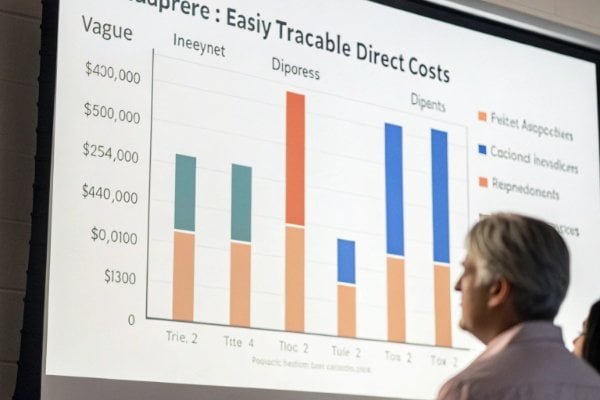
Turning an Indirect Cost into a Direct, Controllable Expense
Here’s where a simple tool like a shipping scale becomes a powerful financial management asset. Many businesses treat shipping adjustment fees and overpayments as an unpredictable indirect cost. They get lumped into "general overhead" and are seen as just a "cost of doing business." This is a mistake. An accurate shipping scale transforms that vague, unpredictable indirect cost into a precise, manageable direct cost.
I was recently talking to a purchasing director who was constantly battling budget overruns in his logistics department. When we looked at his expenses, we found a large, fluctuating line item called "Carrier Adjustments." He had no way to predict or control it. By investing in a high-precision, IoT-enabled weighing system, he took control. The cost of shipping was no longer a guess. He could assign an exact shipping cost to every single order. That unpredictable indirect cost became a predictable direct cost. This gave him incredible power to budget accurately and prove the efficiency of his department's operations. It is all about taking control of the numbers that you can, in fact, control.
| Cost Type | Before Accurate Scale | After Accurate Scale |
|---|---|---|
| Shipping Fees | Indirect Cost (Unpredictable, estimated) | Direct Cost (Predictable, precise) |
| Financial Control | Low (Reactive to carrier bills) | High (Proactive cost management) |
| Budgeting | Inaccurate with high variance | Accurate and reliable |
Conclusion
Accurate scales are not just operational tools; they are strategic assets. They cut hidden fees, protect your profits, and build customer trust, giving you complete control over your shipping costs.
- Preventing carrier disputes through accurate weighing can save you time and money, ensuring smoother operations. ↩
- Exploring cost control methods can lead to significant savings and improved financial health for your business. ↩
- Understanding dimensional weight can help you optimize your packaging and reduce shipping expenses. ↩ ↩
- An industrial-grade shipping scale ensures accuracy and reliability, which are crucial for effective shipping operations. ↩
- Shipping software can streamline your shipping process and help you find the best rates, saving you money. ↩



Comments (0)