

Struggling with label weight errors? These mistakes cause profit loss and regulatory fines. A smart scale with a built-in system can guarantee accuracy on every single label.
A label printing scale ensures accuracy by using a systematic approach. It combines high-precision sensors, automated tare functions, and software that logs every step. This system verifies the container's weight, calculates the net weight, and confirms data stability before printing, which removes human error.

For years, I've seen companies deal with the fallout from inaccurate labels. A client in the food processing industry once told me they were losing thousands of dollars a month. It wasn't from one big error, but from thousands of small ones. A few grams here, a few grams there. It all added up. They needed a system, not just a scale, that could deliver perfect results every time. It made me think about what separates a basic scale from a truly reliable labeling solution. The answer lies in the combination of hardware, software, and process control.
What Mechanisms Help a Label Printing Scale Confirm Correct Tare and Net Weight?
Are you wondering what internal systems make a smart scale so reliable? A basic scale can give you a number, but advanced mechanisms are needed to confirm it's the right number.
Key mechanisms include high-precision load cells, automatic zero tracking, and software interlocks. The software guides the operator through a fixed process. It confirms a stable tare weight before allowing the product to be added and confirms a stable gross weight before printing.

Let's break down the technology that works behind the scenes. When we design these systems, we focus on removing any chance for error. It's not just about measuring weight; it's about creating a foolproof workflow1. The machine has to be smarter than the busiest operator on your factory floor. I once worked with a team that was always in a rush. They would place items on the scale and hit 'print' before the reading was stable. A smart scale simply won't let you do that. This control is built into its core mechanisms.
High-Resolution Load Cells
The load cell is the heart of the scale. A high-resolution load cell is extremely sensitive. It can detect very small changes in weight. This is critical for getting both the tare weight of the container and the net weight2 of the product right. If the load cell isn't precise enough, small errors will multiply across thousands of units.
Software Interlocks and Guided Workflow
This is where the intelligence lies. The scale’s software can be programmed to follow a strict sequence of events. The system ensures one step is completed correctly before the next one can begin. This prevents operators from taking shortcuts.
| Step | Action | System Check | Status |
|---|---|---|---|
| 1 | Operator places empty container on scale. | Is the weight stable? | Tare Locked |
| 2 | Operator presses the 'Tare' button. | Tare weight recorded. | Ready for Product |
| 3 | Operator adds product to the container. | Is the new weight stable? | Gross Weight Locked |
| 4 | System calculates Net Weight (Gross - Tare). | Calculation verified. | Ready to Print |
| 5 | Operator presses 'Print'. | Label is printed with accurate data. | Complete |
Automatic Zero Tracking
Environments can change. Dust can build up on the scale platter, or temperature shifts can affect the electronics. Automatic zero tracking is a feature that constantly monitors the zero point. It makes tiny adjustments automatically to ensure that the scale always starts from a true zero. This prevents slow, creeping errors from affecting your measurements.
How Does a Label Printing Scale Maintain Consistent Tare and Net Weight Labeling?
Getting one label right is simple. But how do you ensure the 10,000th label is just as accurate as the first? Inconsistency can quietly destroy your margins and damage your reputation.
Consistency is achieved through a database of pre-set product information, often called Product Look-Ups (PLUs). You store the tare weight for each specific container. When an operator selects a product, the scale automatically applies the correct stored tare weight, eliminating manual entry errors.
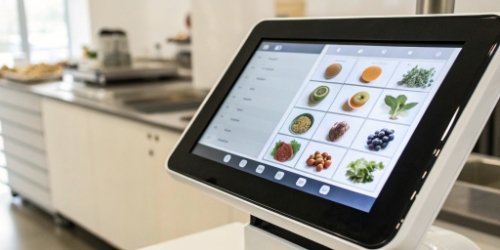
One of our clients packages hundreds of different spice blends in several different jar sizes. Before they upgraded their system, operators had to remember the tare weight for each jar or look it up on a chart. Mistakes were common. After implementing our scales with a PLU system, their error rate dropped to nearly zero overnight. The operator simply selects "Paprika - 250g Jar," and the scale does the rest. It’s about building a system that makes the correct action the easiest action.
Using a Product Look-Up (PLU) Database
A PLU database is a list of all your products stored directly in the scale's memory or a central server. For each product, you can store important information:
- Product Name: e.g., "Organic Coffee Beans"
- Item Code: e.g., "OCB-500"
- Known Tare Weight: e.g., "15g" for the bag
- Target Net Weight: e.g., "500g"
- Price: e.g., "$15.00"
When the operator selects the product, the scale instantly knows the tare weight. This removes the need to weigh the empty container every single time and prevents someone from accidentally using the wrong tare value.
Operator Prompts and Guided Procedures
Modern scales can do more than just weigh. They can guide the operator through the entire process with on-screen prompts. The screen might say "Place Container," then "Add Product," and finally "Print Label." This structured workflow reduces training time for new employees and ensures that even on a busy day, no steps are skipped. It standardizes the procedure across all shifts and all operators, which is the key to achieving real consistency.
What Features Ensure Precision in Tare and Net Weight with Label Printing Scales?
You are likely looking for specific features when buying a new scale. But not all features are equal. Missing one or two key precision features can make an expensive scale perform like a cheap one.
Key features for precision include a stability indicator that prevents printing until the weight is stable, multi-range accuracy for different product weights, and data connectivity. These features work together to capture a perfect measurement and create a verifiable record for every item weighed.
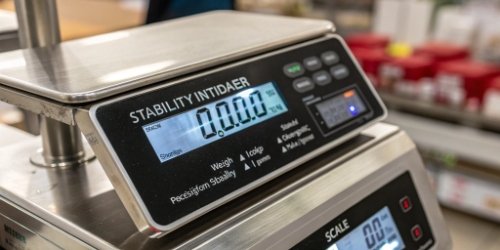
I remember visiting a factory where workers were paid based on how many packages they processed. They would throw items onto the scale and hit print while the weight was still bouncing around. Their labels were never accurate. The first thing we did was enable the motion detection feature on their new scales. The scale would not print a label until the weight was perfectly still. Productivity dipped for a day as they adjusted, but product giveaway and weight errors vanished completely.
Motion Detection and Stability Filters
This is a critical, non-negotiable feature. The scale’s software actively monitors the load cell for vibrations or movement. It will not allow a tare, a weighing operation, or a print command to execute until the reading is 100% stable. This simple feature is one of the most effective ways to prevent bad data. It forces the process to be done correctly.
Multi-Range Precision
A scale that needs to weigh both small and large items can have a hard time being precise at both ends. Multi-range scales solve this. They operate with two or more automatic ranges. For example:
- Range 1: 0 kg to 5 kg with a precision of 1 gram.
- Range 2: 5 kg to 15 kg with a precision of 5 grams.
This allows you to use a single scale for multiple products without sacrificing accuracy on your lighter items. It is a cost-effective way to get the precision you need exactly where you need it.
Data Connectivity and Audit Trails
A precise scale must be able to prove its precision. Connectivity to a central database or ERP system is essential. When a label is printed, the scale sends the gross, tare, and net weight, along with a timestamp, product ID, and operator ID, to your server. This creates a permanent, digital audit trail. If a customer ever questions a weight, you have the exact data to support it. This feature turns a simple scale into a powerful quality control tool.
How Can Calibration Techniques Improve Tare and Net Weight Accuracy in Label Printing Scales?
You bought a great scale, but is it still accurate six months later? Every scale, no matter how good, can drift over time due to use, temperature changes, or movement. Regular calibration is essential.
Proper calibration adjusts the scale to match a known, certified standard. Professional calibration with certified test weights ensures its accuracy across its entire capacity. This process corrects any drift and is the only way to guarantee that tare and net weight calculations remain precise.

Many customers think calibration is just a suggestion. I always tell them this story: a pharmaceutical client of ours is audited regularly. During one audit, they had to prove their scales were accurate. Because their scales automatically logged every calibration event, they could produce a full report in minutes. The auditor was impressed, and they passed with no issues. That log wasn't just a feature; it was their insurance policy. It proved they were a professional operation committed to quality.
Internal vs. External Calibration
It's important to understand the two main types of calibration.
- Internal Calibration: Some advanced scales have a built-in motor that uses an internal reference weight to perform a quick self-calibration. This is great for daily checks and minor adjustments.
- External Calibration: This is the industry standard. A trained technician uses a set of highly accurate, certified test weights. They test the scale at multiple points across its full range (for example, at zero, mid-capacity, and full-capacity) and make fine adjustments to ensure it is accurate everywhere. This should be done on a regular schedule.
Establishing a Calibration Schedule
How often should you calibrate? It depends on several factors:
- Usage: A scale used 24/7 needs more frequent calibration than one used once a day.
- Environment: A scale in a harsh, vibrating, or dusty environment will drift faster.
- Required Precision: If your product has very tight weight tolerances, you must calibrate more often.
For most industrial applications, we recommend a professional external calibration at least once or twice a year, with regular user checks using a single test weight happening daily or weekly.
Calibration Logs for Traceability
Modern scales can and should record every calibration event. This log should include the date, the time, the results (before and after), and the ID of the person who performed the calibration. This traceability is essential for quality management systems3 like ISO 9001 and is your ultimate proof that you are maintaining your equipment correctly.
Conclusion
A reliable label printing scale uses a full system of hardware, software, and regular maintenance. This ensures every single label shows the correct tare and net weight, protecting your profits.



Comments (0)