
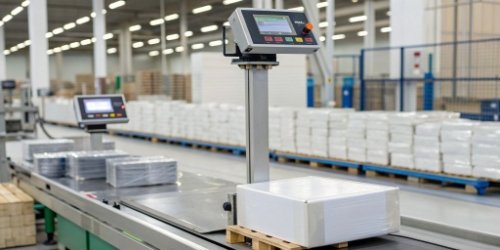
Mislabeled allergens are a constant worry for food producers. A simple mistake can cause serious health issues for consumers and damage your brand. Smart scales offer a reliable solution.
A label printing scale guarantees accuracy by directly connecting to your ERP or database. It automatically pulls allergen data for each product, uses barcode scanning for verification, and performs secondary checks to eliminate manual entry errors. This ensures the right information is on every package.
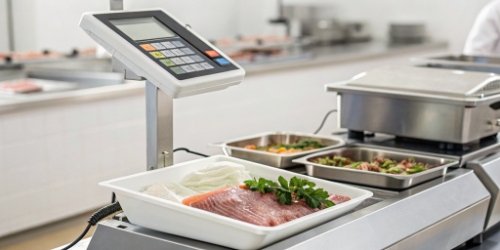
This isn't just about meeting regulations; it's about protecting your customers and your business's reputation. We've spent nearly two decades helping clients perfect this process, and it all starts with having the right systems in place. Let's break down how these scales provide a safety net for your production line, looking at the features, processes, and technologies that make it all work. You'll see how a modern weighing system1 moves beyond simple measurement to become the heart of your quality control2.
What Features Ensure Precise Allergen Labeling with a Label Printing Scale?
Relying on someone to manually type allergen information is a huge risk. One small keyboard error can lead to an entire batch of products being incorrectly labeled. The right features automate this process.
Key features are real-time integration with your ERP system and automated barcode scanning. The scale's software pulls allergen data directly from your central database. This eliminates the need for manual input, ensuring the information is always correct for the specific product being weighed.
Real-Time System Integration
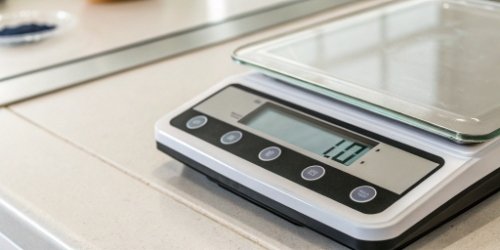
The most fundamental feature is the scale's ability to communicate with your other business systems. Think of the scale not as a standalone device, but as smart terminal on your network. We design our scales to connect directly with Enterprise Resource Planning (ERP) or Product Information Management (PIM) systems.
When an operator starts a new production order, they simply scan a work order barcode. The scale then automatically retrieves the complete product information. This includes the recipe, weight tolerances, and, most importantly, the specific list of allergens. The operator never has to type "Contains Nuts" or "Dairy-Free." The system does it for them. I remember a client who produced baked goods; they constantly battled minor labeling errors from manual entry. After we integrated our scales with their ERP, their labeling error rate3 dropped to zero within a month. It completely changed their operation.
| Process Step | Manual Method | Integrated Method |
|---|---|---|
| Data Entry | Operator manually types allergen info | System automatically pulls data from ERP |
| Verification | Relies on visual check by operator | System flags any mismatch automatically |
| Error Risk | High (typos, wrong product selected) | Extremely Low |
| Speed | Slow and prone to interruption | Fast and seamless |
How Does a Label Printing Scale Maintain Accuracy in Allergen Information?
Having the correct recipe is only half the battle. That accurate information can easily get lost between the mixing stage and final packaging, resulting in the wrong label on the right product.
A label printing scale maintains accuracy using a closed-loop verification process. After printing a label, a connected scanner can re-read it to confirm its data perfectly matches the central database before the product moves on. This creates an essential, automated double-check.
Barcode Traceability and Database Cross-Checks
We build our systems around a simple but powerful idea: check, print, and then check again. This creates what we call a "data closed loop4."
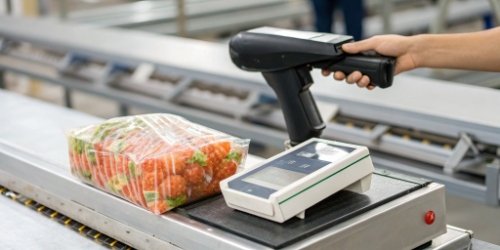
First, an operator scans the product's barcode at the weighing station. The system instantly cross-references this with the database to confirm it's the correct item for the current production run. If an operator accidentally grabs a different batch or the recipe has changed, the system can flash an alert or even stop the conveyor belt. This prevents the wrong information from ever being printed.
Second, after the scale weighs the product and prints the label, a scanner further down the production line reads the new barcode. This final check confirms that the printed information is correct and that the right label has been applied to the right package. We helped a ready-meal company implement this system. They had dozens of meal variations, making mistakes easy. This two-step verification process gave them the confidence that a vegan meal would never accidentally get a label mentioning dairy.
What Technologies Support Reliable Allergen Data with Label Printing Scales?
Data accuracy is one thing, but data security is another. What if your allergen data was tampered with, either by accident or on purpose? You need to trust the data's integrity.
Modern technologies like the Internet of Things (IoT) and blockchain add a powerful layer of trust. By recording each labeling event on an unchangeable digital ledger, blockchain technology ensures that your allergen information is tamper-proof from the factory to the consumer.

Advanced Data Security with Blockchain
As specialists in IoT weighing, we see technologies like blockchain as the future of data reliability. Think of blockchain as a permanent, digital record book that everyone can trust.
When one of our IoT-enabled scales prints a label, it can simultaneously create a record on a blockchain. This digital entry contains the product name, batch number, timestamp, weight, and the exact allergen statement. Once recorded, this information cannot be altered or deleted by anyone.
This provides an unbreakable chain of custody. If a customer or regulator ever questions a product's label, you can instantly pull the immutable blockchain record. You can prove exactly what information was on that label when it left your facility. While this technology is still emerging for many, we work with clients in high-risk food industries who are already exploring it. For a software vendor like you, offering the capability to integrate with and write to a blockchain could be a massive competitive advantage. It’s the ultimate form of accountability.
How Can a Label Printing Scale Prevent Errors in Allergen Packaging Information?
Great technology is essential, but it can fail if your physical processes aren't aligned. For example, airborne flour from one area can cross-contaminate a "gluten-free" product in another, making a perfect label a lie.
A smart scale system prevents errors by integrating with your factory floor controls. It can link label printing rights to specific, physically separated production zones. The system can be programmed not to print a "nut-free" label unless the scale is operating in the designated nut-free area.
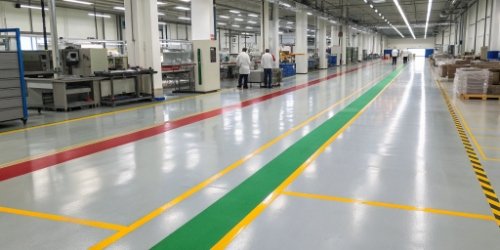
Integrating with Production Environment Controls
The best solutions connect the digital world to the physical world. This means your scale system should understand and enforce the rules of your production floor. As a manufacturer, we help our clients design these integrated workflows.
For example, you can create physically separate zones for products containing major allergens like dairy, gluten, or nuts. You might even use color-coded equipment for these areas—red for allergens is a common practice we see. We can then configure the weighing system to be location-aware. A scale in the "Allergen Zone," marked with red, is digitally locked. It can only access and print labels for recipes containing those specific allergens. An operator simply cannot print a gluten-free label from that station. This makes the process mistake-proof.
Furthermore, the system logs the operator ID, the specific scale used, and other machine parameters with every weighment. This creates an incredibly detailed audit trail5. If an issue ever arises, you can trace it back to the exact moment, operator, and machine, making investigations fast and effective.
Conclusion
Smart scales ensure accurate allergen labeling through system integration, automated verification, and process controls. This protects consumers, strengthens your brand's reputation, and provides peace of mind for your entire operation.
-
Explore the benefits of modern weighing systems in enhancing accuracy and efficiency. ↩
-
Discover the critical role of quality control in ensuring safe and accurate food products. ↩
-
Learn strategies to minimize labeling errors and enhance consumer safety. ↩
-
Explore the significance of a data closed loop in maintaining labeling accuracy. ↩
-
Learn how audit trails help trace back issues in food production for accountability. ↩



Comments (0)