
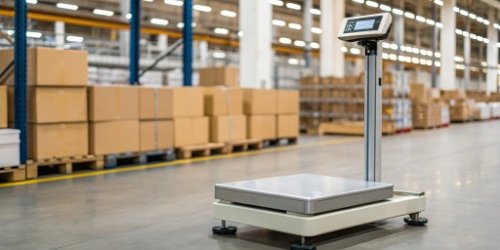
Your business is always changing, but your weighing system isn't. This inflexibility costs you time and money. A programmable scale adapts with you, solving these problems for good.
A programmable scale adapts by allowing its software to be recompiled for new tasks and its hardware to be upgraded or modified. This means the scale can evolve with your production demands, integrating new functions and technologies without needing a complete replacement, ensuring long-term value and efficiency.

I've seen countless businesses struggle with equipment that quickly becomes outdated. It's a common bottleneck that stifles growth. But what if your weighing solution could grow and change right alongside your business? This isn't just a possibility; it's a reality with the right technology. Let's explore how this adaptability can transform your operations and unlock new levels of efficiency1.
What Benefits Do Programmable Scales Offer for Evolving Business Requirements?
Your operational needs are constantly evolving. Standard scales just can't keep up, causing workflow disruptions. Programmable scales offer tailored benefits that match your specific growth.
Programmable scales offer key benefits like cost-effectiveness, as you upgrade instead of replace. They improve efficiency by automating custom tasks and ensure future-proofing by integrating new technologies. This adaptability allows your weighing system to meet new regulatory or production requirements seamlessly, saving time and resources.
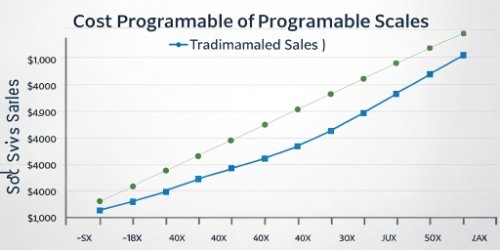
The real advantage of a programmable scale2 lies in its long-term value. Instead of buying a new scale for every new process, you simply update the existing one. As a manufacturer with 19 years of experience, I've seen this firsthand. Companies save significant capital. But it's not just about saving money on hardware. It's about optimizing your entire workflow. You can program the scale to perform specific calculations, communicate with other machinery, or even integrate with your ERP system. This level of customization eliminates manual steps, reduces errors, and speeds up production. It directly addresses the need for stable, integrated software that our clients, especially software vendors, value so highly. This is what we mean by future-proofing your investment.
Key Benefits Analyzed
Let's break down the core advantages in a more structured way. Each benefit impacts a different part of your business, from the balance sheet to the factory floor.
| Benefit | Impact on Business Operations | Long-Term Advantage |
|---|---|---|
| Cost Savings | Reduces the need to purchase new hardware for new tasks. | Lowers total cost of ownership (TCO) over the equipment's lifespan. |
| Increased Efficiency | Automates repetitive tasks and integrates seamlessly into workflows. | Frees up employee time, reduces human error, and boosts output. |
| Future-Proofing | Adapts to new software, technologies (like IoT), and regulations. | Ensures the investment remains relevant and valuable for years to come. |
This adaptability means you are always prepared for what's next, whether it's a new industry standard or a shift in your own production strategy.
How Can Programmable Scales Be Customized to Suit Different Business Operations?
Every business has unique weighing needs. Off-the-shelf scales force you to compromise your process. Programmable scales can be tailored to match your exact workflow.
Customization is achieved through both software and hardware. You can develop custom applications for specific tasks like parts counting or recipe formulation. Hardware can also be modified by adding peripherals like barcode scanners, printers, or extra displays, creating a truly bespoke weighing station for your specific needs.
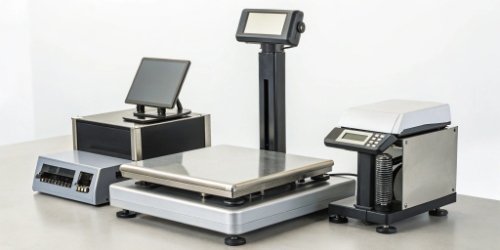
Customization is where programmable scales truly shine. It's not just about changing a few settings. It's about fundamentally altering the scale's function to fit your exact process. I remember working with a client in the pharmaceutical industry. They needed a scale that could not only weigh ingredients with extreme precision but also guide the operator through a complex formulation process, record every step for compliance, and print a detailed label. A standard scale couldn't do any of that. We used a programmable scale2 to build a custom application that managed the entire workflow.
Software Customization
The software is the brain of the scale. You can program it to handle tasks far beyond simple weighing. This includes creating custom user interfaces3, implementing complex logic for quality control checks4, or connecting to cloud databases5 for real-time data logging. For our partners who are software vendors, this opens up a world of possibilities for creating value-added services for their own customers.
Hardware Integration
The body of the scale is just as flexible. The ability to add and integrate different hardware components is crucial. You can connect barcode scanners to eliminate manual data entry errors, attach printers for on-the-spot labeling, or link the scale to automated conveyors for a fully integrated production line. This modular approach ensures the scale fits perfectly into your existing physical and digital infrastructure, addressing common pain points around compatibility and integration.
In What Ways Can a Programmable Scale Enhance Business Flexibility?
Market demands can pivot overnight. A rigid production line means you can't respond quickly. Programmable scales provide the agility to adapt your processes fast.
A programmable scale enhances flexibility by allowing for rapid process changes through simple software updates. You can easily switch the scale's function from simple weighing to complex batching or quality control without hardware changes. This agility allows your business to pivot quickly to new products or customer demands.
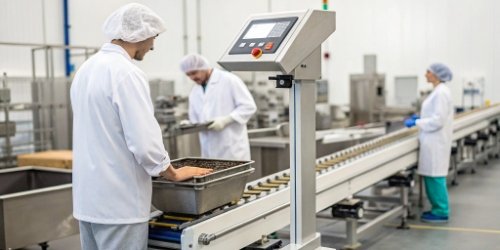
Business flexibility is no longer a luxury; it's a necessity for survival. A programmable scale is a key tool for achieving this agility. Imagine you need to launch a new product line with a completely different quality control process. With a traditional system, this might mean weeks of sourcing and installing new equipment. With a programmable scale, it can be as simple as our technical team deploying a new software package to your existing hardware. This ability to quickly reconfigure your production line is a massive competitive advantage. It allows you to say "yes" to new opportunities without hesitation.
Rapid Role-Switching
One of the most powerful features is the scale's ability to switch roles. In the morning, a scale might be used for receiving and inventorying raw materials. In the afternoon, with a quick software change, the same scale can be used for precise batching in production. This multi-functionality6 maximizes your hardware investment and reduces equipment clutter on the factory floor.
Scaling Operations
Flexibility also means scalability7. As your business grows, your programmable scales can grow with you. You can update their software to handle higher volumes, more complex data, or integrate with new enterprise software8. You are not locked into the technology you buy today. We provide solutions that evolve, ensuring your initial investment continues to pay dividends as you scale. This addresses the common concern about high costs with uncertain returns.
How Do Programmable Scales Support Dynamic Work Environments?
Your work environment is constantly in motion. Stationary, single-purpose equipment creates bottlenecks and inefficiency. Programmable scales thrive in dynamic settings by being adaptable and multi-functional.
Programmable scales support dynamic environments by consolidating multiple functions into one device. They can be moved and quickly repurposed for different tasks, reducing clutter and equipment needs. With IoT capabilities, they provide real-time data access to managers anywhere, supporting flexible and remote oversight of operations.
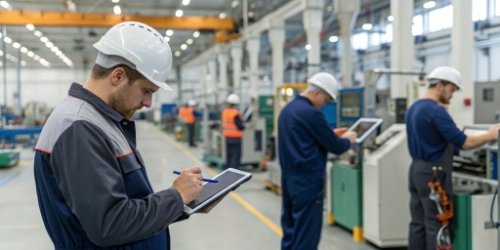
Modern work environments are fast-paced and interconnected. Equipment needs to be just as dynamic. Programmable scales fit perfectly into this model, especially those with IoT capabilities9. As weighing experts, we've focused heavily on integrating IoT technology. This means a scale is no longer an isolated data point. It's a smart node in your network. You can monitor production weights from your office, push software updates remotely, and pull data directly into your cloud analytics platform. This supports a culture of data-driven decision-making10 and allows for flexible management, even when you're not on the production floor.
Key Features for Dynamic Workflows
Let's look at the specific features that make these scales ideal for ever-changing environments.
| Feature | How It Supports a Dynamic Environment | Example Application |
|---|---|---|
| IoT Connectivity | Allows for remote monitoring11, management, and data collection. | A production manager adjusts batch recipes on all scales from a central dashboard. |
| Mobile Integration | Can be controlled or monitored via tablets or smartphones. | A quality inspector uses a tablet to pull up weighing protocols on the spot. |
| Multi-User Profiles | Supports different permission levels and custom interfaces. | Different operators see only the functions and data relevant to their specific jobs. |
This connectivity and customizability ensure that the scale is not just a tool, but an active participant in your smart factory ecosystem12. It also meets strict enterprise requirements for information security and data compliance, a critical concern for our clients.
Conclusion
Programmable scales are not just an upgrade; they are a strategic investment. They provide the flexibility, efficiency, and future-ready adaptability that modern businesses need to thrive and grow.
-
Explore strategies that can significantly boost your manufacturing efficiency and productivity. ↩
-
Discover how programmable scales can enhance your business operations and adapt to changing needs. ↩ ↩
-
Explore how tailored user interfaces can enhance usability and efficiency. ↩
-
Learn about the importance of quality control in maintaining product standards. ↩
-
Discover how cloud databases can enhance data accessibility and collaboration. ↩
-
Understand how multi-functional equipment can save costs and improve efficiency. ↩
-
Learn how scalable solutions can support your business as it grows and evolves. ↩
-
Understand the advantages of using enterprise software for managing business processes. ↩
-
Explore the transformative impact of IoT on manufacturing efficiency and data management. ↩
-
Understand the significance of data-driven approaches in modern business strategies. ↩
-
Discover the advantages of remote monitoring for managing production processes. ↩
-
Explore the concept of smart factories and their impact on modern manufacturing. ↩

Comments (0)