

Struggling with inconsistent product quality? Manual recipe management leads to errors, waste, and unhappy customers. It's a constant battle to maintain standards across every batch.
Intelligent scales revolutionize recipe management by digitally storing formulations, guiding operators step-by-step through ingredient weighing, and automatically recording data. This ensures every batch is accurate, consistent, and traceable, eliminating guesswork and costly mistakes.
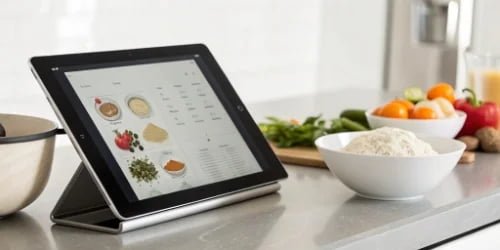
As someone who has been in the industrial weighing industry for nearly two decades, I've seen countless businesses grapple with a common problem: inconsistency. Whether it's a chain restaurant trying to make sure their signature sauce tastes the same in every location or a large-scale food production facility, maintaining recipe integrity1 is crucial. A small mistake in measurement can have a huge impact on the final product, affecting taste, texture, and safety. This is where the right technology can make all the difference. It’s not just about weighing; it’s about creating a foolproof system.
Let's explore how these advanced scales can transform your formulation process from a source of stress into a streamlined, reliable operation.
How Do Smart Scales Improve Accuracy in Recipe Formulation?
Are you tired of batches being ruined by simple weighing errors? These mistakes cost money in wasted ingredients and rework. This inaccuracy can damage your brand's reputation for quality.
Smart scales improve accuracy by providing real-time, on-screen guidance with tolerance controls. They prevent operators from adding too much or too little of an ingredient, ensuring every component is weighed precisely according to the master formula. This virtually eliminates human error.

When we talk about accuracy, it's about more than just a number on a screen. It's about building a system that makes mistakes nearly impossible. I remember working with a client who ran a large-scale bakery. Their team was skilled, but the pressure of high-volume production led to occasional errors in their complex bread recipes. A little too much yeast here, not enough salt there – it all added up to inconsistent products. After we integrated smart scales into their workflow, the change was immediate. The scales guided the bakers through each step. The system would only allow them to proceed once the correct weight, within a pre-set tolerance, was met. This simple change drastically reduced their ingredient waste and ensured every loaf met their high standards. It took the pressure off the operators and put control back into the process.
Breaking Down Accuracy Enhancement
- Tolerance Control: The system allows you to set acceptable weight ranges (e.g., ±1g). If the weight is outside this range, the scale alerts the user and prevents them from moving to the next step.
- Step-by-Step Guidance: The scale's display shows the operator which ingredient to add next and the target weight, simplifying complex recipes and reducing cognitive load.
| Feature | How It Boosts Accuracy | Business Impact |
|---|---|---|
| Digital Recipe Display | Eliminates reading errors from paper instructions. | Fewer recipe mistakes, consistent product. |
| Real-Time Feedback | On-screen bar graph shows progress towards target weight. | Faster weighing, less guesswork. |
| Data Logging | Automatically records the exact weight of each ingredient. | Full traceability for quality control and audits. |
What Role Do Intelligent Weighing Systems Play in Optimizing Ingredient Management?
Is your stockroom a mess of uncertainty? Poor ingredient tracking leads to surprise shortages, over-stocking, and expired materials. This chaos directly impacts your production schedule and bottom line.
Intelligent weighing systems act as the central hub for ingredient management. By connecting to inventory software, they automatically deduct weighed ingredients from stock levels in real time, providing an accurate, live view of all materials on hand and improving traceability.
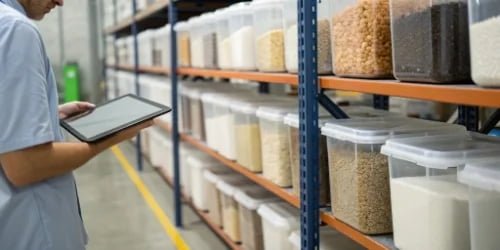
Optimizing ingredient management2 goes beyond just weighing. It's about creating a connected ecosystem. A few years ago, we helped a large catering company that managed food services for multiple canteens. One of their biggest challenges was tracking the massive volume of ingredients they used daily. They would often run out of a key item mid-shift, causing delays and forcing last-minute menu changes. By implementing an intelligent weighing system, every time a chef weighed out flour, vegetables, or meat for a recipe, the system automatically updated their central inventory database. This gave the purchasing manager a live, accurate count of all stock. They could set up alerts for low-stock items and generate purchasing reports automatically. This transformed their supply chain from reactive to proactive, ensuring they always had what they needed without carrying excessive, wasteful inventory.
Key Functions for Ingredient Optimization
- Real-Time Stock Depletion: As ingredients are weighed for a batch, the system subtracts the amount from the total inventory count. This gives you a live, accurate view of your stock levels.
- Lot Tracking: The system can require operators to scan the lot number of each ingredient before weighing. This ensures full traceability from the raw material to the finished product, which is critical for recalls or quality audits3.
| System Role | Functionality | Benefit |
|---|---|---|
| Inventory Watchdog | Tracks usage and sends low-stock alerts. | Prevents production shutdowns due to shortages. |
| Quality Gatekeeper | Enforces "First-In, First-Out" (FIFO) usage by tracking lot numbers. | Reduces spoilage and waste of perishable goods. |
| Data Analyst | Generates reports on ingredient consumption patterns. | Better forecasting and more efficient purchasing. |
Can Advanced Scale Technology Streamline Complex Formulation Processes?
Do complex recipes with many ingredients slow your production to a crawl? Juggling multiple steps, sub-mixes, and precise measurements creates bottlenecks and increases the chance of error, limiting your output.
Yes, advanced scale technology streamlines complexity by digitizing multi-step recipes and guiding operators seamlessly. It can manage sub-mixes, prompt for quality checks, and integrate with other equipment, turning a complicated manual process into a simple, automated workflow.
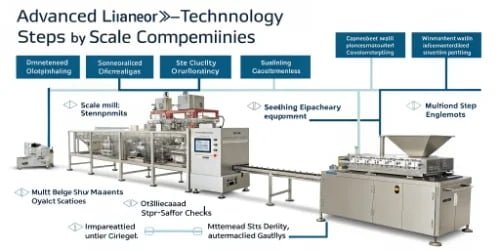
One of the most impressive applications I've seen was in the chemical industry, but the principle is the same for complex food recipes, like those in large restaurant chains with signature dishes. This client had a formulation that required 25 different components, some added at specific temperatures and others only after a certain mixing time. Manually, it was a nightmare to manage. We designed a custom solution where the intelligent scale controlled the entire process. It would prompt the user to add ingredient A, weigh it, then automatically start a mixer for a set time, monitor the temperature via a probe, and only then prompt for ingredient B. It broke down a highly complex task into a series of simple, validated steps. This not only sped up their production time significantly but also ensured that this sensitive formula was produced with perfect consistency, every single time. It took the complexity out of the operator's hands and embedded it into the system itself.
From Complex to Simple
- Recipe Segmentation: The software breaks down a master recipe into logical stages or sub-assemblies. Operators only see the steps for the current stage, preventing them from getting overwhelmed.
- Peripheral Integration: Advanced systems can connect to and control other devices like mixers, heaters, or printers. For example, the scale can print a label for a sub-mix only after it has been correctly prepared.
| Challenge in Complex Formulations | How Advanced Scales Solve It | Outcome |
|---|---|---|
| Multiple Sub-Mixes | Stores sub-mixes as separate recipes and prompts for their addition later. | Ensures consistency in intermediate and final products. |
| Human Memory Reliance | Provides on-screen, step-by-step instructions for the entire process. | Drastically reduces missed steps or incorrect sequencing. |
| Process Variables (Time/Temp) | Integrates with sensors and timers to enforce process parameters. | Guarantees quality checks and conditions are met. |
How Does Automation in Scales Enhance Recipe Consistency and Precision?
Is achieving perfect consistency across all your production sites or shifts just a dream? Variations in operator skill and attention lead to products that differ in taste, texture, and quality.
Automation in scales enhances consistency by removing operator judgment from the weighing process. It uses tolerance locks, barcode scanning for ingredient verification, and centralized recipe management to ensure every operator, everywhere, follows the exact same procedure for every batch.
For me, this is the ultimate goal for any client, especially those in food service. Think about a global coffee chain. You expect your favorite drink to taste the same in New York as it does in Tokyo. This level of consistency is achieved through extreme process control, and automated weighing4 is at the heart of it. We worked with a fast-growing chain of salad restaurants. Their dressings were key to their brand. To ensure consistency, we helped them deploy intelligent scales across all their kitchens. The master recipes were managed at their headquarters and pushed out to all scales remotely. A local kitchen worker simply selected the "Caesar Dressing" recipe on the screen. The scale then forced them to scan the correct ingredients and weigh them to within one gram of the target. There was no room for "a little extra" of anything. This automation guaranteed that their brand promise of a consistent, high-quality product was delivered every single time.
Pillars of Automated Consistency
- Centralized Recipe Control: Recipes are managed in one place and deployed digitally to all scales. This prevents unauthorized local changes and ensures everyone uses the latest, approved version.
- Forced procedural compliance: The system can be programmed to enforce a specific workflow. For example, it might require scanning a batch number, then the ingredient barcode, and only then will it allow weighing.
| Automation Feature | How It Drives Consistency | Impact on Precision |
|---|---|---|
| Barcode Verification | Prevents the wrong ingredient from being added. | Guarantees formula integrity from the start. |
| Tolerance Interlocks | Stops the process if a weight is out of specification. | Eliminates "close enough" errors for ultimate precision. |
| Remote Recipe Updates | Pushes recipe changes from HQ to all locations instantly. | Ensures immediate and uniform adoption of new formulas. |
Conclusion
Ultimately, intelligent scales remove human error and guesswork, giving you precise control over your recipes. This ensures perfect consistency, optimizes inventory, and streamlines even the most complex production workflows.
-
Understand the importance of maintaining recipe integrity for product quality. ↩
-
Explore effective strategies for managing ingredients to optimize production. ↩
-
Explore the essential elements of conducting effective quality audits. ↩
-
Explore how automation in weighing can enhance consistency and precision in production. ↩



Comments (0)