
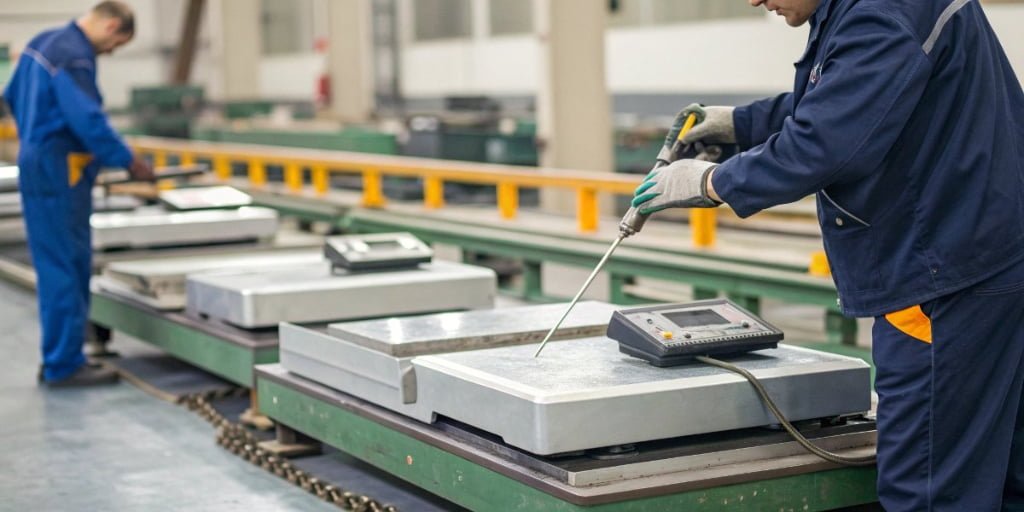
Inaccurate measurements lead to costly errors and lost profits. Simple verification steps can guarantee your scale's accuracy and compliance, protecting your bottom line and your reputation.
To ensure accuracy, start by choosing a scale from a reputable manufacturer with industry certifications like CE. Then, regularly verify its performance using certified calibration weights. This two-step process is crucial for reliable and compliant measurements and is the foundation for trustworthy data in your operations.
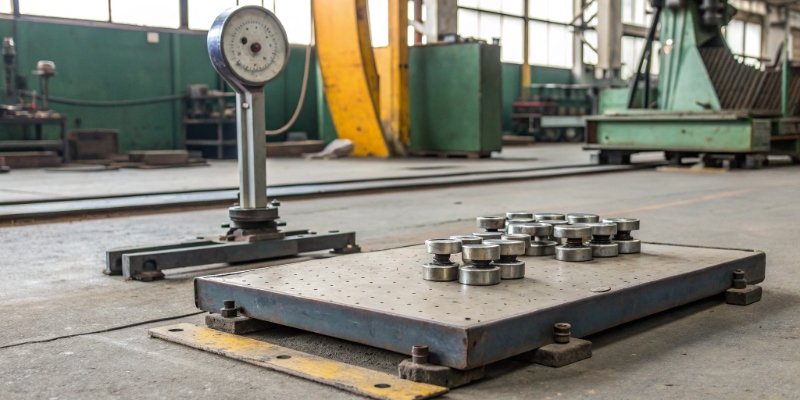
Choosing the right equipment is the foundation. But how do you confirm that foundation is solid day after day? It's not just about buying a good scale; it's about maintaining its precision. Let’s explore the practical steps you can take to measure and maintain that accuracy, ensuring your operations run smoothly and your data is always trustworthy. We'll start by looking at how you can measure the accuracy of your scales in the first place.
How do you measure the accuracy of industrial scales?
You own an industrial scale, but you have a lingering doubt about its accuracy. This uncertainty can ripple through your entire process, affecting quality control and even your financial reports.
You can measure a scale's accuracy by performing a calibration test. Use a set of known, certified calibration weights. Place these weights on the scale and compare the scale's reading to the weight's certified value. The difference reveals the scale's accuracy.
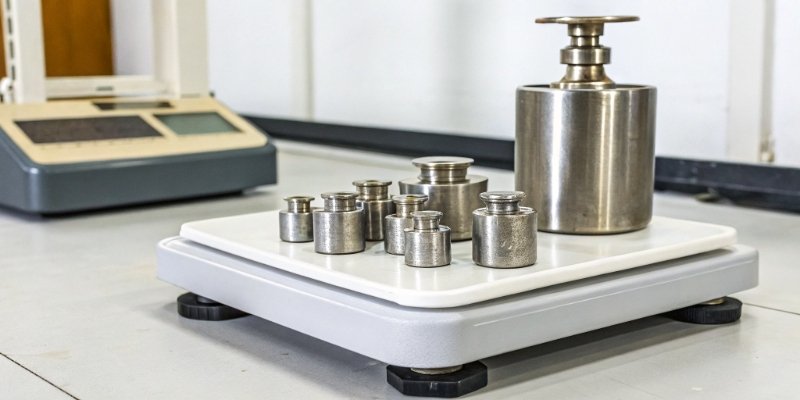
Going deeper, performing a proper test is about more than just placing a weight on the platform. It's a systematic process. In my 18 years in this industry, I've seen clients gain huge confidence from learning this simple procedure.
The Right Tools: Calibration Weights
First, you need the right tools. Certified calibration weights are not just any heavy objects. They are manufactured to tight tolerances and are traceable to a national or international measurement standard. This traceability is your link to a global standard of accuracy. When you buy weights, make sure they come with a certificate of calibration.
The Step-by-Step Test
The test itself is straightforward. Start with the scale at zero. Place a test weight that is around 50% of the scale's capacity on the platform. Record the reading. Then, test at the lower and upper ends of the scale's typical usage range. This ensures accuracy across all the weights you normally measure.
Interpreting the Results
Finally, compare the scale's reading to the known value of the weight. Your company or industry will have a defined tolerance for error1. For example, if the tolerance is ±0.1%, a 100 kg weight must read between 99.9 kg and 100.1 kg.
| Actual Weight | Scale Reading | Tolerance (±0.1%) | Result |
|---|---|---|---|
| 100.00 kg | 100.05 kg | 99.90 - 100.10 kg | Pass |
| 100.00 kg | 100.12 kg | 99.90 - 100.10 kg | Fail |
If the scale fails, it's time for a professional calibration service2.
How can you ensure that a scale is giving accurate measurements?
A scale can drift from its calibrated state over time. Environmental changes, simple wear and tear, or even power fluctuations can silently introduce errors into your measurements, threatening your quality.
Ensure ongoing accuracy through regular calibration, routine checks with test weights, and proper maintenance. Keep the scale clean, on a level surface, and away from drafts or vibrations. A consistent verification schedule is key to catching drifts before they become problems.
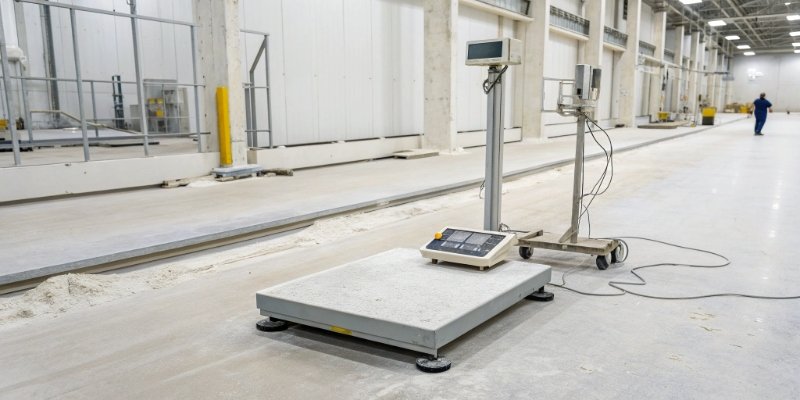
Ensuring accuracy is not a one-time event; it's an ongoing commitment. Think of it like maintaining a high-performance car. You need to do more than just fill it with gas. At Weigherps, we build our scales to last, but we always educate our clients on the importance of routine care3. A little effort goes a long way in preventing large, costly issues down the road.
Creating a Verification Schedule
A simple verification schedule4 can save you from major headaches. For critical applications, a daily check before the start of a shift is a good idea. This can be a quick check with one or two test weights to confirm the scale is still in tolerance. For less critical scales, a weekly or monthly check might be sufficient. The important thing is to create a schedule, stick to it, and document the results. This creates a historical record of the scale's performance.
Controlling Environmental Factors
The environment where the scale operates has a huge impact on its accuracy. I've visited client sites where a simple fix, like moving a scale away from an open door, solved persistent accuracy problems. You need to be aware of these factors.
| Factor | Problem Caused | Simple Solution |
|---|---|---|
| Temperature | Can cause components to expand/contract | Operate within the manufacturer's specified range. |
| Vibration | Leads to unstable or jumpy readings | Place on a solid, stable surface away from machinery. |
| Air Drafts | Fluctuating measurements, especially with small weights | Use a draft shield or move it away from vents/doors. |
| Leveling | Incorrect load distribution on cells | Check the level bubble and adjust the feet regularly. |
By controlling these factors, you provide a stable foundation for the scale to perform its job correctly.
How do you ensure your measurements are accurate and precise?
You often hear "accuracy" and "precision" used together, but they are not the same thing. Confusing them can lead to flawed quality control where your results are consistent, but consistently wrong.
You ensure accuracy by calibrating the scale against a known standard. You ensure precision by repeatedly measuring the same object and checking for consistency. A good scale, properly maintained, will give you results that are both accurate (close to the true value) and precise (tightly grouped together).
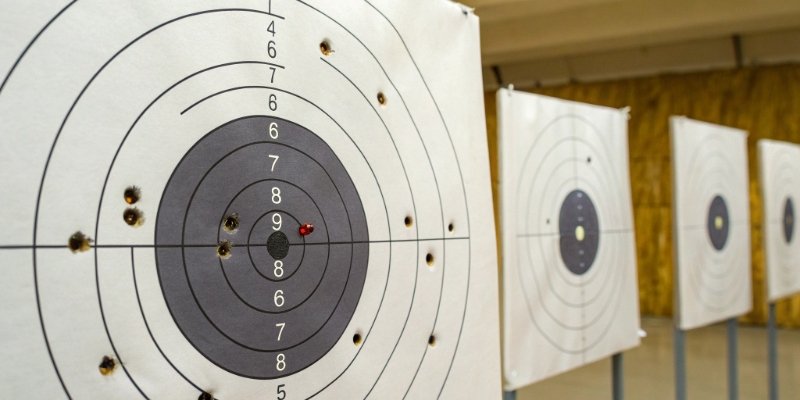
Understanding this difference is critical for anyone who relies on data. I like to use a simple target analogy. Accuracy is about hitting the bullseye. Precision is about hitting the same spot every time, even if that spot isn't the bullseye. Your goal is to be both accurate and precise.
Accuracy: Closeness to the Truth
Accuracy tells you how close your scale's measurement is to the item's true, or actual, weight. If you place a certified 10 kg weight on a scale and it reads 10 kg, it is accurate. If it reads 10.5 kg, it is inaccurate. Calibration is the process you use to correct for inaccuracy.
Precision: Repeatability of Results
Precision, or repeatability, refers to how close multiple measurements of the same item are to each other. If you weigh that 10 kg item five times and get readings of 10.21, 10.20, 10.21, 10.22, and 10.20 kg, your scale is very precise. The results are tightly grouped. If the readings are 9.95, 10.30, 10.01, 9.89, and 10.25 kg, the scale is not precise. Precision is largely determined by the quality of the scale's design and components. This is why choosing a reputable manufacturer5 is so important.
Why You Need Both
You cannot have reliable measurements without both. An imprecise scale is useless because you can't trust any single reading. A precise but inaccurate scale is dangerous because it gives you false confidence.
| High Accuracy | Low Accuracy | |
|---|---|---|
| High Precision | Ideal Goal | Consistently wrong, but you might not know it. |
| Low Precision | Readings are scattered, but the average is close to correct. | Completely unreliable data. |
By starting with a high-quality scale (ensuring precision) and implementing a regular calibration schedule (ensuring accuracy), you can trust your data.
What is the most important factor in ensuring the accuracy of measurements taken by control instruments?
With so many variables like environment, usage, and maintenance, it's easy to get lost focusing on the wrong thing. You could spend time and money on minor adjustments while missing the one factor that matters most.
The single most important factor is regular, proper calibration using traceable standards. Without it, even the most advanced instrument is unreliable. Calibration links your scale to a recognized standard of measurement, providing the ultimate proof of its accuracy and ensuring compliance.

Everything else we've discussed—choosing a good manufacturer, controlling the environment, training operators—is incredibly important. However, they all support the master process: calibration. It is the cornerstone of measurement confidence. As a manufacturer, we design scales that hold calibration well, but the act of calibration itself is what validates the instrument's performance in the real world.
The Chain of Traceability
Calibration is not just an adjustment. It is a process that creates an unbroken chain of comparisons back to a national or international standard, like those maintained by NIST in the US. When you use a certified weight to test your scale, that weight's value has been verified by a lab, which had its standards verified by a higher-level lab, and so on, all the way back to the primary standard. This "chain of traceability6" is your documented proof that your measurements are valid and compliant with industry regulations.
The Role of the Manufacturer
While calibration is the key activity, the quality of the instrument itself plays a huge role. A well-designed scale from a reputable manufacturer like Weigherps is built to be stable and hold its calibration for longer periods. It is also designed to be easily and reliably calibrated when the time comes. This is why product certifications like CE are important; they are an initial signal that the manufacturer adheres to quality and safety standards.
Internal vs. External Calibration
A question we often get is, "Can we calibrate it ourselves?" For routine verifications, absolutely. Using your own set of test weights to check for drift is a great practice. However, for official calibration, especially in regulated industries, you often need a certified third-party technician. They have the training and properly calibrated equipment to adjust the scale and provide the necessary certification for audits. A good approach is to perform frequent internal checks and schedule periodic external calibrations.
Conclusion
Ensuring your industrial scale is accurate and compliant comes down to two things: choosing certified equipment and maintaining a consistent calibration schedule. These steps protect your business.
-
Understanding tolerance for error is vital for maintaining quality control in your operations. ↩
-
Knowing when to seek professional calibration can prevent inaccuracies and ensure compliance. ↩
-
Implementing routine care can prolong the life and accuracy of your industrial scales. ↩
-
Creating a verification schedule can help ensure consistent accuracy in your measurements. ↩
-
Choosing a reputable manufacturer is essential for ensuring the quality and reliability of your equipment. ↩
-
Exploring the chain of traceability can enhance your understanding of measurement validity. ↩

Comments (0)