
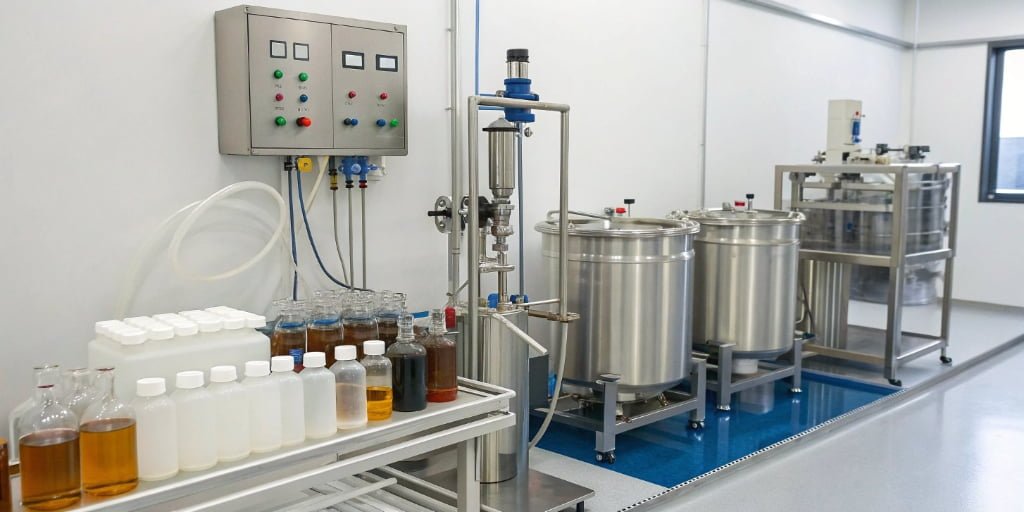
Inaccurate chemical batches create waste and lead to inconsistent products. This hurts your company's bottom line and reputation. Let's explore key strategies to boost your batching accuracy right now.
Improving accuracy involves a multi-step approach. Start by identifying error sources, then implement automation to reduce human error. Regularly calibrate your equipment and, most importantly, select high-precision weighing technology specifically designed for your chemical properties. This ensures consistent and reliable results every single time.
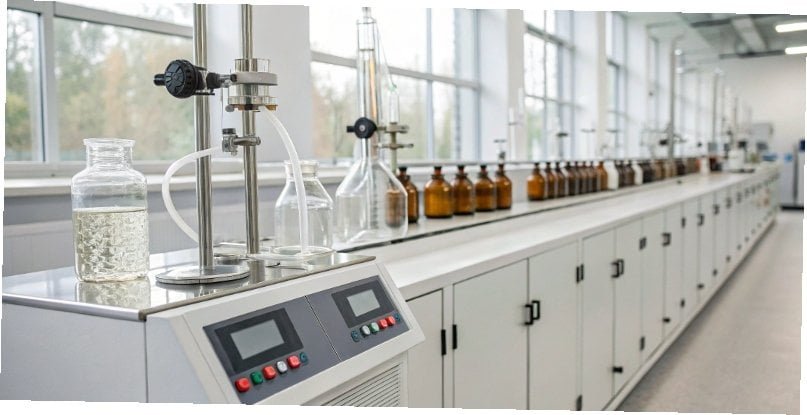
Precision is not just a goal; it's a necessity in chemical processing. Achieving it requires more than just good intentions. It demands a deep understanding of where things can go wrong and how to systematically fix them. We have been in this industry for 18 years, and we've seen it all. Let's break down the common problems first, so you know exactly what to look for in your own operations.
What are the most common sources of error in a chemical batching system?
You follow the formula, but batches still turn out inconsistent. This uncertainty is frustrating and costly, making it hard to scale production reliably. Let's pinpoint the hidden culprits that are throwing off your measurements.
Common errors stem from several sources. Human error during manual additions is a big one. Equipment issues like improper calibration or worn-out sensors also cause drift. Environmental factors such as temperature, vibrations, and air currents can significantly impact sensitive measurements, leading to inaccurate batches.

To truly get a handle on accuracy, you need to look at your process from different angles. Errors rarely come from just one place. More often, they are a combination of small issues that add up to a big problem. I often advise clients to categorize potential problems to make them easier to solve. Think about it in terms of people, machines, and the environment. Each area has its own unique challenges that require specific solutions. By breaking it down, you can create a targeted plan to eliminate inaccuracies one by one, creating a much more stable and reliable system. Let's look at a simple breakdown.
Human, Equipment, and Environmental Factors
Understanding these sources is the first step. For example, a simple draft from an open door can throw off a high-precision scale. Similarly, an operator in a hurry might not wait for a scale to stabilize. Tackling these issues systematically is key to long-term consistency.
| Error Category | Specific Examples | Impact on Batch |
|---|---|---|
| Human | Misreading instructions, incorrect ingredient addition1, inconsistent timing | Inconsistent product, safety2 risks, wasted material |
| Equipment | Uncalibrated scales, sensor drift3, clogged valves, worn parts | Wrong ingredient proportions, batch failure |
| Environmental | Vibrations, drafts (air currents), temperature changes | Unstable scale readings, measurement errors |
How can automation improve the accuracy and consistency of my batching process?
Manual batching is slow, prone to mistakes, and hard to scale. Relying on human precision creates a bottleneck and inconsistencies in your final product. Discover how automation removes the guesswork and delivers perfect batches.
Automation improves accuracy by removing human variability. Automated systems precisely measure and dispense ingredients based on pre-programmed recipes. This ensures every batch is identical. It also provides real-time data logging, which helps in tracking performance, identifying issues quickly, and maintaining a consistent, high-quality output.
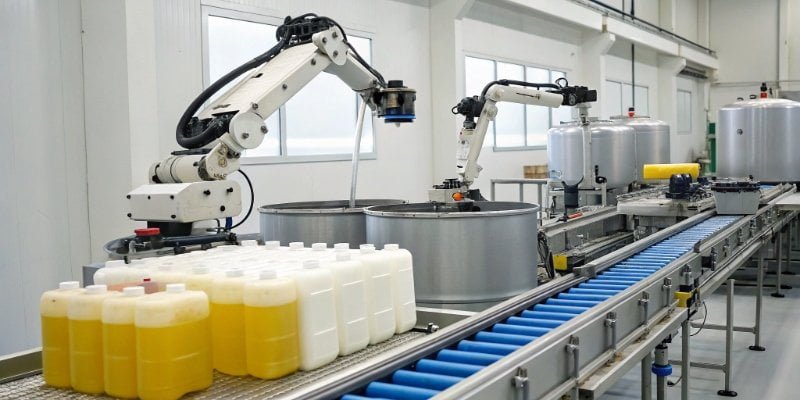
In my 18 years of manufacturing weighing systems, the biggest leap in customer success always comes from automation4. Moving away from manual processes is a game-changer. It's not just about speed; it's about control and repeatability. An automated system follows the recipe perfectly, 24/7, without getting tired or distracted. This consistency is the foundation of quality control5. Plus, you get a complete digital record of every batch. This data is invaluable for troubleshooting, process optimization, and meeting regulatory requirements. It transforms your production from an art into a science. Let's look at the direct benefits you can expect.
Key Benefits of an Automated System
The data logging6 aspect is especially powerful for our clients who are software vendors. Your systems can integrate with ours to provide a seamless flow of information, creating powerful dashboards and reports. This is how modern production facilities grow and maintain their competitive edge.
| Automation Benefit | Description | Impact on Your Business |
|---|---|---|
| Repeatability | Executes the exact same steps and measurements for every batch. | Guarantees product consistency and quality. |
| Data Logging | Automatically records all process data, like weights, and times. | Simplifies quality control and compliance reporting. |
| Safety | Reduces operator exposure to hazardous chemicals during handling. | Improves workplace safety and reduces liability. |
What role does proper equipment calibration play in chemical batching precision?
Your scales seem to work, but you suspect they are not fully accurate. This doubt undermines your quality control and can lead to costly batch failures. Understand why calibration is your foundation for precision.
Calibration is critical. It ensures your weighing equipment measures accurately against a known standard. Without regular calibration, scales can 'drift' due to wear or environmental changes. This drift introduces errors into every batch, compromising the quality and consistency of your final product.
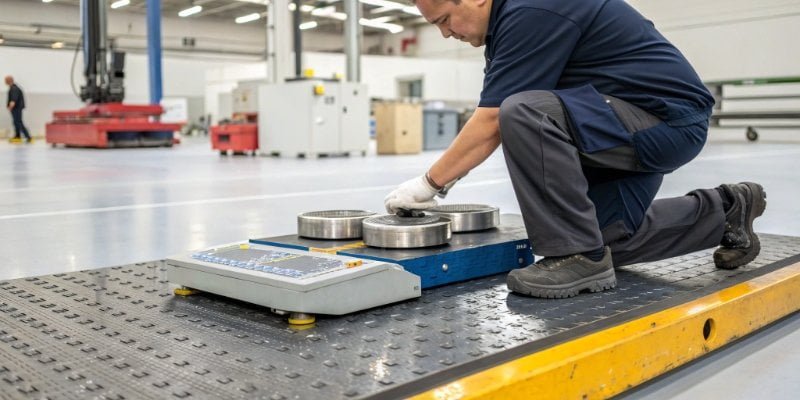
I can't stress this enough: calibration is non-negotiable for accuracy. Think of it like tuning a musical instrument. Over time, it goes out of tune, and you need to adjust it back to the correct standard. Scales are the same. Daily use, temperature shifts, and even small bumps can affect their accuracy. Ignoring calibration is like building on a shaky foundation—sooner or later, everything will be off. Establishing a strict calibration schedule7 is one of the most cost-effective ways to guarantee quality. We build robust scales, but even the best equipment needs regular checks to perform at its peak.
Establishing a Calibration Schedule
This schedule can act as a basic guideline. Your specific needs might vary based on usage and the sensitivity of your process. Working with a professional service can help you define the perfect schedule, ensuring you are always compliant and accurate.
| Frequency | When to Calibrate | Reason |
|---|---|---|
| Daily/Weekly | Before critical production runs or at the start of a shift. | To catch minor drifts early before they cause problems. |
| Quarterly/Annually | As part of a scheduled preventative maintenance program. | To perform a comprehensive check and adjustment. |
| After an Event | If the scale is moved, shocked, or repaired. | To ensure an impact has not affected its accuracy. |
Which weighing technologies are best suited for high-accuracy chemical batching?
You need extreme precision, but your current scales are not delivering it. Using the wrong technology means you are always compromising on quality and efficiency. Let's match the right high-precision technology to your needs.
The best technology depends on your material. For high accuracy, load cell-based bench or floor scales are common. For critical liquid or powder additions, loss-in-weight feeders offer superior control. Crucially, selecting sensors with high precision, such as 1-in-10,000 resolution, is essential.

As a manufacturer, this is where my most sincere advice comes in. Not all scales are created equal, and choosing the right one for the job is paramount. You wouldn't use a truck scale to weigh a gram of spice. The same principle applies here. The properties of your chemicals—like their density, flowability, and if they are solid or liquid—dictate the best technology. Investing in the right equipment saves you countless headaches and wasted product. It is the foundation of an accurate and profitable batching system. We help clients make this decision every day based on their unique needs.
Matching Technology to Application
My most important advice is to focus on the sensor. For critical components, insist on a high-resolution sensor8, often called 1-in-10,000 resolution or better. This level of precision is what separates an average system from a world-class one. It ensures that even the smallest additions are measured perfectly.
| Weighing Technology | Best For | Key Feature |
|---|---|---|
| High-Precision Bench/Floor Scales | Manual or semi-automated additions of larger quantities. | High capacity, durable, cost-effective for bulk ingredients. |
| Loss-in-Weight Feeders | Automated, continuous dosing of critical powders and liquids. | Extremely high accuracy and control over flow rate. |
| Gain-in-Weight Systems | Batching multiple ingredients into a central vessel on a scale. | Efficient for recipes with many components. |
Conclusion
Improving batching accuracy is a continuous process. By addressing errors, embracing automation, calibrating regularly, and choosing the right equipment, you can achieve perfect, consistent results every time.
-
Implementing best practices for ingredient addition can enhance accuracy and reduce waste. ↩
-
Automation can significantly enhance workplace safety by reducing operator exposure to hazards. ↩
-
Understanding sensor drift is important for maintaining accuracy in your batching process. ↩
-
Discover how automation can enhance accuracy and efficiency in your chemical batching operations. ↩
-
Improving quality control is essential for ensuring product consistency and compliance. ↩
-
Data logging is vital for tracking performance and ensuring consistent quality in production. ↩
-
Establishing a proper calibration schedule is key to maintaining accuracy and compliance. ↩
-
High-resolution sensors are crucial for achieving the precision needed in chemical batching. ↩



Comments (0)