

Frustrated with your scale's short lifespan? Inaccurate readings cost you money and time. Proper maintenance is the simple, often overlooked, solution to extend its durability and reliability.
To make your digital scale last longer, you should clean it regularly, avoid overloading it, and place it on a flat, stable surface. Also, manage the battery correctly and perform periodic calibration checks. This simple care routine prevents most common failures and ensures accuracy.

These basic steps sound simple enough. But my 18 years in the industrial scale1 business have shown me that the details matter. Understanding why each step is crucial can make the difference between a scale that lasts five years and one that lasts fifteen. As an industrial scale manufacturer, we see firsthand how good habits protect a customer's investment. Let's explore how to keep your scale in top condition, so you get the reliable performance you paid for.
How to maintain the performance of a digital weighing scale?
Are inconsistent readings slowing down your operations? Performance degradation can lead to costly errors in production or shipping. A strict maintenance schedule is key to keeping your scale performing at its peak.
Maintain performance by creating a routine. Regularly clean the surface, check and perform calibration with standard weights, and ensure it’s used on a level surface. Also, protect it from extreme temperatures and moisture. This consistency guarantees reliable and accurate measurements every time.

At Weigherps, we advise all our clients to treat scale maintenance as a non-negotiable part of their quality control2. It's not about if a scale will drift, but when. A proactive approach saves countless headaches. I once worked with a client in the food processing industry who was experiencing fluctuating weights. The issue wasn't the scale's quality; it was an air conditioning vent blowing directly onto the platform, causing temperature shifts and air pressure changes. A simple relocation solved a problem that was costing them thousands. This highlights how small details in the environment and regular checks are vital.
A Structured Maintenance Plan
To ensure consistent performance, you need a plan. Don't leave it to chance. A simple checklist can make a huge difference.
| Frequency | Task | Why It's Important |
|---|---|---|
| Daily | Check if the surface is level and clean. | An unlevel surface is the #1 cause of bad readings. |
| Weekly | Clean the scale body and platform. | Dust and debris can interfere with moving parts. |
| Monthly | Perform a calibration check with a known weight. | Confirms the scale's accuracy and catches drift early. |
| As Needed | Replace batteries or check the power supply. | Low power causes erratic behavior and display issues. |
Environmental Controls
The environment where you use your scale is just as important as the scale itself. Avoid placing it in areas with direct sunlight, high humidity, or extreme temperature changes. Electronic components are sensitive. Protecting them from environmental stress is a core part of maintaining long-term performance and accuracy.
How long should a digital scale last?
Are you tired of replacing scales that seem to fail after just a few years? It feels like a waste of money and resources. The lifespan of your scale depends heavily on its build quality and how you treat it.
A well-maintained, high-quality industrial digital scale can last 10 to 15 years or even longer. In contrast, a typical consumer-grade scale might only last 3 to 5 years. The key factors are build quality, usage frequency, operating environment, and consistent maintenance.
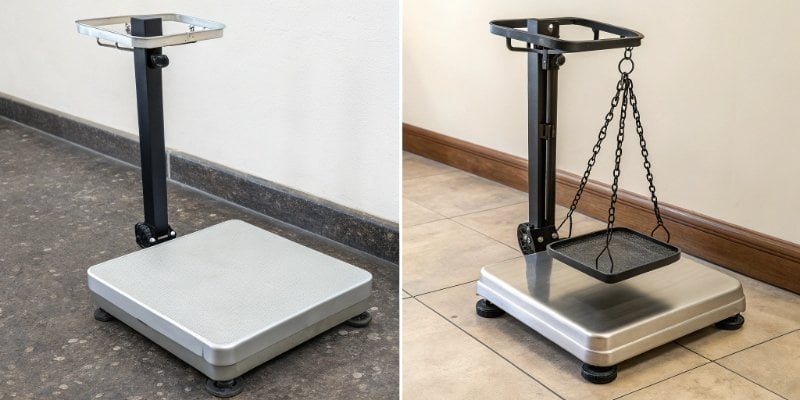
The difference in lifespan comes down to design and materials. As manufacturers, we build our industrial scales with heavy-duty load cells3 and durable steel platforms because we know they need to withstand tough factory environments. Consumer scales are built for occasional use with lighter materials. Expecting a consumer scale to survive in an industrial setting is unrealistic. I've seen customers try to save money by using cheaper scales, only to replace them annually. The math just doesn't work. Investing in a robust, appropriate-grade scale and maintaining it properly is always more cost-effective in the long run.
Factors That Determine Lifespan
Several key factors will decide if your scale becomes a long-term asset or a short-term expense.
Build Quality and Intended Use
An industrial scale is designed for thousands of cycles per day and is protected against dust, moisture, and impact. A consumer kitchen scale is not. Using a scale outside of its intended purpose will dramatically shorten its life.
| Scale Type | Typical Lifespan (with proper care) | Key Features |
|---|---|---|
| Consumer Grade | 3-5 Years | Plastic body, light-duty sensors, for occasional use. |
| Commercial Grade | 5-10 Years | Stainless steel pan, better sensors, for daily use. |
| Industrial Grade | 10-15+ Years | Heavy-duty construction, overload protection, sealed electronics. |
The Real Cost of Neglect
Neglecting maintenance has a direct financial impact. A scale that isn't calibrated can lead to product giveaway or short-shipping clients. A scale that fails prematurely requires replacement, causing downtime and unexpected costs. A well-cared-for scale from a reliable manufacturer like us is an asset that pays for itself over its long life.
Do digital scales need to be stored flat?
Are you storing your scale on its side to save a little bit of shelf space? This common mistake can cause serious, irreversible damage. Improper storage is a silent killer of precision weighing instruments.
Yes, you must always store a digital scale flat on a level surface. Storing it on its side or at an angle puts constant, uneven pressure on the sensitive load cells and internal mechanisms. This can lead to permanent calibration errors and a much shorter lifespan.
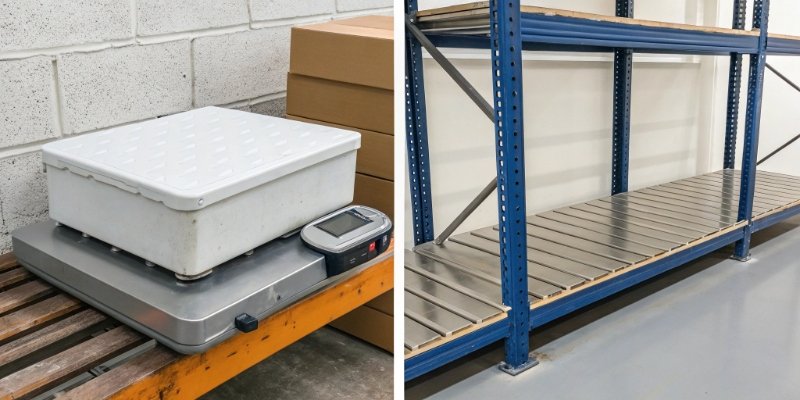
The core of any digital scale4 is its load cell. Think of it as the scale's heart. It’s a highly sensitive sensor that flexes minutely under weight to produce an electrical signal. When you store the scale on its side, you are putting the entire weight of the scale's platform and internal components onto this delicate sensor in a way it was never designed to handle. I often use an analogy with my clients: it’s like parking your car with two wheels on the curb every single night. Eventually, the suspension and alignment will be ruined. The same principle applies here.
Understanding the Mechanics
To appreciate why flat storage is critical, you need to understand what's happening inside.
What are Load Cells?
Load cells are transducers that convert mechanical force into a measurable electrical output. In a digital scale, they are strategically placed to evenly support the weighing platform. They are engineered to handle vertical force but are vulnerable to lateral or prolonged, uneven pressure.
The Impact of Uneven Pressure
When a scale is on its side, gravity pulls the internal structure against the load cell at an unnatural angle. This sustained stress can cause the metal within the load cell to "creep" or deform permanently. Even a microscopic deformation is enough to throw off the scale's readings forever, making it impossible to calibrate correctly. This is not something that can be easily fixed; it often requires a complete load cell replacement, which can cost nearly as much as a new scale.
Why does my digital scale keep giving me different readings?
Does your digital scale show a different weight every time you use it? This frustrating inconsistency makes your data completely unreliable. The good news is that the cause is usually simple and easy to fix.
Inconsistent readings are most often caused by an unlevel surface, low batteries, or a need for calibration. External factors like air drafts from vents, vibrations from nearby machinery, or even static electricity can also interfere. Always check these basics first to restore accuracy.

As a technical expert for Weigherps, this is one of the most common support questions I get. Before a customer sends a scale in for repair, I always walk them through a simple troubleshooting checklist. Over 90% of the time, the issue is environmental, not a defect. I remember a call from a logistics company whose large floor scale was giving different weights for the same pallet. It turned out the scale was placed on a cracked and uneven section of their concrete floor. Once they moved it a few feet to a solid, level spot, the problem disappeared.
A Quick Troubleshooting Guide
If you're getting inconsistent readings5, don't panic. Go through this checklist first.
The Three Main Culprits
These three issues account for the vast majority of problems with reading stability.
- Uneven Surface: The scale must be perfectly level. Use a bubble level to check. Most industrial scales have adjustable feet to help you achieve this.
- Power Issues: Low batteries or a faulty power adapter can cause the electronics to behave erratically. Try fresh batteries or a different power outlet.
- Calibration Drift: All scales drift over time. Use a certified standard weight to check the calibration. If it's off, run the calibration procedure6 described in your user manual.
| Problem | Likely Cause | Simple Solution |
|---|---|---|
| Numbers keep changing | Air drafts or vibrations | Move the scale away from vents, fans, or machinery. |
| Reading is slow or dim | Low battery | Replace the batteries or check the AC adapter. |
| Reading is consistent but wrong | Needs calibration | Calibrate the scale using a known standard weight. |
| Reading won't settle at zero | Debris under the platform | Clean any dirt or objects from under the scale. |
By methodically checking these common issues, you can solve most accuracy problems yourself and keep your operations running smoothly.
Conclusion
Regular cleaning, proper use, and periodic calibration are essential. Following these simple maintenance steps will greatly extend the life and accuracy of your digital scale, protecting your valuable investment.
-
Discover the advantages of investing in industrial scales for long-term use. ↩
-
Understand the critical role of scale maintenance in ensuring quality control. ↩
-
Gain insights into the mechanics of load cells and their role in scale accuracy. ↩
-
Explore expert tips on maintaining your digital scale for longevity and accuracy. ↩
-
Find solutions to common issues that lead to inconsistent readings in scales. ↩
-
Learn the steps to accurately calibrate your digital scale for reliable measurements. ↩



Comments (0)